Wedding photography · Florida & USA
Gujarati Wedding Photographer: Pithi, Garba, Mandap and Vidaai
By Noor K Photography ·
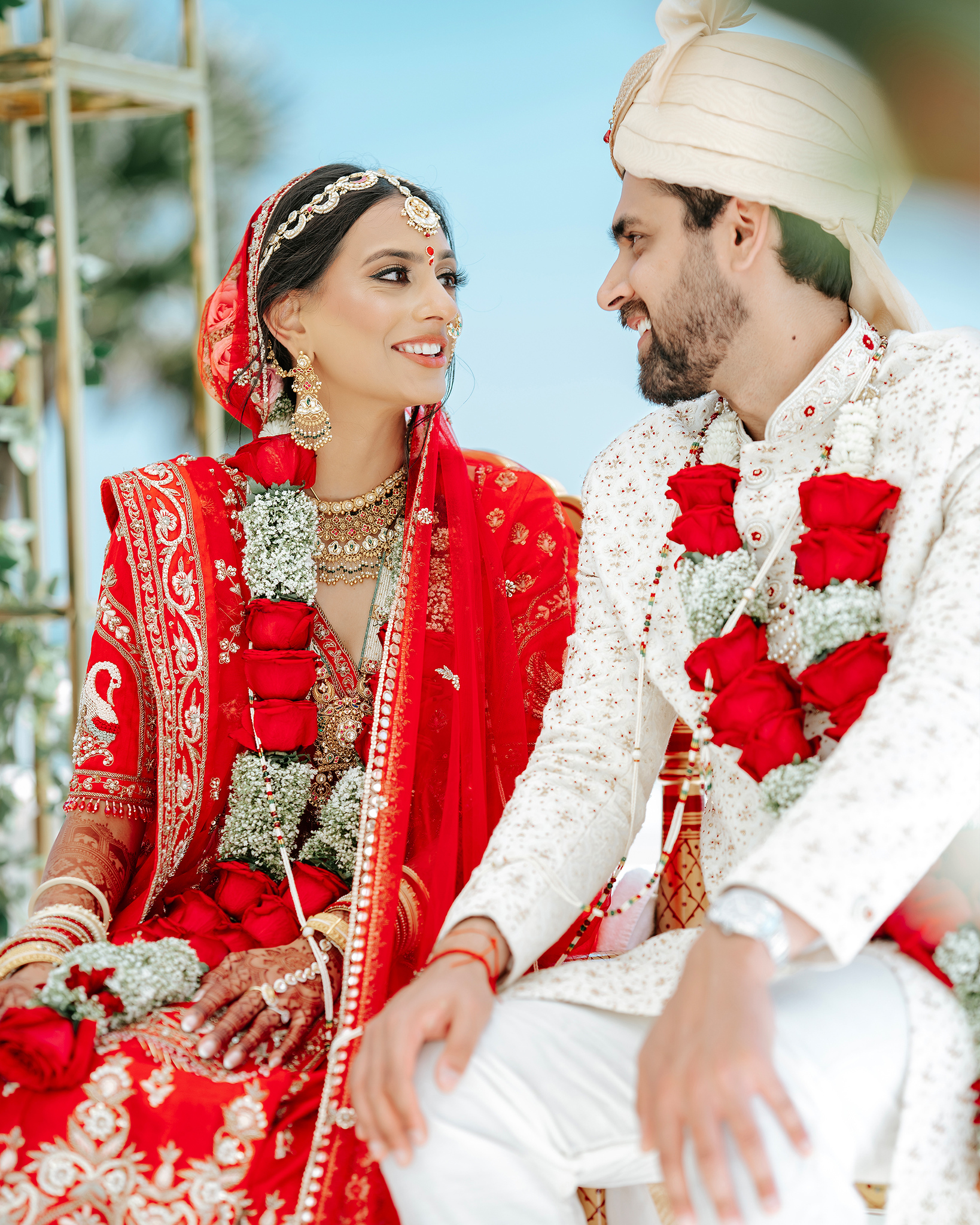
As a Gujarati wedding photographer based in Orlando, Florida, photographing weddings across the USA, we plan every celebration around the rituals your family cares about most: the yellow laughter of the pithi, a garba night that runs past midnight, the mameru gifts from the bride’s maternal uncle, the ponkhana at the door and the four mangal pheras under the mandap. Gujarati weddings are full of short, meaningful moments and big, joyful crowds. This guide walks through each event in order, what we photograph at each one and how to plan the weekend so nothing is missed.
What a Gujarati wedding weekend looks like
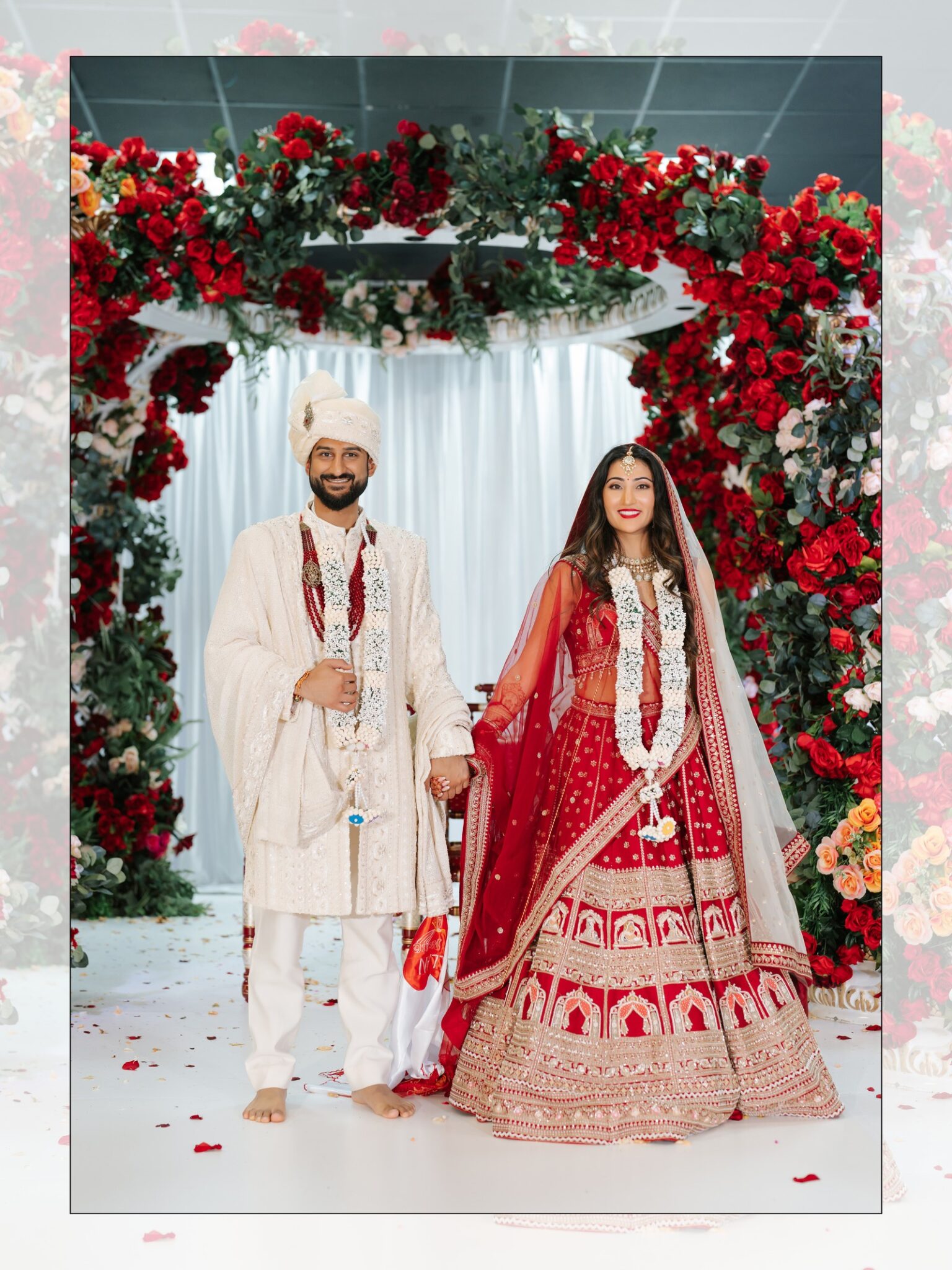
Most Gujarati weddings run over two to four days. A typical weekend starts with a Ganesh sthapana or a small puja at home, then the mehndi, the pithi, a garba or raas night, and finally the wedding day with the baraat, the mandap ceremony, the vidaai and a reception. Kutchi, Kathiawadi, Surti, Patel, Jain and Brahmin families can all have their own names, order and small customs, and many families in the US combine events to fit a hotel weekend. Ask your maharaj for the order of rituals early and share it with your photographer, so the team knows which moments matter most to your family.
Pithi
The pithi is the Gujarati turmeric ceremony. Family apply a paste of turmeric, chickpea flour and fragrant oils to the bride or groom, usually the morning before the wedding or the day before. The bride and groom often have separate pithis with their own families, which means two sets of coverage at different times or places. We photograph the elders giving the first blessing, cousins sneaking an extra handful, the bride laughing under all that yellow and the close details of hands and marigolds. Plan for old clothes, a covered floor and a shower nearby.
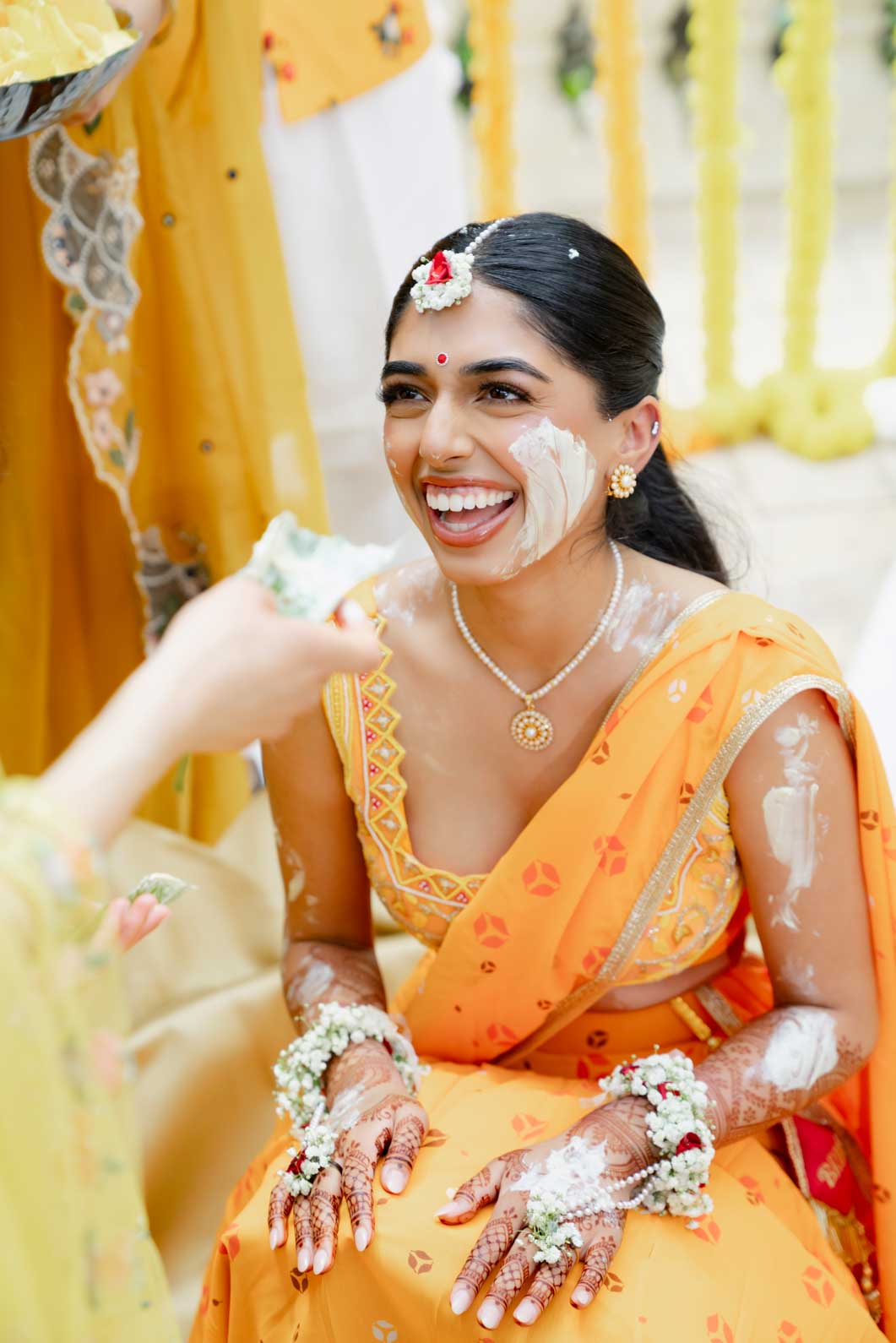
Our haldi and pithi photography guide has more tips on outfits, light and keeping the mess fun.
Mameru
In the mameru, the bride’s mama (maternal uncle) and his family bring gifts for her: often a panetar saree, jewelry, sweets and other items for her new life. In many families it happens a day or two before the wedding, sometimes alongside the pithi or another puja. It is a small, warm event that is easy to miss on a busy schedule, so put it on the timeline. We photograph the gifts laid out, the uncle presenting them and the bride with her mother’s side of the family. In many families the bride also wears the panetar from her mama for the start of the ceremony.
Garba and raas
The garba night is often the biggest party of the weekend. Guests dance in circles around a central lamp or a decorated garbo, and for raas they dance with dandiya sticks. Dhol players, live singers and hundreds of guests in bright chaniya cholis and kediyus make for wonderful photos, but the dancing is fast and the light is usually low. We mix wide frames from a raised spot to show the circles with close, sharp candids of the couple and their families. A short burst of couple portraits before the dancing starts, while outfits are fresh, is always worth it.
For more on planning a dance night, see our sangeet and garba photography guide.
Baraat and ponkhana
On the wedding day the groom arrives with his family in the jaan, the Gujarati baraat, dancing to dhol or a DJ, sometimes in a vintage car or on a horse. At the entrance the bride’s mother welcomes him with the ponkhana: she circles an aarti thali, may playfully try to catch his nose, and the groom often crushes a small clay pot (or a pair of sakoras) under his foot before he enters. It is quick, crowded and full of laughter, so we keep one photographer in front of the groom and a second angle on the bride’s family.
Hotels have their own rules for baraat routes and start times. Our baraat photography guide covers how to plan it.
Under the mandap: the Gujarati ceremony
The ceremony, the lagna, is led by the maharaj and usually takes about one and a half to two hours. It begins with a Ganesh puja, then the groom is seated at the mandap. Here are the main rituals, in the order many families follow. Your maharaj may change the order or add others.
Madhuparka
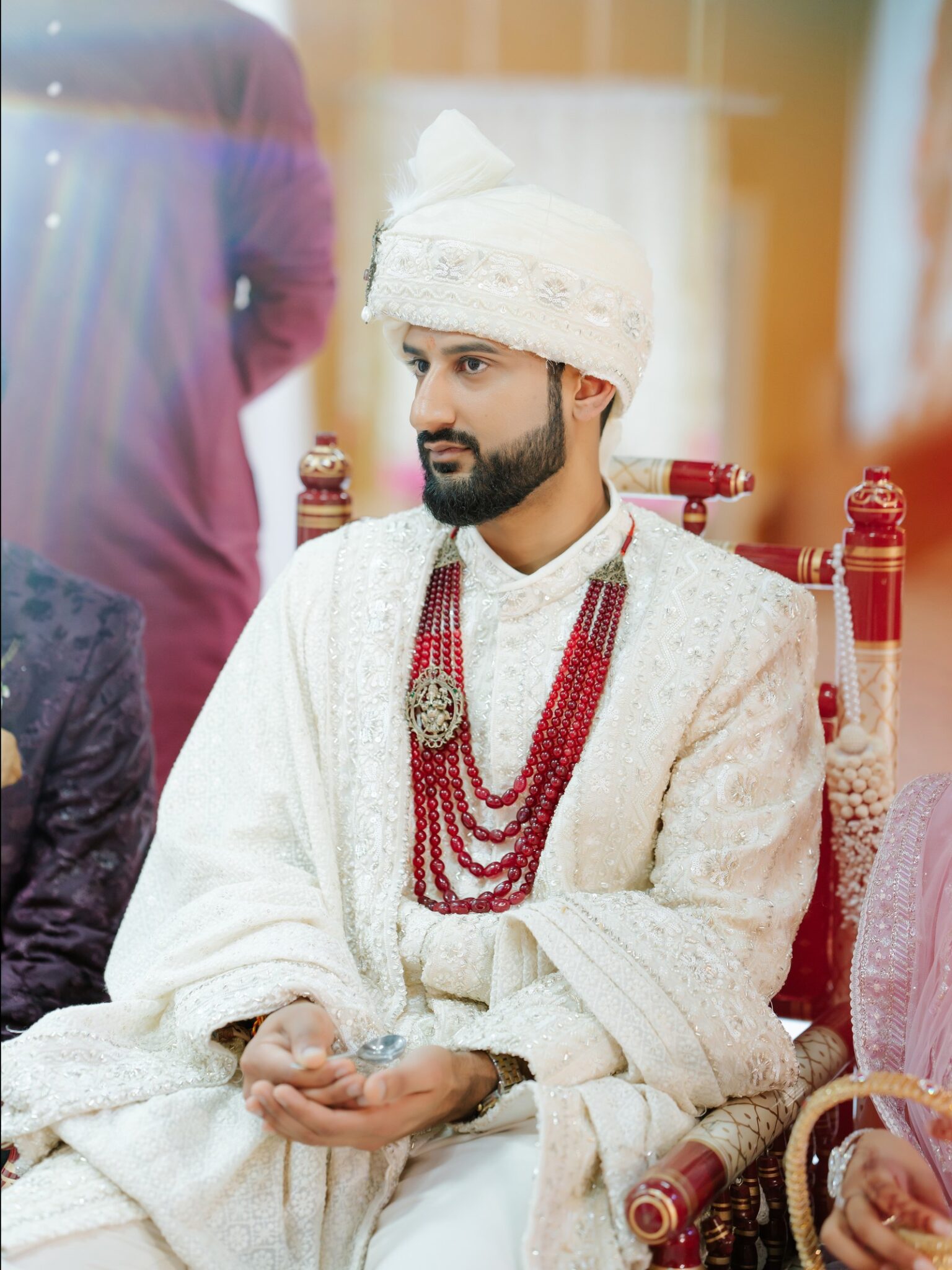
The groom is welcomed at the mandap, his feet are washed, and he is offered madhuparka, a mixture of honey, yogurt and ghee. Families differ on who performs it. It is a gentle opening moment, and photos of the groom’s face and the bride’s parents caring for him set the tone for the ceremony.
Antarpat and the bride’s entrance
The bride is often walked in by her mama. In many families a cloth, the antarpat, is held between the couple until the moment it is lowered and they see each other. We photograph the bride’s walk from the front and keep a second camera on the groom so his reaction is not lost.
Jaimala, kanyadaan and hasta milap
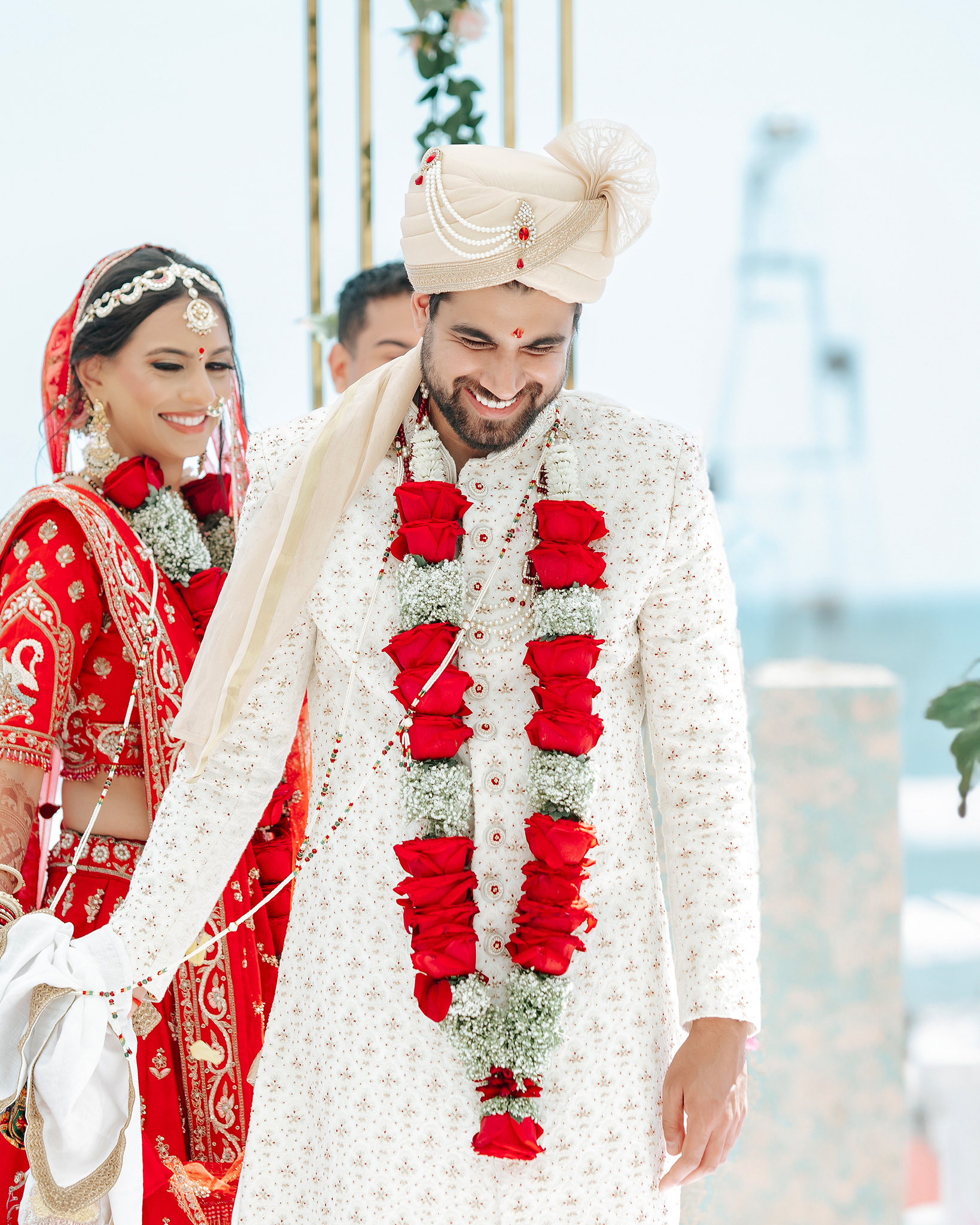
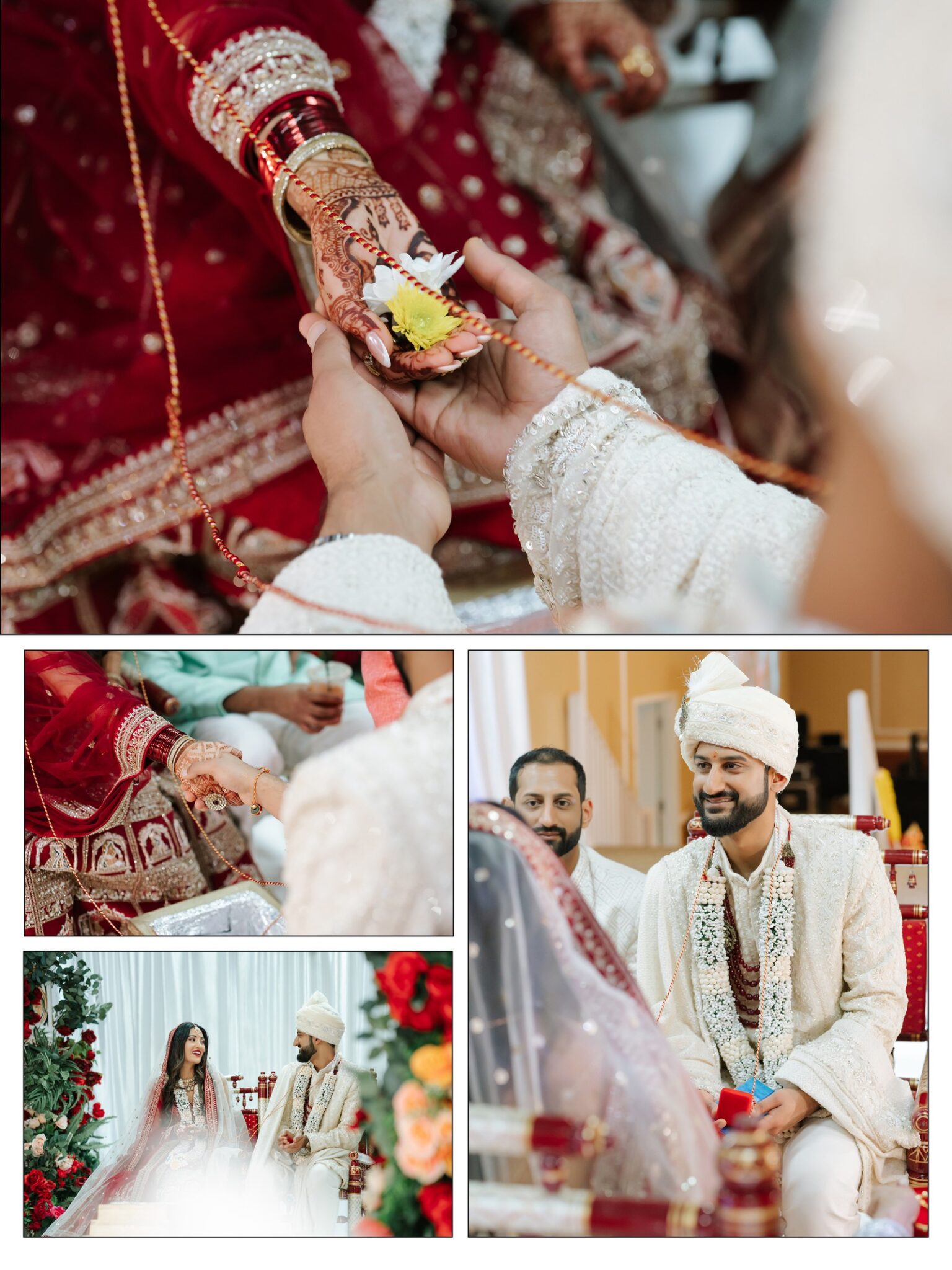
The couple exchange varmala garlands. In the kanyadaan, the bride’s parents give her hand to the groom with their blessings, one of the most emotional moments of the day. In the hasta milap, the couple’s hands are joined, and the groom’s scarf is tied to the bride’s saree. We photograph the hands, the parents’ faces and a wider frame that shows everyone at the mandap.
Mangal fera and saptapadi
The couple walk around the sacred fire in the mangal fera. Gujarati weddings usually have four pheras, for dharma, artha, kama and moksha, with the groom leading some rounds and the bride leading others, though some families follow seven. The saptapadi, seven steps together, follows in many ceremonies. Each round looks different from a different side, so we move around the mandap without blocking guests and keep one wide frame of the whole scene.
Sindoor, mangalsutra and kansar
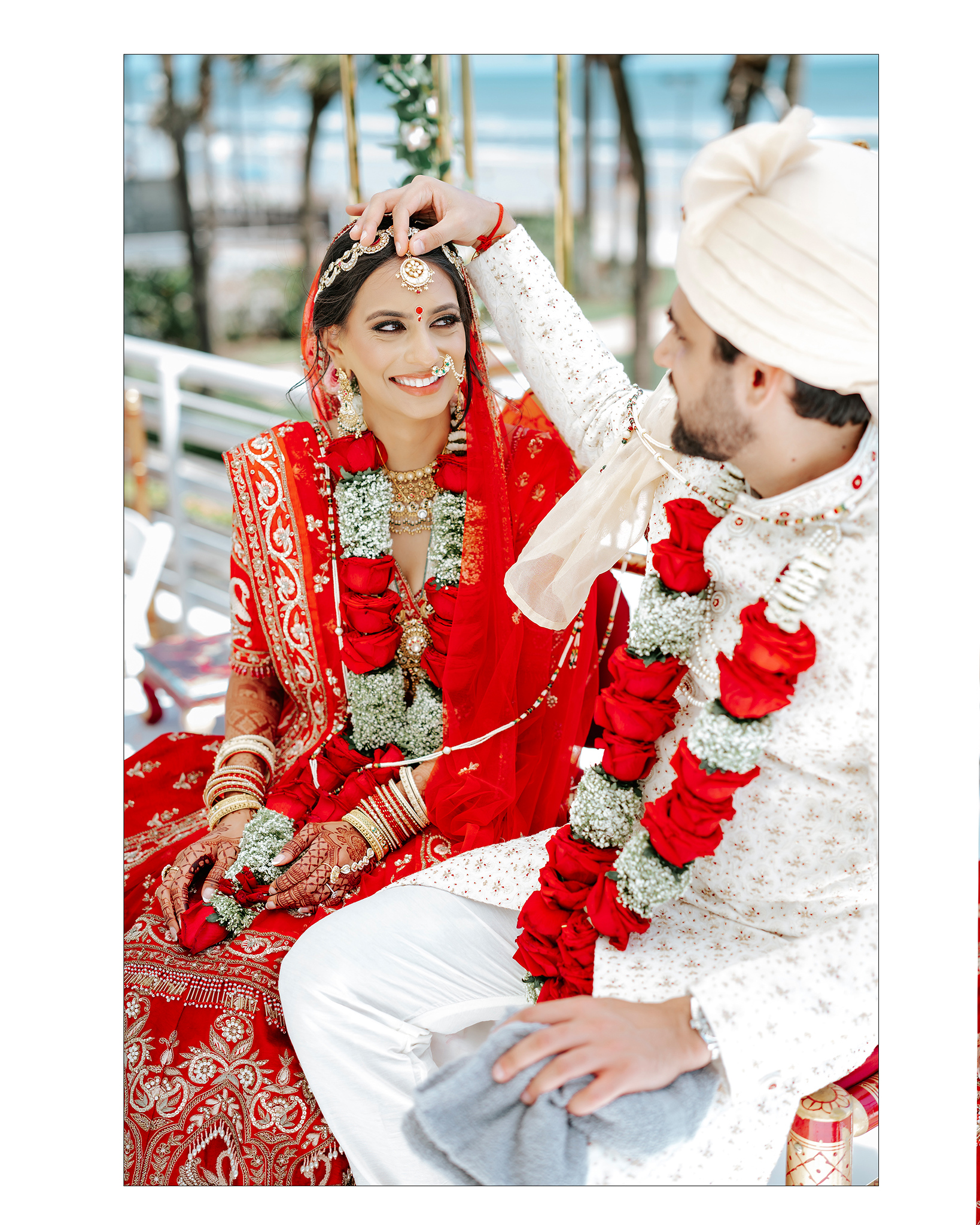
The groom places sindoor in the bride’s hair parting and ties the mangalsutra. Then many families do the kansar, where the couple feed each other a sweet, followed by games like aeki beki, where the couple search for a ring in a bowl of milk. These are short, close moments with lots of laughing, the kind of candids families love.
For the full list of Hindu ceremony moments across regions, see our Hindu wedding photography guide.
Vidaai
At the vidaai the bride leaves with her new family. In many Gujarati families she throws rice or coins over her shoulder toward her parents’ home, and the farewell is often the most tearful moment of the weekend. Plan the exit in good light, or make sure the doorway or driveway is well lit for an evening send-off, so faces can be seen in the photos.
Our work as a Gujarati wedding photographer
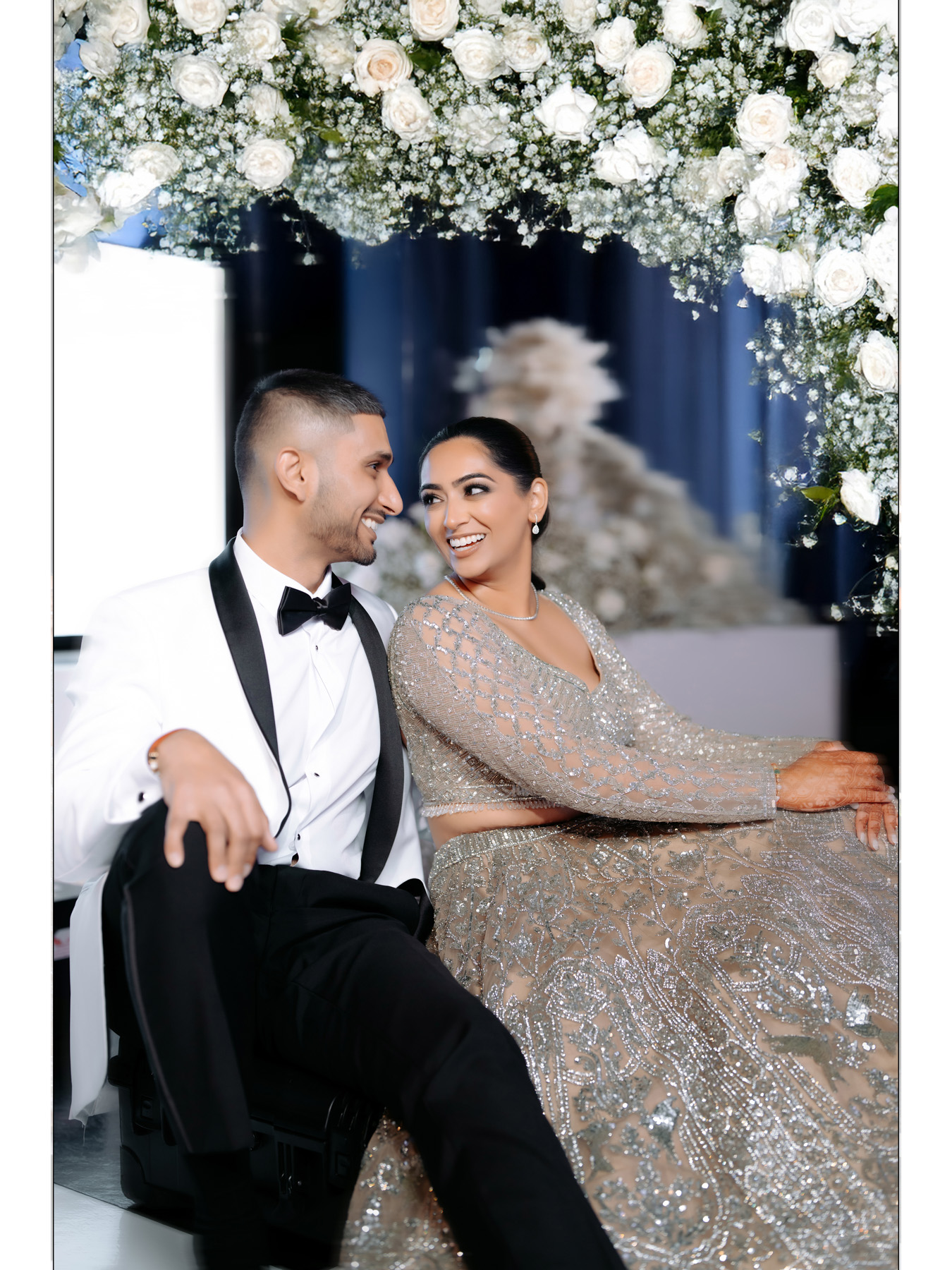
We have photographed Gujarati weddings in hotel atriums, oceanfront terraces and modern event spaces. Alisha and Kunal’s four-day Hindu Gujarati wedding at Gaylord Palms started with a sangeet outdoors and a haldi in their suite. Krupa and Neel’s Gujarati wedding at The Motor Enclave in Tampa moved from garden portraits to a mandap in the Event Center. Nirali and Dev’s oceanfront Gujarati wedding in Daytona Beach had a floral mandap with the Atlantic behind it, and Priya and Dillan’s Gujarati wedding in Atlanta included a first look, a baraat and a mandap ceremony at GCA Hall.
Planning tips for Gujarati wedding photos
- Ask your maharaj for the written order of rituals and the muhurat time, and build the wedding day backwards from it.
- Put smaller events like the mameru, Ganesh sthapana and griha shanti on the timeline, even if they are at home.
- If the bride and groom have separate pithis at the same time, plan a second photographer so both sides are covered.
- For garba, ask the venue about a raised spot for wide photos, and keep some lights on over the dance floor.
- Confirm the venue allows a small fire at the mandap, indoors or outdoors.
- Plan family portraits right after the ceremony, while everyone is near the mandap, and share your list ahead of time.
- Leave a little time before the reception for a change of outfit and a few couple portraits.
Gujarati families often have big guest lists, so venue space matters. Our Indian wedding venues in Florida guides cover hotels in Orlando, Tampa, Miami, Fort Lauderdale and Palm Beach, and we travel for weddings anywhere in the USA. You can also see more on our Orlando and Tampa pages, or use our sample wedding photography timeline to plan the weekend.
Frequently asked questions
How many pheras are there in a Gujarati wedding?
Most Gujarati ceremonies have four mangal pheras around the sacred fire, often followed by the saptapadi, seven steps together. Some families follow seven pheras, so check with your maharaj.
What is the mameru?
A ceremony where the bride’s maternal uncle and his family bring her gifts, often a panetar saree, jewelry and sweets. It usually happens a day or two before the wedding.
What is the ponkhana?
The welcome of the groom at the entrance by the bride’s mother, with an aarti thali and playful rituals. In many families the groom also breaks a small clay pot with his foot before entering.
Do you photograph garba nights?
Yes. We photograph garba and raas nights across Florida, in Atlanta and anywhere in the USA, mixing wide shots of the dance circles with close candids of the couple and family.
How long is a Gujarati wedding ceremony?
Most take about one and a half to two hours, depending on the maharaj and the rituals your family includes. The baraat and ponkhana add time before it.
When will we receive our photos?
Edited photos are usually delivered in about 8 to 12 weeks, and films in about 12 to 16 weeks. A full Gujarati weekend often adds up to around 2,000 to 3,000 edited images.
Planning your Gujarati wedding?
We photograph and film Gujarati weddings across Florida, in Atlanta and anywhere in the USA, from the pithi and garba to the pheras and vidaai. Tell us your dates and venue and we will reply within 24 to 48 hours.