Wedding photography · Florida & USA
Bengali Wedding Photographer: Hindu and Bangladeshi Muslim Weddings
By Noor K Photography ·
As a Bengali wedding photographer based in Orlando, Florida, photographing weddings across the USA, we plan for both sides of Bengali wedding culture: the Hindu ceremony with its shubho drishti, saat paak and sindoor daan, and the Bangladeshi Muslim celebration with its gaye holud, nikah and reception. Both share a love of turmeric, music, red and white, and big family gatherings, but the rituals and their order are very different. This guide explains each tradition, what to photograph and how to plan the days so every moment is covered.
Two traditions, one shared culture
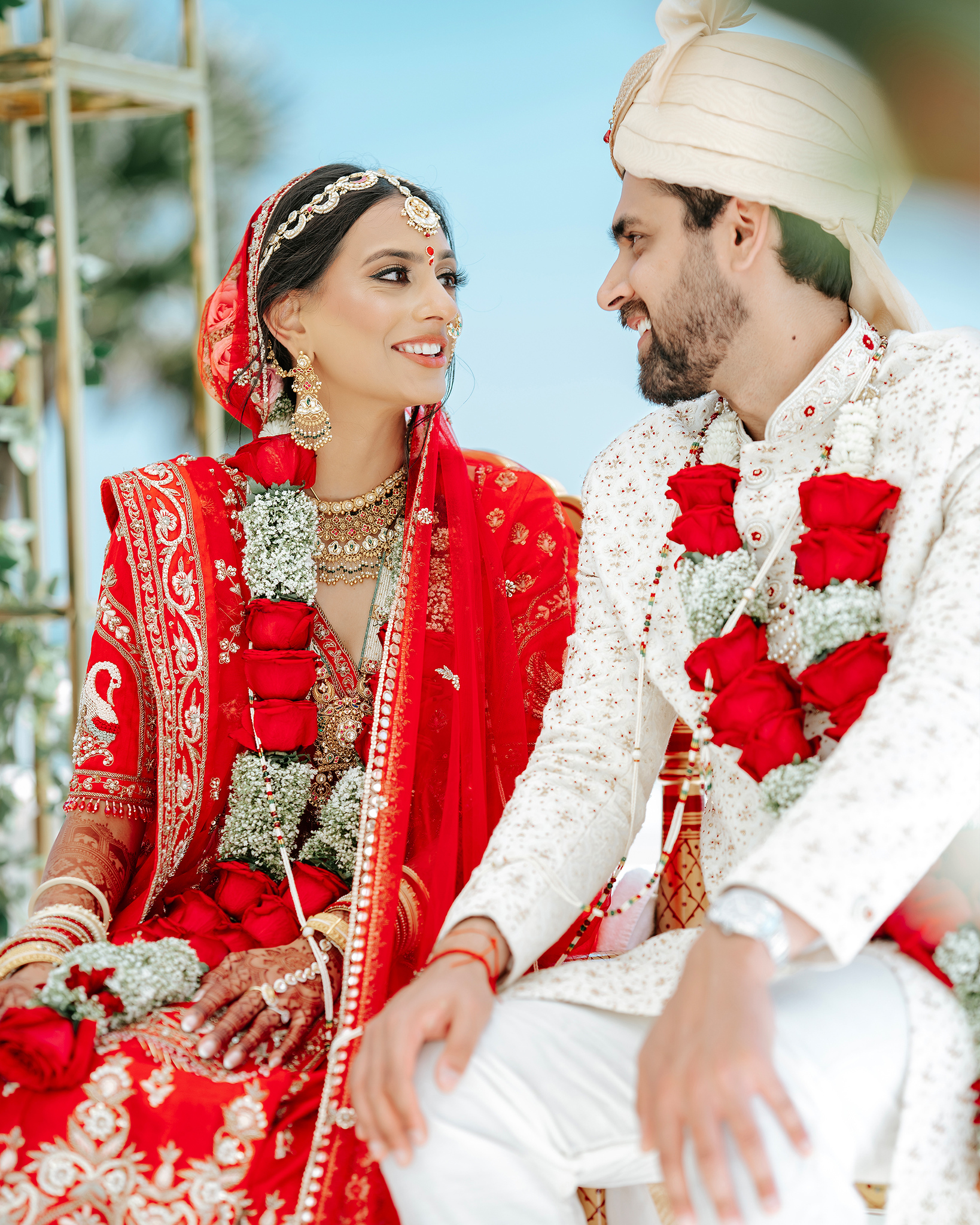
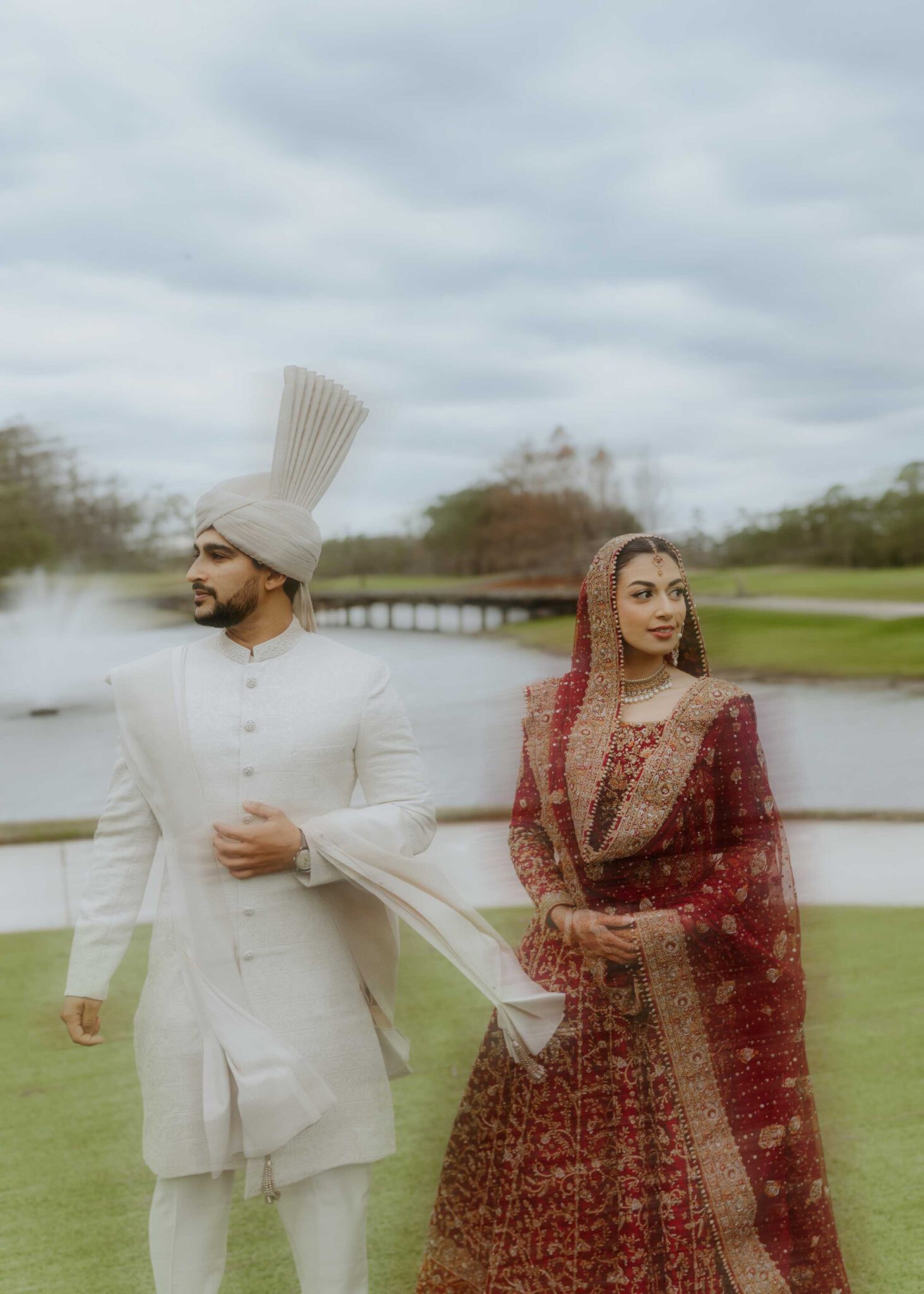
Bengali families come from West Bengal and other parts of India, and from Bangladesh. A Bengali Hindu wedding follows rituals rooted in Bengal, led by a purohit, with the bride often in a red Banarasi saree, a white shola crown (topor for the groom, mukut for the bride) and sandalwood patterns on her forehead. A Bangladeshi Muslim wedding centers on the nikah and is usually spread over several events, with the bride often in a red or maroon saree or lehenga. Many families in the US also blend customs, or hold events that mix Bengali and American traditions. Every family is different, so ask your elders and your officiant which rituals they want, and share the list with your photographer.
Gaye holud
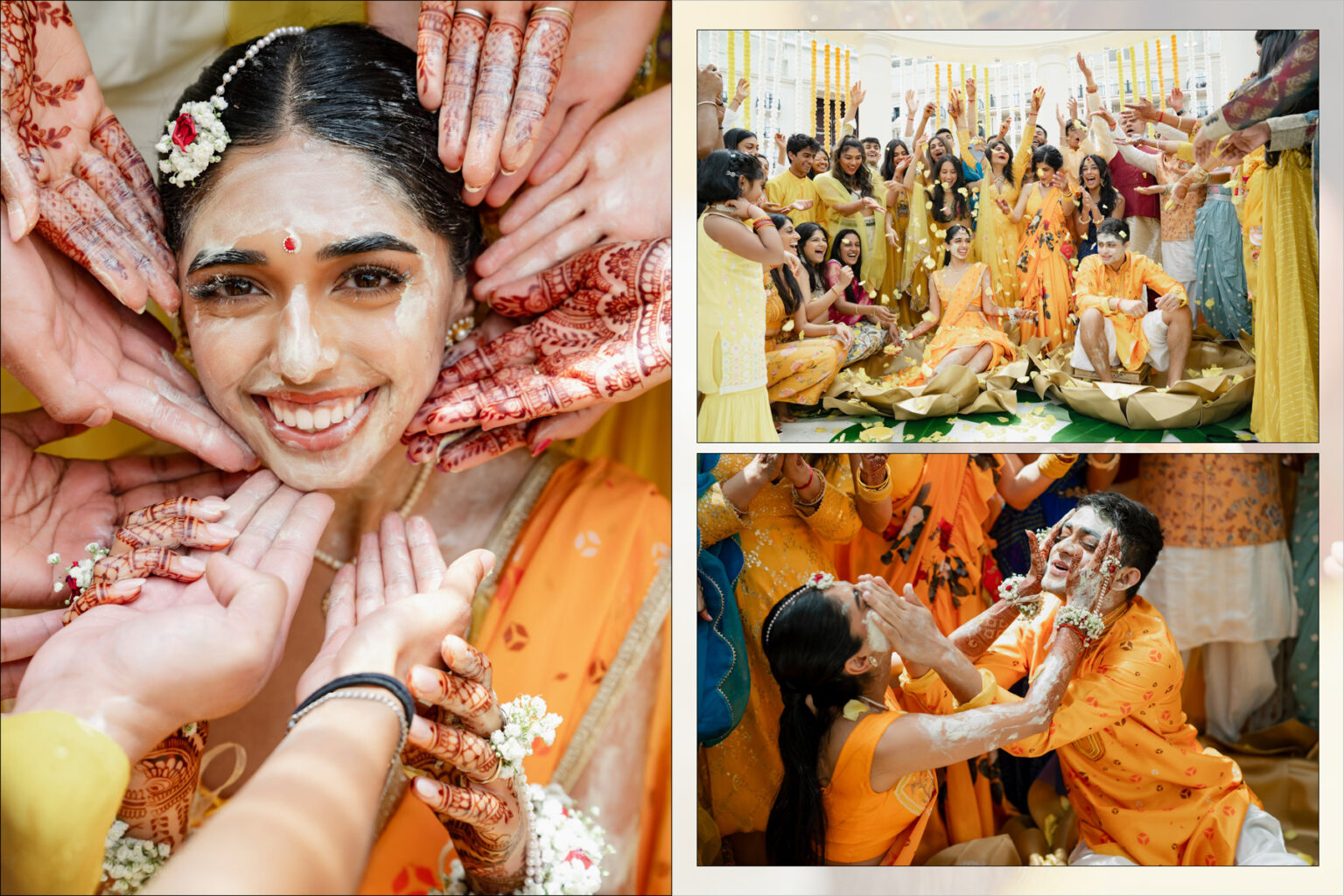
The gaye holud, the turmeric ceremony, is shared by Bengali Hindus and Bangladeshi Muslims and is one of the most colorful events of the wedding. In many families the bride and groom each have their own holud, and the groom’s family brings turmeric, sweets, fish and gifts to the bride’s holud in a procession, often with dancing and songs. Guests wear yellow, orange and green, the bride sits on a decorated stage, and relatives take turns smearing turmeric on her face and hands and feeding her sweets. Today many couples hold a joint holud with both families, which makes it easier to photograph as one event.
For photos, the holud is all about color and laughter. We photograph the procession with the gift trays (tattva), the stage and decor, each relative’s turn with the couple, and the dancing that follows. A raised angle helps show the full stage, and a second photographer catches the guests.
See our haldi photography guide for tips on outfits, light and keeping turmeric off the decor.
The Bengali Hindu wedding ceremony
Many Bengali Hindu weddings take place in the evening, at a time chosen by the family’s purohit. The day often starts with the dodhi mangal, a small meal of yogurt and flattened rice for the bride and groom at dawn, and the bride’s getting ready with chandan (sandalwood) designs on her forehead. Here are the main moments, in the order many families follow:
Bor boron
The groom arrives with his family and is welcomed by the bride’s mother and relatives with a tray (boron dala) of lamp, rice, grass and sweets. Women ululate (ulu dhwani) and blow the shankha (conch shell), sounds that fill a Bengali wedding.
Saat paak and shubho drishti
The bride is seated on a low wooden stool, the piri, and lifted by her brothers or male cousins, with her face hidden behind two betel leaves. They carry her around the groom seven times in the saat paak. Then she lowers the leaves and the couple look at each other for the first time as bride and groom: the shubho drishti. It is the single most important photo of a Bengali Hindu wedding, and it happens in seconds. We place one photographer facing the bride and one facing the groom, so both faces are captured at the same moment.
Mala badal
Still lifted on the piri, the bride exchanges garlands with the groom, usually three times. Friends try to lift the groom too, and the crowd cheers. It is lively and fast, so wide frames that show the people lifting the couple are as important as the close-ups.
Sampradan, yagna and the seven steps
In the sampradan, the bride is given away by her father or another elder, and the couple’s hands are tied together with a sacred thread. The purohit lights the sacred fire, and the couple offer puffed rice (khoi) to the fire in the anjali. They walk around the fire, and in the saptapadi they take seven steps together, in some families with the bride stepping on betel leaves or a stone at each step. These moments are close and smoky, and they look beautiful in firelight.
Sindoor daan and ghomta
The groom puts sindoor in the parting of the bride’s hair, often with a ring, from a small sindoor box called a sindoor kouto, and then covers her head with a new saree or veil, the ghomta. This marks her as a married woman. We stay close and in front of the couple for this moment, with a second angle on the parents.
Bashor ghar and bidaai
After the ceremony, the couple and their friends often stay up late in the bashor, with songs, games and teasing. The next day the bride leaves her family home in the bidaai, and in many families she throws a handful of rice over her shoulder toward her mother as thanks. A few days later the groom’s family hosts the bou bhaat, a reception where the bride serves rice to her new family, and many couples combine this with an American-style reception.
Bangladeshi Muslim weddings
A Bangladeshi Muslim wedding is often spread over several days. After the paan chini or engagement, there is usually a gaye holud (or separate holuds for each side), the nikah, the main wedding reception hosted by the bride’s family, and the walima or bou bhaat hosted by the groom’s family. Some families also hold a mehndi night with henna and dancing.
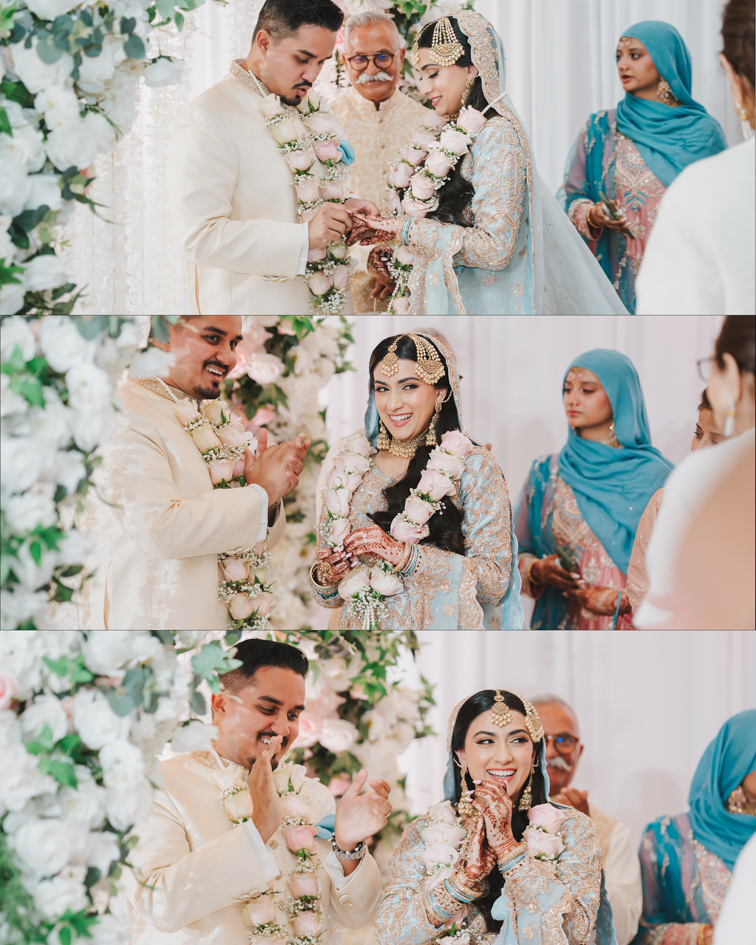
The nikah, sometimes called the akd or biye, is the Islamic marriage contract. The imam or kazi leads it, two witnesses are present, the mohr (dower) is agreed, and the couple sign the kabin nama, the marriage contract. In many families the bride and groom give their consent separately, with the bride surrounded by female relatives. Afterward the couple are often seated together and shown each other’s reflection in a mirror, and fed sweets and milk. Bangladeshi weddings also have playful moments, like the gate dhora, where the bride’s sisters and cousins block the groom at the entrance until his side pays a fee, and the hiding of the groom’s shoes.
We photograph Muslim weddings across Florida and anywhere in the USA, at mosques, hotels and outdoor venues. For more on the nikah, see our nikkah photography guide and walima photography guide, or our Muslim wedding photography in Florida page.
What a Bengali wedding photographer plans for
- The shubho drishti: two photographers in place, one facing each of the couple, before the bride is lifted on the piri.
- Low light: evening ceremonies and smoky fire rituals need fast lenses and a careful approach to flash, agreed with the purohit.
- The holud: a raised angle for the stage, and time for each relative’s turn without rushing.
- Details: the topor and mukut, the shankha-pola bangles, the alta on the bride’s feet, the chandan designs and the gift trays.
- Nikah moments: the consent, the signing of the kabin nama, the mirror and the family reactions, with respect for any separate seating.
- Two or more outfits: a wedding saree, a reception saree or lehenga and Western wear for the reception, each with its own portraits.
Planning tips for your Bengali wedding photos
- Ask your purohit or imam for the order of rituals and the timing, and share it with your photographer and planner.
- If the bride and groom have separate holuds, plan for two teams or stagger the times so both are covered.
- Tell your venue there will be a small fire, conch shells, and turmeric or rice on the floor.
- Choose the brothers or cousins who will lift the piri in advance, and do a quick practice.
- Plan family portraits right after the ceremony, and share your list ahead of time.
- If the reception is a day or two later, leave time for couple portraits in the new outfits.
We are based in Orlando, photograph weddings across Florida and in Atlanta, and travel for weddings anywhere in the USA. See our Miami, Fort Lauderdale and Orlando pages, browse the portfolio or read our Hindu wedding photography guide for how other regions compare.
Frequently asked questions
What is shubho drishti?
The moment in a Bengali Hindu wedding when the bride, lifted on a wooden stool, lowers the betel leaves covering her face and the couple look at each other for the first time as bride and groom.
What is saat paak?
Before the shubho drishti, the bride is carried on a wooden stool around the groom seven times by her brothers or cousins. Many families also take seven steps together by the sacred fire later in the ceremony.
What is a gaye holud?
The turmeric ceremony before a Bengali Hindu or Bangladeshi Muslim wedding, with relatives applying turmeric to the bride or groom, feeding them sweets, and music and dancing.
Do you photograph Bangladeshi Muslim weddings?
Yes. We photograph Muslim weddings across Florida and anywhere in the USA, including the holud, the nikah, the reception and the walima, and we follow the family’s and the mosque’s wishes.
How many photos will we receive?
A full wedding weekend often adds up to around 2,000 to 3,000 edited images. Photos are usually delivered in about 8 to 12 weeks and films in about 12 to 16 weeks.
Planning your Bengali wedding?
We photograph and film Hindu and Muslim weddings across Florida, in Atlanta and anywhere in the USA, from the holud to the reception. Tell us your dates and venue and we will reply within 24 to 48 hours.