Photography guide
Sangeet Photography Guide: Performances, Garba and Low Light
By Noor K Photography ·
Sangeet photography captures the music night before an Indian wedding: family performances, the couple’s entrance, speeches, open dancing and a lot of happy noise. Your family may call it a sangeet, a garba or raas, or a dholki, but all three happen mostly after dark, on a stage or a dance floor, in light that changes every minute. This guide explains what happens, which moments to plan for, and how stage setup and lighting choices decide how your sangeet photos and film will look.
What happens at a sangeet?
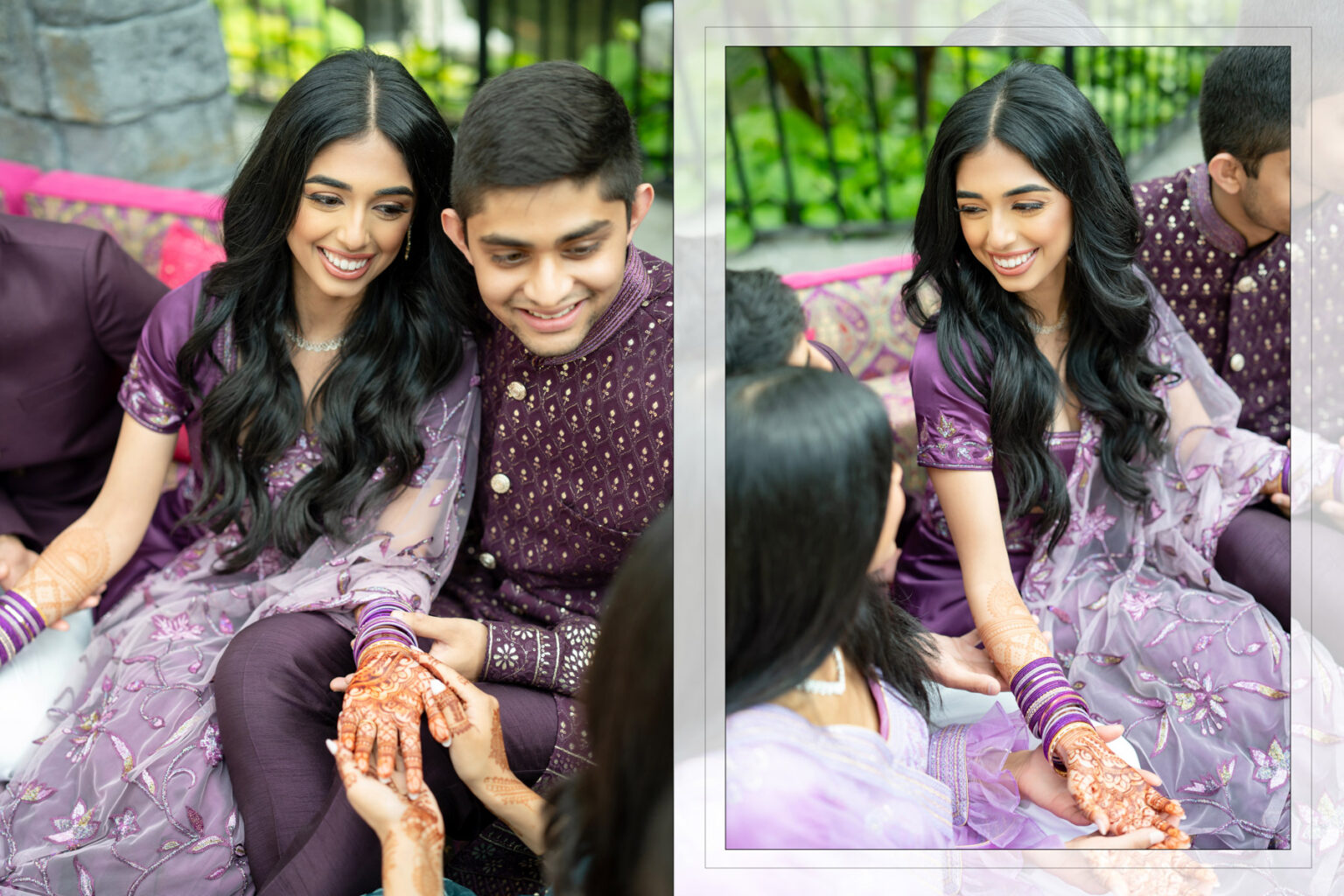
A sangeet (from the Hindi word for music) is usually held one or two nights before the wedding. Both families come together for dinner, choreographed dance performances, songs, a slideshow or video about the couple, speeches and then open dancing with a DJ. Many couples perform their own dance, and parents, siblings and cousins often rehearse for weeks. Some families still hold a smaller ladies’ sangeet with traditional songs, while others turn it into a full stage show.
Garba and raas
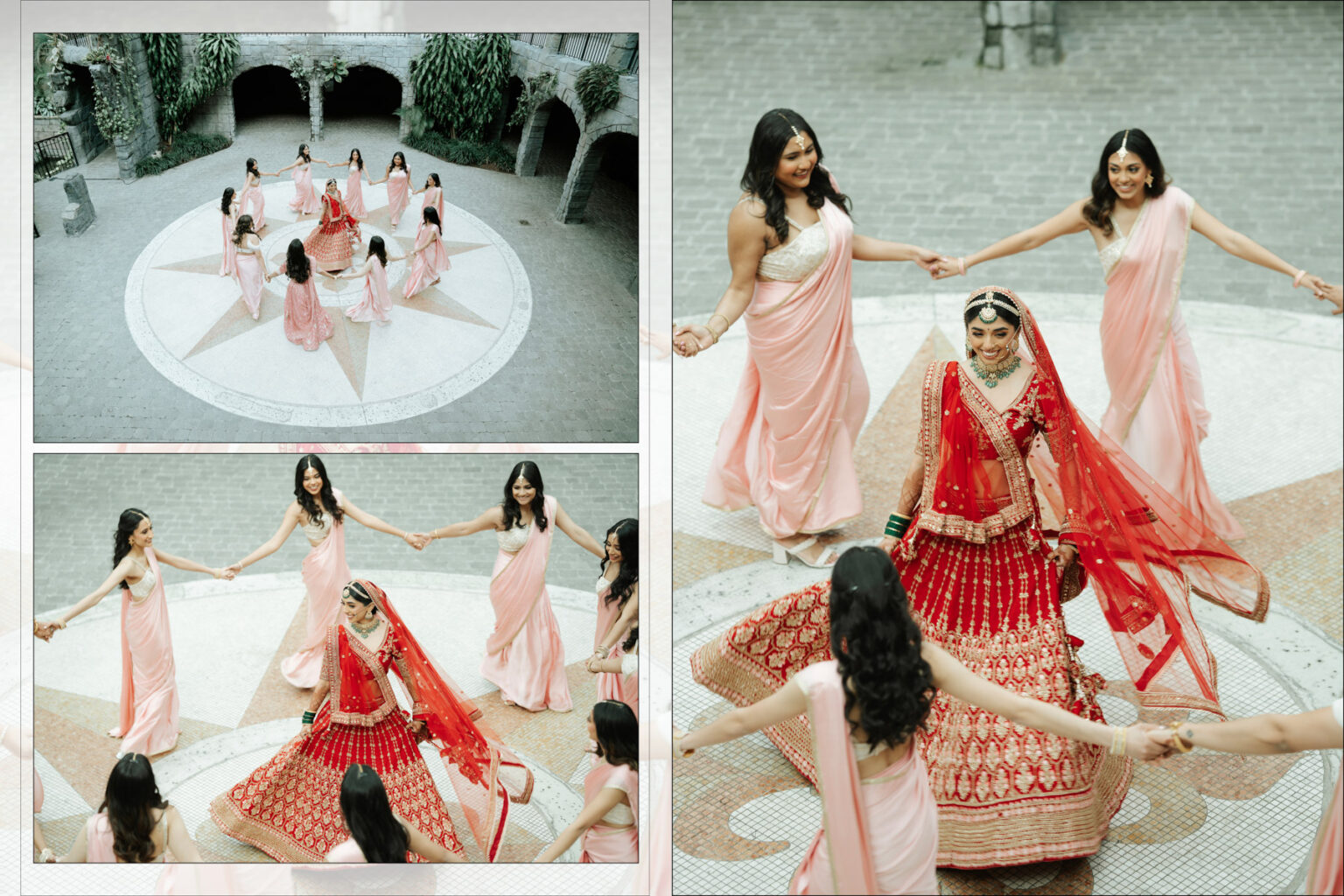
In Gujarati families the music night is often a garba or raas. Guests dance in large circles around a center point, clapping in rhythm for garba and striking decorated dandiya sticks in pairs for raas. The circles can fill a whole ballroom, and they look best from above or from the edge of the circle, looking along the line of dancers.
Dholki
In Pakistani and many Muslim families, the dholki is a music night built around the dholak drum. Women of the family sing traditional wedding songs, often teasing ones, while someone keeps the beat, and the night may include the ubtan or mehndi. Dholkis can be small home gatherings or full events with a stage and performances.
Sangeet photos to plan for
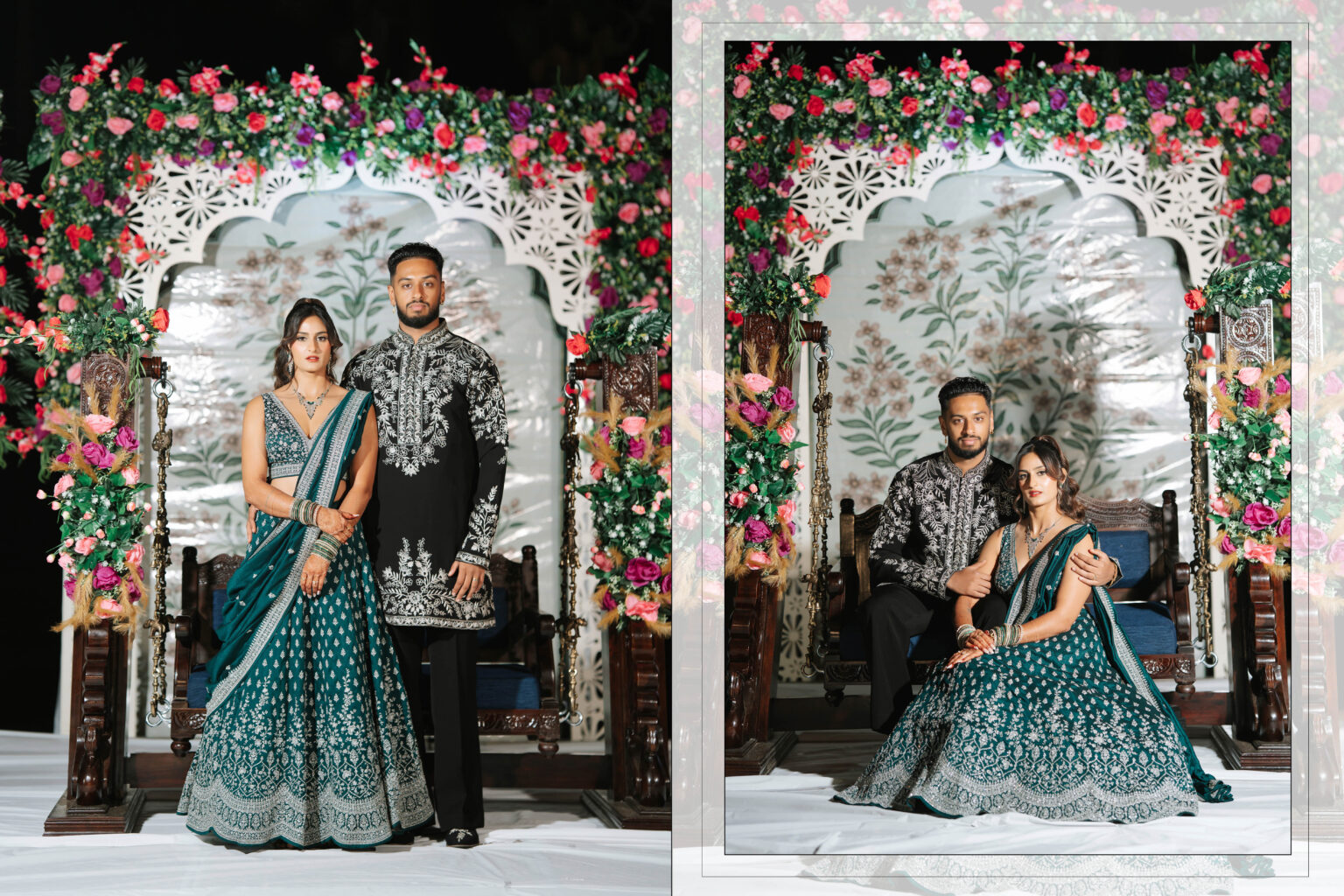
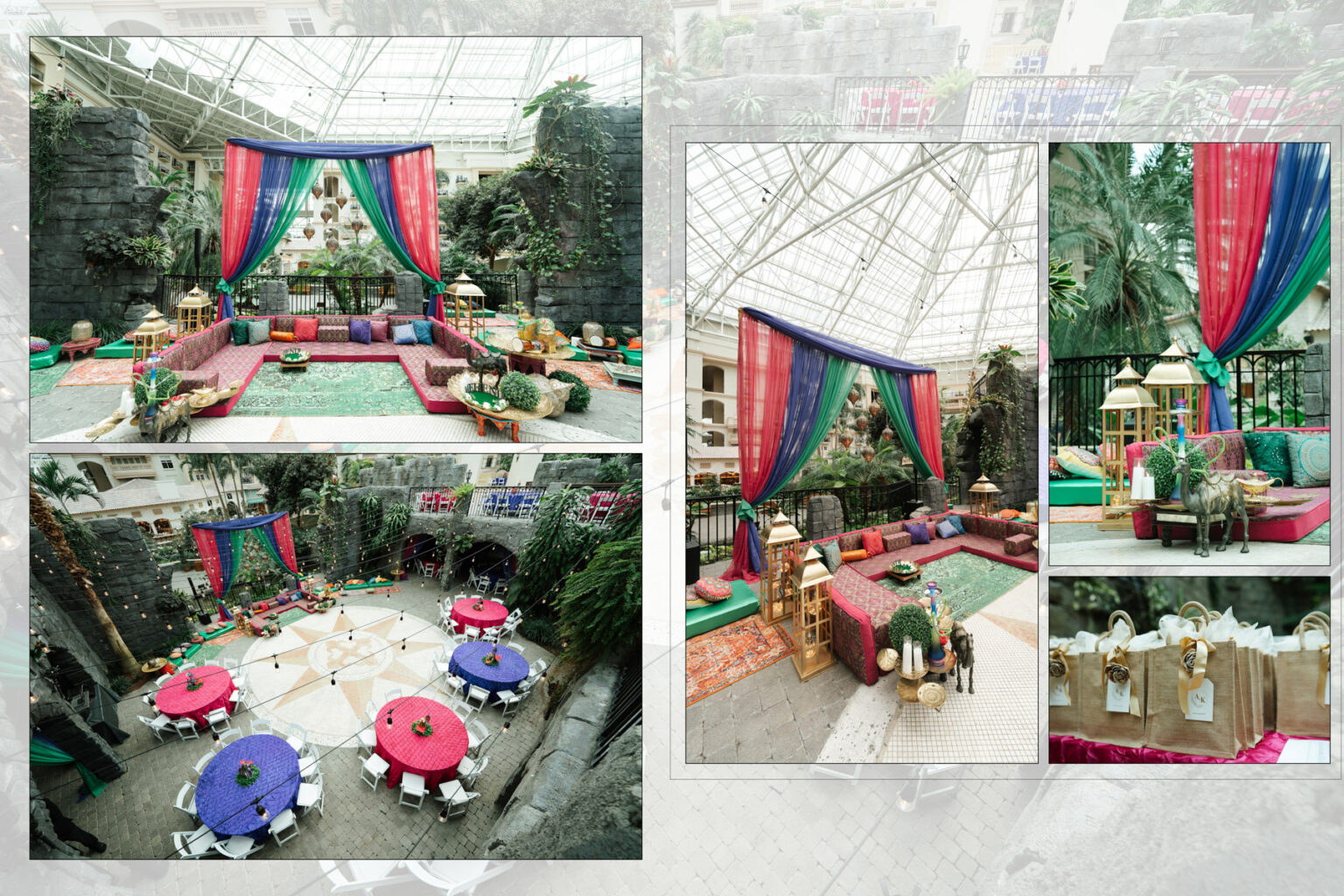
- Decor, stage and dance floor before guests arrive, while the room is still empty
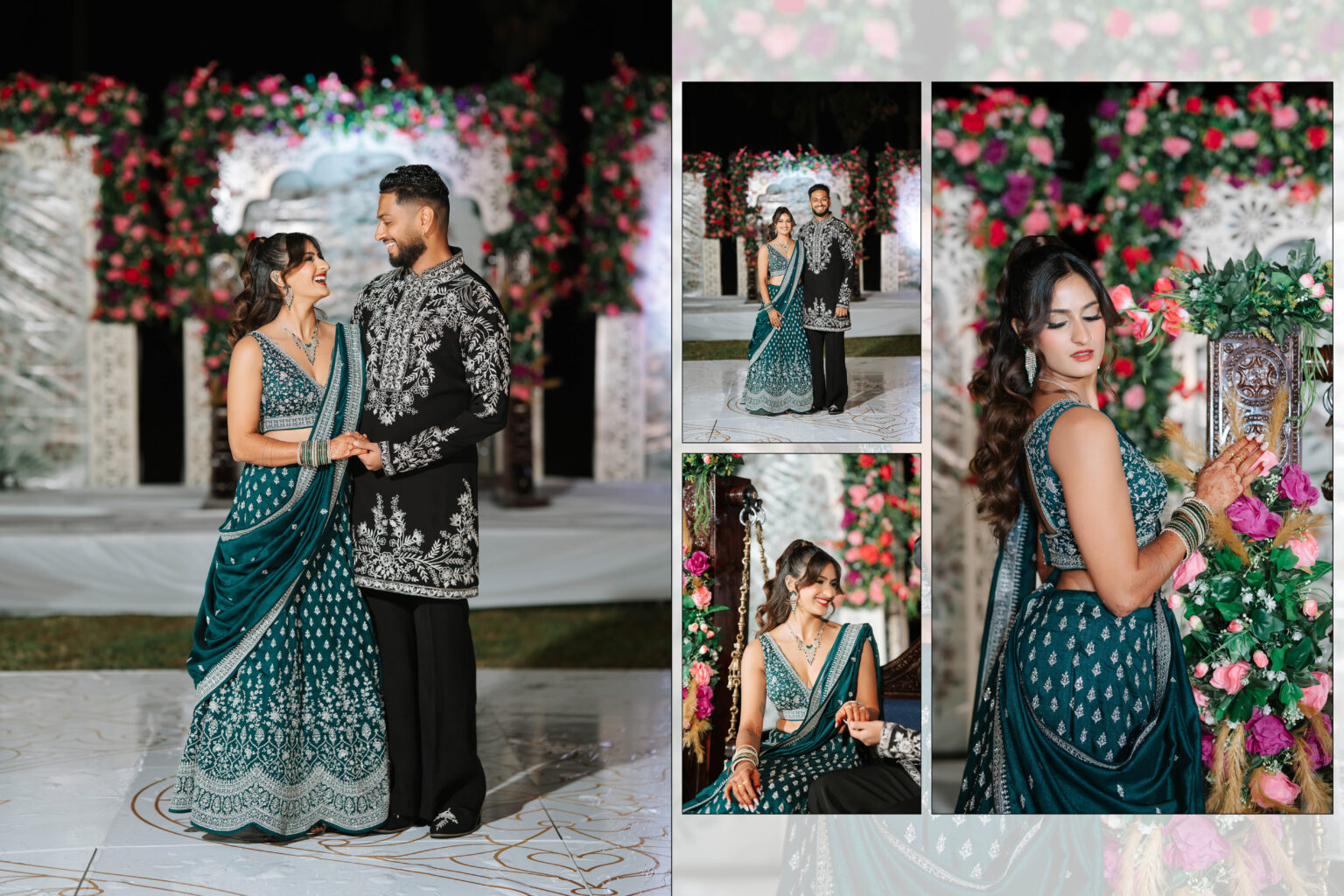
- Couple portraits in sangeet outfits, ideally outside before sunset
- The couple’s entrance, and the first look at the room from the doorway
- Every performance, with the dancers and the couple’s reactions in the same frame where possible
- Parents, grandparents and siblings watching from the front row
- Speeches, toasts and the slideshow, with reactions
- The couple’s own performance, from the front and from a wide angle
- Garba circles or the dholki group singing
- The dance floor at its fullest, with the couple in the middle
Stage and dance floor setup that photographs well
The layout of the room matters more than most couples expect. A few small choices make a big difference to what the photo and film team can see.
- Seat the couple where they can see the stage, but where we can also see them. A small sofa at the side of the dance floor works better than a table at the back of the room.
- Leave a clear path between the front row and the stage. Guests standing with phones at the edge of the floor block the view for everyone.
- Put the stage against a wall or a decor backdrop, not in front of a doorway, an exit sign or a buffet.
- Keep a gap of a few feet between the front row and the stage for the photographers to move.
- If you have a screen for the slideshow, place it where guests can see it without standing in front of the stage.
- For a garba, a balcony, a mezzanine or a step ladder at the edge of the room gives the best view of the circles.
Lighting and low-light tips for sangeet photography
Most sangeets are in dark ballrooms or outdoors after sunset, lit by the DJ. That can look magical or muddy, depending on the setup. A good photographer brings their own lights and knows how to use flash without flattening the mood, but the lighting in the room still shapes every frame.
- Ask your DJ or lighting company for a warm white wash on the stage during performances. Faces need light from the front, not only colored lights from behind.
- Use colored uplighting on the walls rather than on the dance floor. Strong red, blue or purple light on skin is very hard to correct.
- Ask for strobes, lasers and heavy haze to wait until open dancing. During performances they make faces blurry and hide the dancers.
- Keep some light on the couple’s seats so their reactions are visible.
- Ask the DJ to give the film team an audio feed for speeches and the couple’s performance. Clean sound makes the highlight film much better.
- If the sangeet is outdoors, start the first performances before it is fully dark, or plan string lights and warm spotlights on the stage.
Share the run of show
A sangeet program can have ten or more performances, and the order often changes on the night. Send your photographer and filmmaker the list of performances, who is in each one and roughly when it starts. Mark the ones that matter most, such as the grandparents’ dance or the couple’s surprise. When we know a performance is next, we can be in position before the music starts. Our Indian wedding photography shot list has more ideas for what to include.
How many hours of sangeet coverage do you need?
Most sangeets need about 3 to 5 hours of photography. That covers portraits before the event, the entrance, the performances, speeches and the first part of open dancing. A short dholki at home may need 2 hours, while a large garba with 300 guests may need the full 5. Plan the last performance to finish before the coverage ends. Our guide to coverage hours explains how to plan the full weekend.
A sample sangeet timeline
- 5:30 PM: Photo and film team arrives. Decor, stage and details in the empty room.
- About an hour before sunset: couple portraits outside, 20 to 30 minutes.
- 7:00 PM: Guests arrive, cocktails and family photos in sangeet outfits.
- 7:30 PM: Couple’s entrance, welcome speech and dinner opens.
- 8:15 PM: Performances, with the couple’s dance last or as a surprise in the middle.
- 9:30 PM: Open dancing, garba circles or dholki songs.
- 10:30 PM: Coverage ends after the first hour of the dance floor.
What to wear for sangeet photos
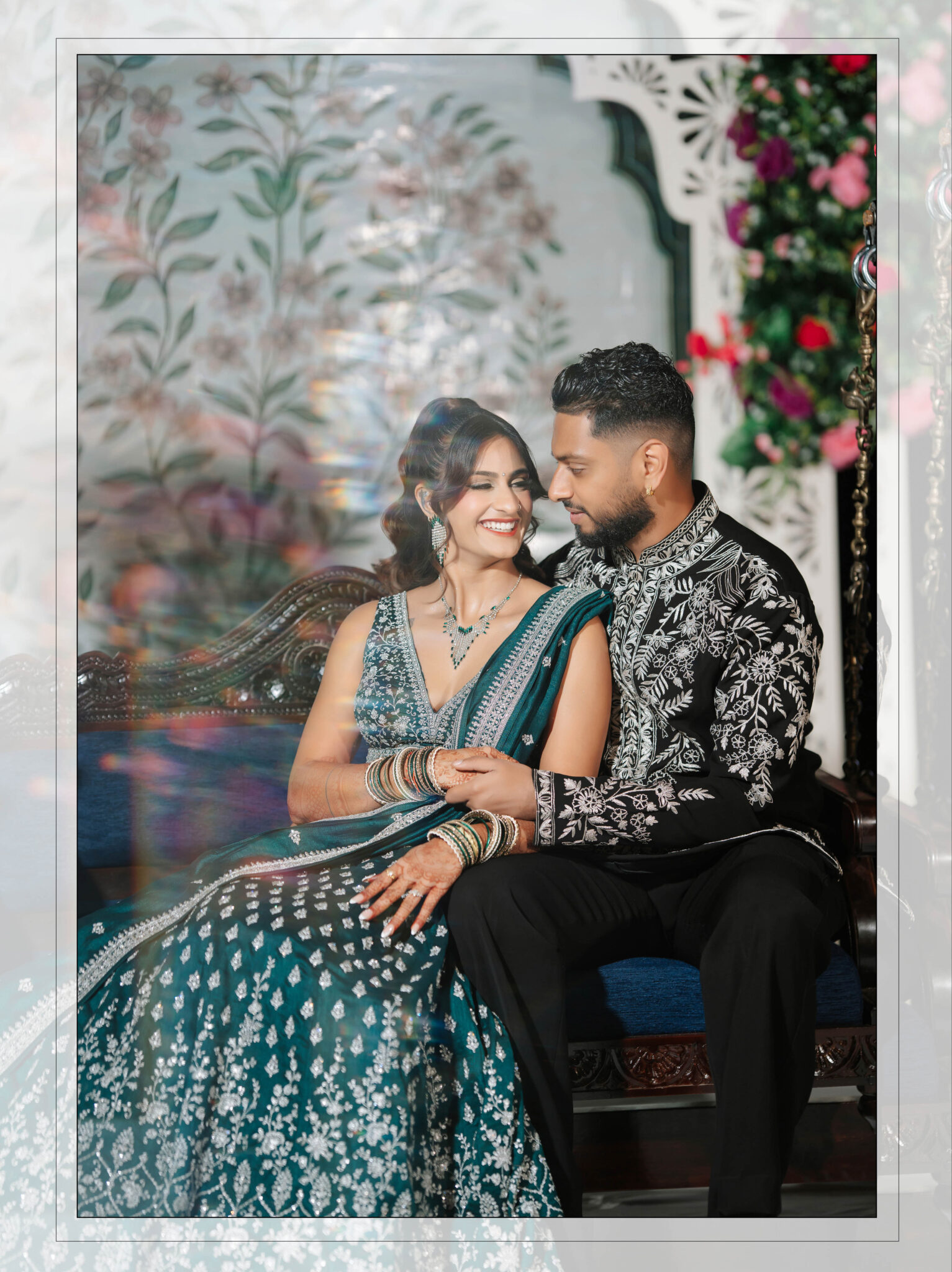
Sangeet outfits are made for movement. Lehengas with a full flare, anarkalis, shararas and lighter sherwanis or kurta sets all photograph well when you dance. Sequins and mirror work catch the light beautifully at night. Jewel tones and pastels both work, as long as the couple stands out from the stage backdrop. For a garba, chaniya cholis and kediyu outfits are traditional and look stunning in a spinning circle. Wear shoes you can dance in, and keep a pair of flats under your seat.
Real sangeets we have photographed
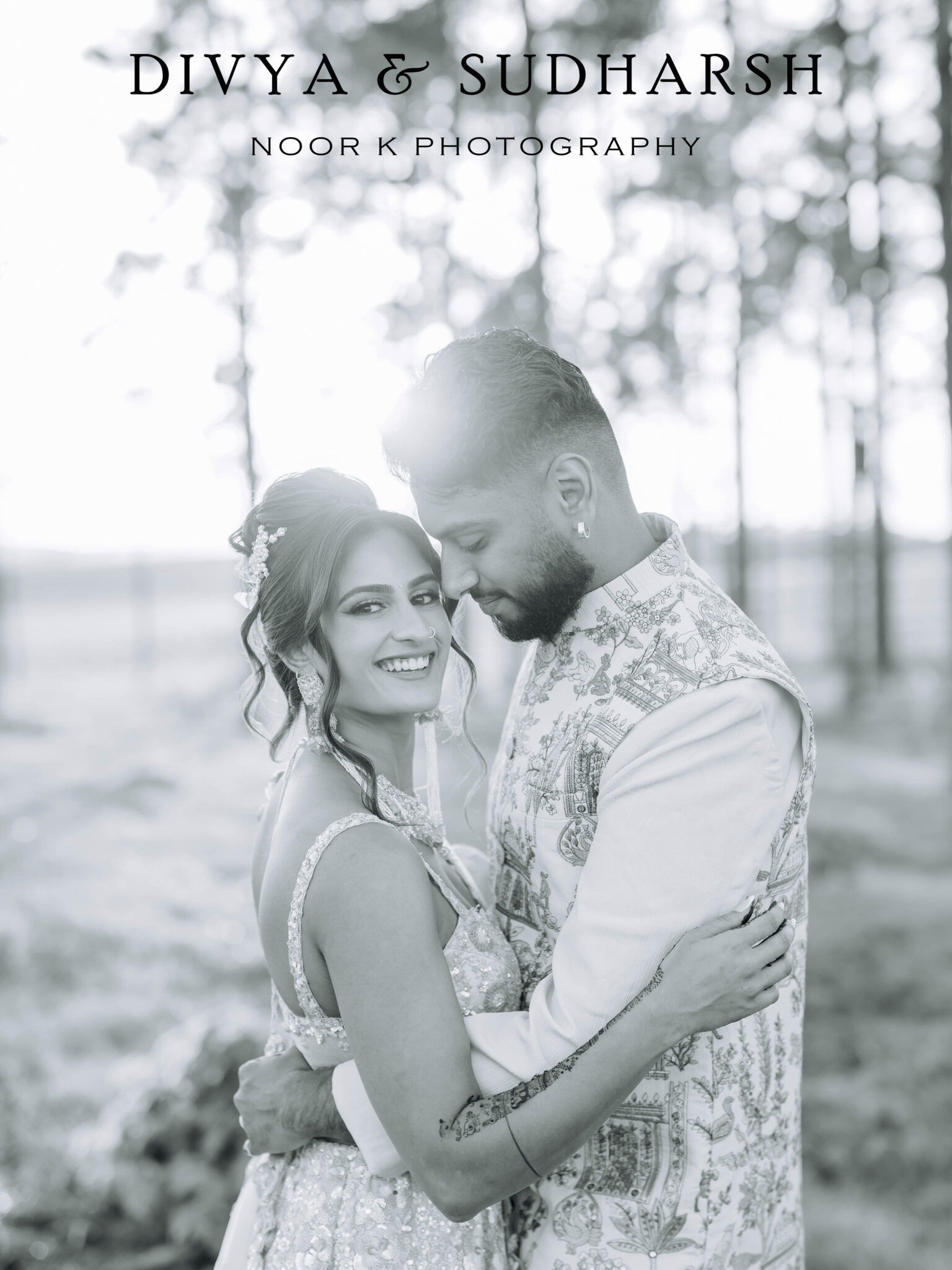
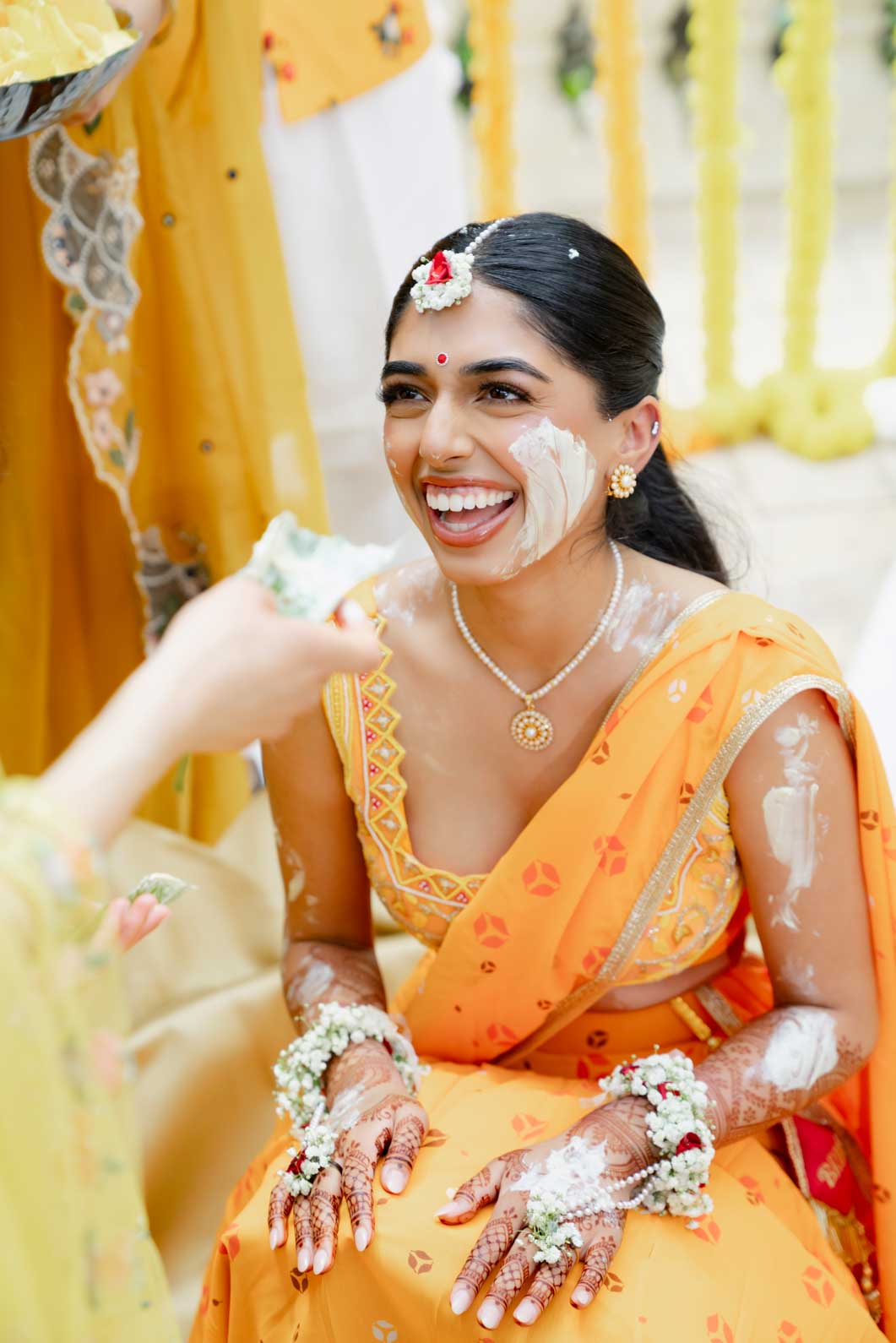
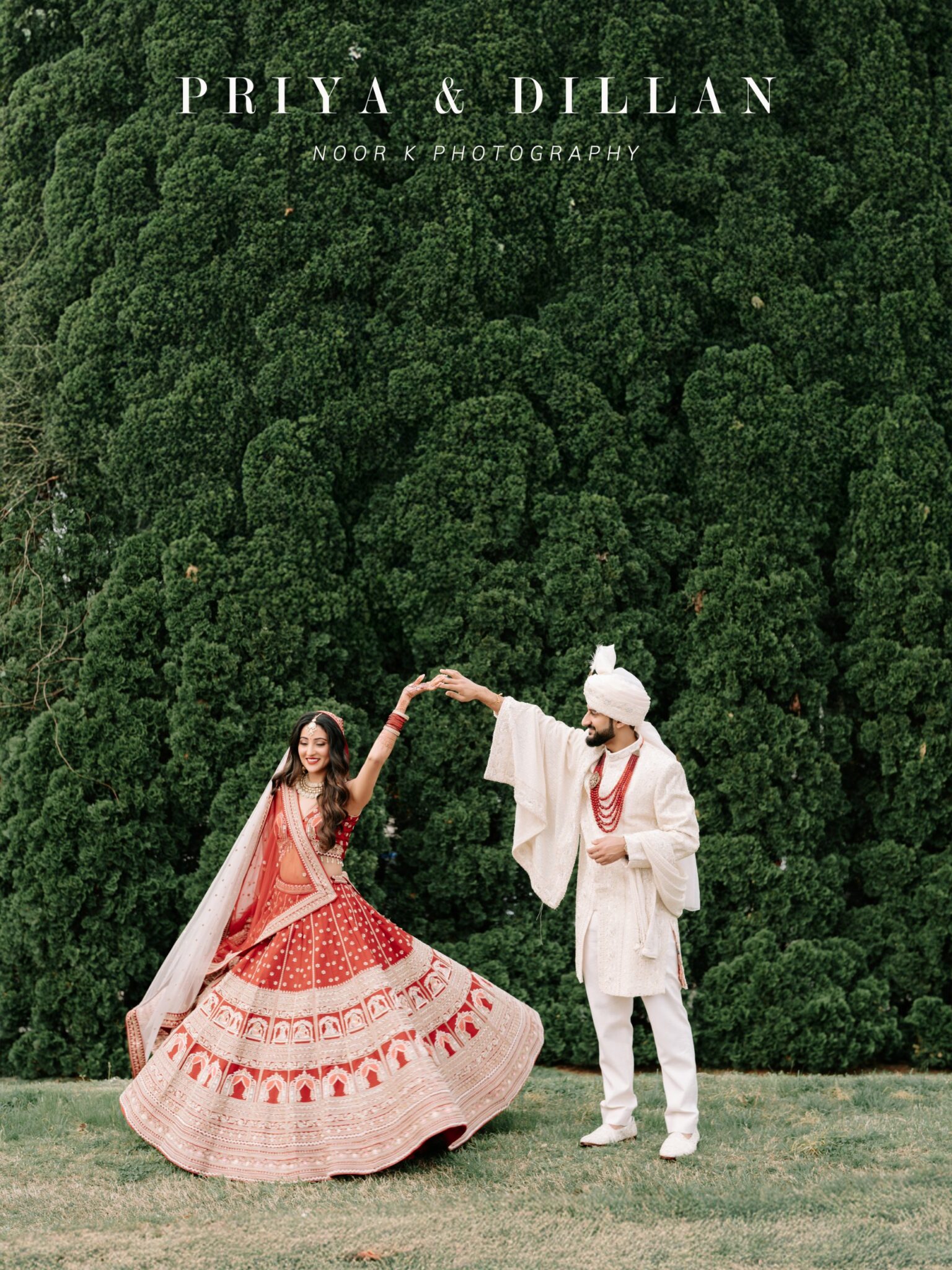
See the family performances at Divya and Sudharsh’s backyard Indian wedding in Tampa, Alisha and Kunal’s outdoor sangeet at Gaylord Palms and the pre-wedding celebrations at Priya and Dillan’s Gujarati wedding in Atlanta. For the rest of the weekend, read our haldi photography guide and baraat photography guide, or meet us as an Indian wedding photographer in Tampa.
Frequently asked questions
How long should a photographer stay at a sangeet?
Most sangeets need about 3 to 5 hours, from portraits before the event through the performances and the first part of open dancing.
What is the difference between a sangeet, garba and dholki?
All three are music nights before the wedding. A sangeet usually has performances and a DJ, a garba or raas is a Gujarati circle dance with clapping or dandiya sticks, and a dholki is a Pakistani and Muslim music night built around the dholak drum and traditional songs.
How do you photograph a sangeet in low light?
A professional photographer brings their own lights and flash. It also helps to ask the DJ for warm white light on the stage during performances and to save strobes and haze for open dancing.
Should we send the performance list to our photographer?
Yes. A list of performances, who is in each one and the rough order lets the photo and film team be in position before every dance starts.
Where should the couple sit during the sangeet?
Close to the stage and visible to the cameras, such as a sofa at the side of the dance floor, so both the performances and the couple’s reactions can be photographed.
Planning your sangeet?
We photograph and film sangeets, garbas and dholkis across Florida, in Atlanta and anywhere in the USA. Tell us your date and venue and we will reply within 24 to 48 hours.