Photography guide
Hindu Wedding Photography Guide: Every Ceremony Moment to Capture
By Noor K Photography ·
Hindu wedding photography captures a ceremony full of ritual, color and family, from the baraat and the jaimala to the pheras around the sacred fire and the vidaai at the end of the day. The ceremony usually takes place under a mandap and can last two hours or more, with many short moments that matter deeply to the family. This guide walks through each part in order, what to photograph, and how to plan so nothing is missed.
How a Hindu wedding ceremony is structured
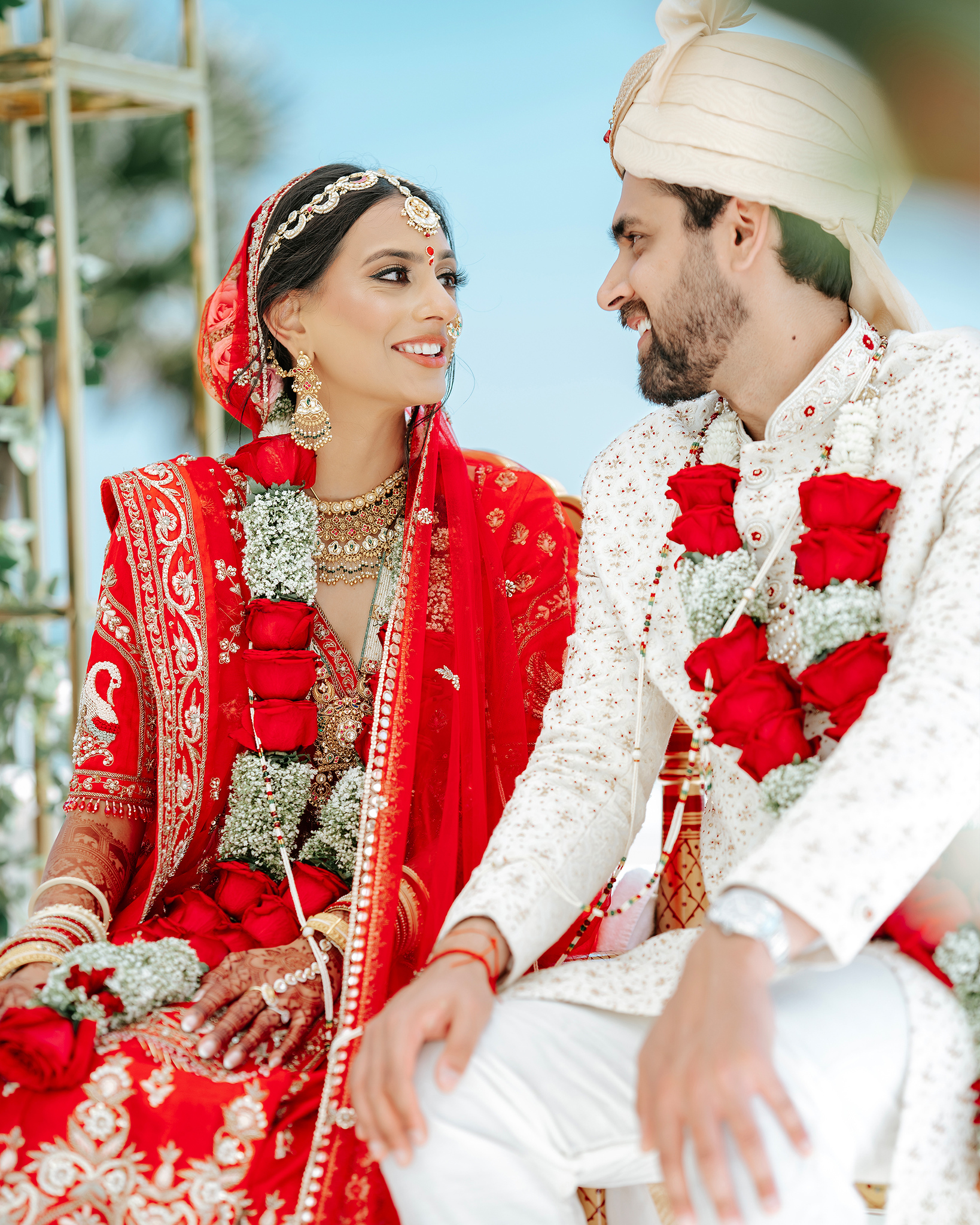
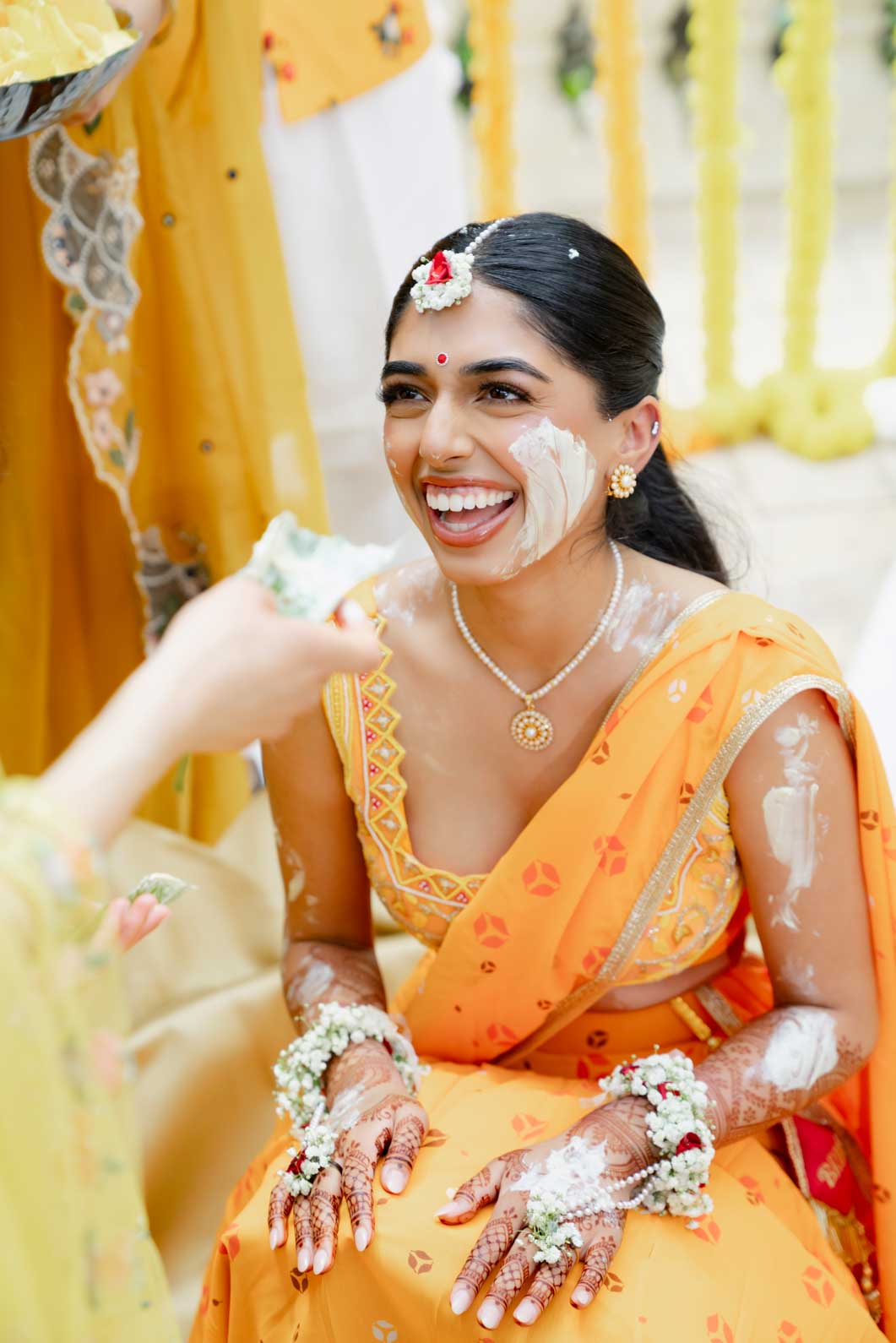
Hindu weddings differ by region and family. A Gujarati, Punjabi, Marwari, Bengali, Telugu or Tamil ceremony will each have its own names, order and rituals. Most North Indian and Gujarati ceremonies follow a similar flow: the groom’s arrival, the welcome, the garland exchange, the giving away of the bride, the vows around the fire, and the blessings. A priest (pandit or maharaj) leads the ceremony and explains each step. Ask your priest for the order of rituals a few weeks ahead and share it with your photographer. The days before usually include a pithi or haldi, a mehndi and a garba or sangeet.
Key moments in Hindu wedding photography
Below are the main moments in the order they usually happen at a North Indian or Gujarati wedding. Your family may skip some, add others or call them by different names.
Baraat
The groom arrives with his family and friends, dancing to dhol or a DJ, often on a decorated horse (ghodi), in a vintage car or on foot. Photograph the groom with his sehra, the family dancing around him, the dhol players and wide shots of the whole procession. Ask your venue about the baraat route and start time early.
Milni and welcome
At the entrance, the bride’s family welcomes the groom. In many Gujarati families, the bride’s mother performs a ponkhvu with an aarti thali, and the groom breaks a small clay pot with his foot. In Punjabi Hindu families, relatives from both sides meet in pairs for the milni. These moments are quick and crowded, so plan to have a photographer in front of the groom.
Ganesh puja and the bride’s entrance
The ceremony often begins with a Ganesh puja to remove obstacles. Then the bride enters, sometimes walked in by her maternal uncles (mamas) or brothers, or carried in a doli. In Gujarati ceremonies an antarpat, a cloth, is held between the couple until the moment they see each other. Photograph the bride’s entrance from the front, and the groom’s face when he first sees her.
Jaimala or varmala
The bride and groom exchange flower garlands. Friends often lift the groom or bride to make it harder for the other to place the garland, which gives some of the most fun photos of the day. A second angle on the guests’ reactions is worth having.
Kanyadaan
The bride’s parents place her hand in the groom’s hand and give their blessing. It is one of the most emotional moments of the ceremony. Photograph the hands, the parents’ faces and a wider frame that shows all four people.
Granthi bandhan, hasta milap and the sacred fire
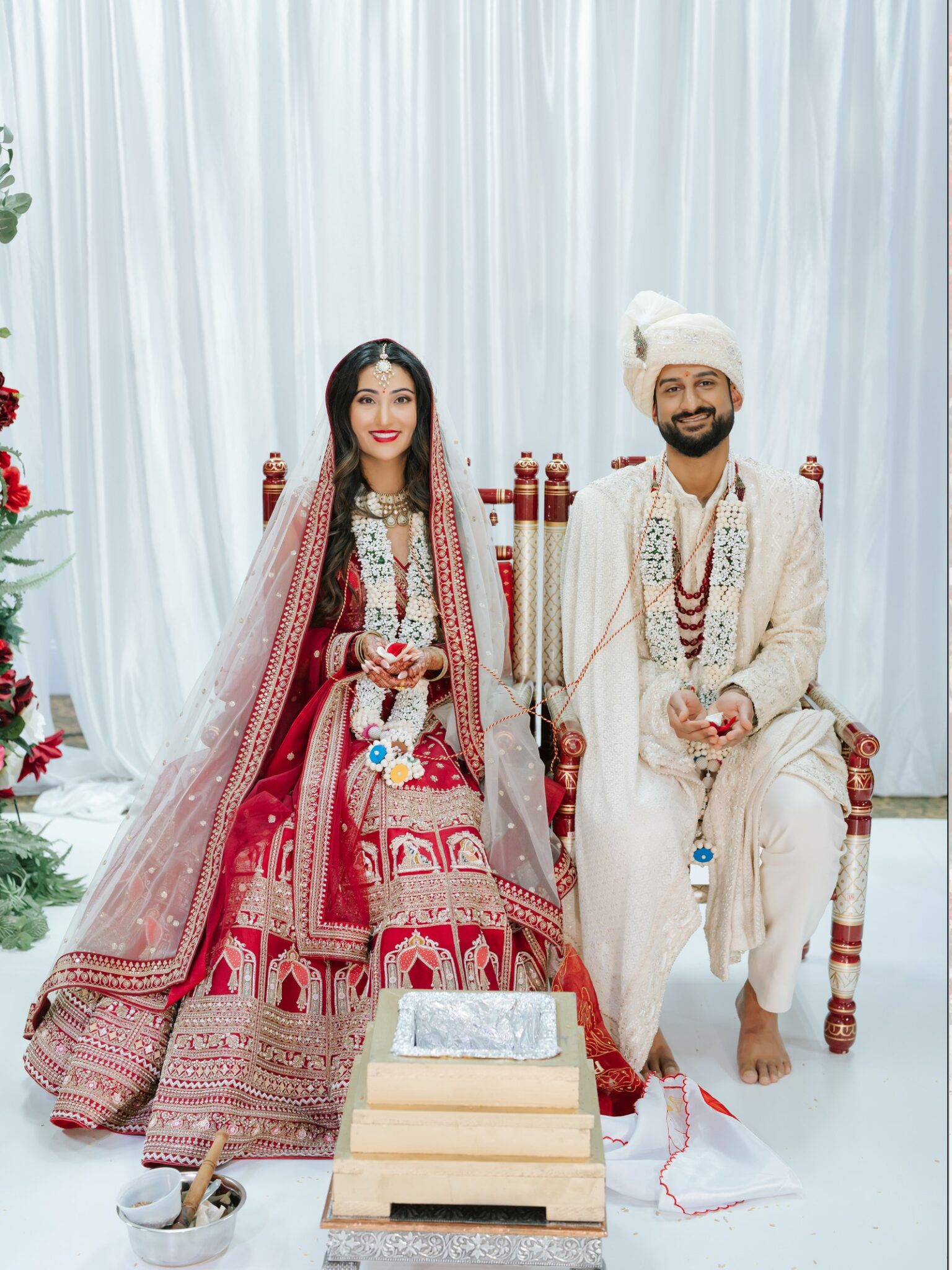
The couple’s garments are tied together in a knot (granthi bandhan or gath bandhan), and their hands are joined. The priest lights the agni, the sacred fire, which is the witness to the marriage. Smoke and firelight make beautiful images, so tell your venue early that there will be a small fire, and ask about any rules.
Mangal phera and saptapadi
The couple walks around the fire while the priest recites the vows. Gujarati weddings usually have four mangal pheras, with the bride and groom taking turns leading. Many North Indian weddings have seven pheras. In the saptapadi, the seven steps, the couple takes seven steps together, each one for a promise of their married life. In some families the bride touches a small mound of rice or a betel nut with her toe at each step. Photograph each round from a different angle, and keep one wide shot that shows the mandap and the guests.
Sindoor and mangalsutra
The groom places sindoor in the parting of the bride’s hair and ties the mangalsutra around her neck. These are short, close moments. A photographer should be ready in front of the couple, with a second angle on the parents’ reactions. In South Indian ceremonies, tying the thaali or mangalsutra is the central moment of the wedding.
Ashirwad, kansar and games
Elders bless the couple, often showering them with rice and flower petals. Gujarati families may have the kansar, where the couple feeds each other sweets. Games like finding the ring in a bowl of milk, and the juta chupai, where the bride’s sisters hide the groom’s shoes, give lots of laughter and candids.
Vidaai
At the vidaai the bride leaves her family home, often throwing rice over her shoulder as a blessing for her parents. It is the most emotional moment of the day for many families. Plan it in good light, or make sure the exit is well lit for evening send-offs.
Regional differences to tell your photographer about
- Gujarati: ponkhvu, antarpat, madhuparka, four mangal pheras and kansar.
- Punjabi Hindu: chooda ceremony in the morning, milni, and seven pheras.
- Marwari and Rajasthani: elaborate baraat and, in many families, the groom’s toran ritual at the entrance.
- Bengali: the bride carried on a wooden seat (piri), the shubho drishti exchange of glances, and sindoor daan.
- Telugu, Tamil and other South Indian: an early morning muhurtham, the thaali tying, and rituals like the jeelakarra bellam in Telugu weddings.
Every family adds its own customs, so the best plan is a written order of rituals from your priest, with a note on which moments matter most to you.
Planning tips for Hindu wedding photos
- Ask your priest for the order of rituals and share it with your photographer and planner.
- Ask the priest to leave space around the mandap so the team can move without blocking guests.
- Choose a mandap with open sides and enough light. Very dark backdrops and heavy draping make faces hard to light.
- Confirm the venue allows a small fire for the agni, indoors or outdoors.
- If you have a muhurat time, build the day backwards from it and add buffer time for the baraat.
- Plan family portraits right after the ceremony while everyone is near the mandap.
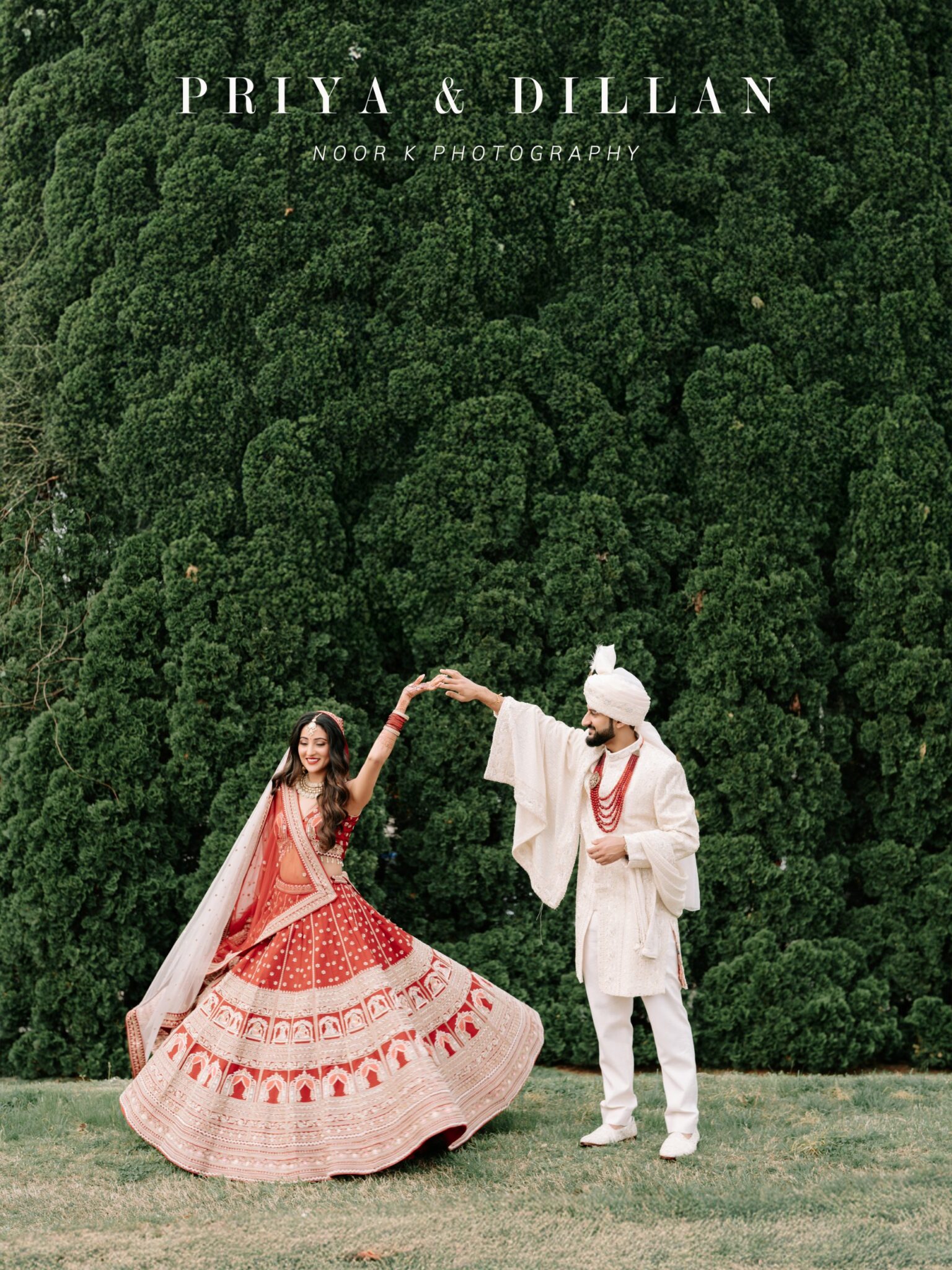
See real Hindu weddings we have photographed: Nirali and Dev’s oceanfront Gujarati wedding in Daytona Beach, Alisha and Kunal’s Gujarati wedding at Gaylord Palms and Priya and Dillan’s Gujarati wedding in Atlanta. For the full weekend, use our sample wedding photography timeline and shot list.
Frequently asked questions
How long is a Hindu wedding ceremony?
Most Hindu ceremonies last about 1.5 to 2.5 hours, depending on the region, the priest and the rituals your family includes. Add time before it for the baraat and welcome.
What are the most important Hindu wedding photos?
The baraat, the bride’s entrance, the jaimala, the kanyadaan, the pheras around the fire, the sindoor and mangalsutra, family blessings and the vidaai.
Is it four or seven pheras?
It depends on the tradition. Gujarati weddings usually have four mangal pheras, while many North Indian weddings have seven. The saptapadi, the seven steps, is part of many ceremonies.
Can you have the sacred fire at a Florida hotel?
Many Florida venues allow a small fire for the agni with conditions. Confirm the rules with your venue’s event team early in planning.
Do you photograph South Indian Hindu weddings?
Yes. We photograph Hindu weddings from many regions, including Gujarati, Punjabi and South Indian ceremonies, across Florida, in Atlanta and anywhere in the USA.
Planning your Hindu wedding?
We photograph and film Hindu weddings across Florida and anywhere in the USA, from the pithi and garba to the pheras and vidaai. Tell us your dates and venue and we will reply within 24 to 48 hours.