Photography guide
Haldi Photography Guide: What to Capture at a Haldi, Pithi or Maiyan
By Noor K Photography ·
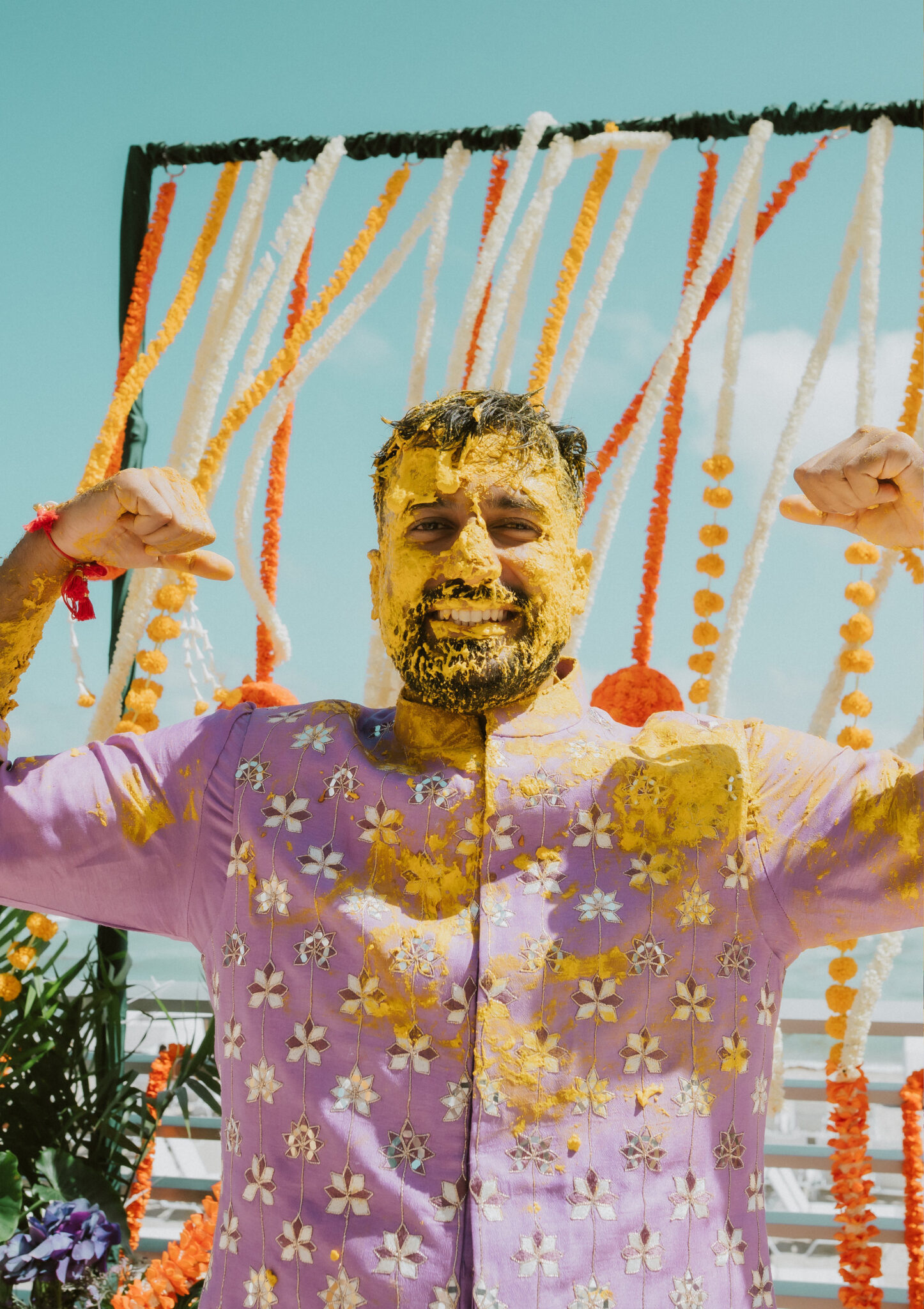
Haldi photography captures the bright, messy, laughing ritual where family covers the bride and groom in a turmeric paste before the wedding. Depending on your family it may be called the haldi, pithi, maiyan, vatna or ubtan, but the feeling is the same: yellow everywhere, elders giving blessings and cousins who cannot wait to join in. This guide explains what happens, which moments to plan for, what to wear, how to protect outfits and venues from the mess, and when the light is best in Florida.
What is a haldi ceremony?
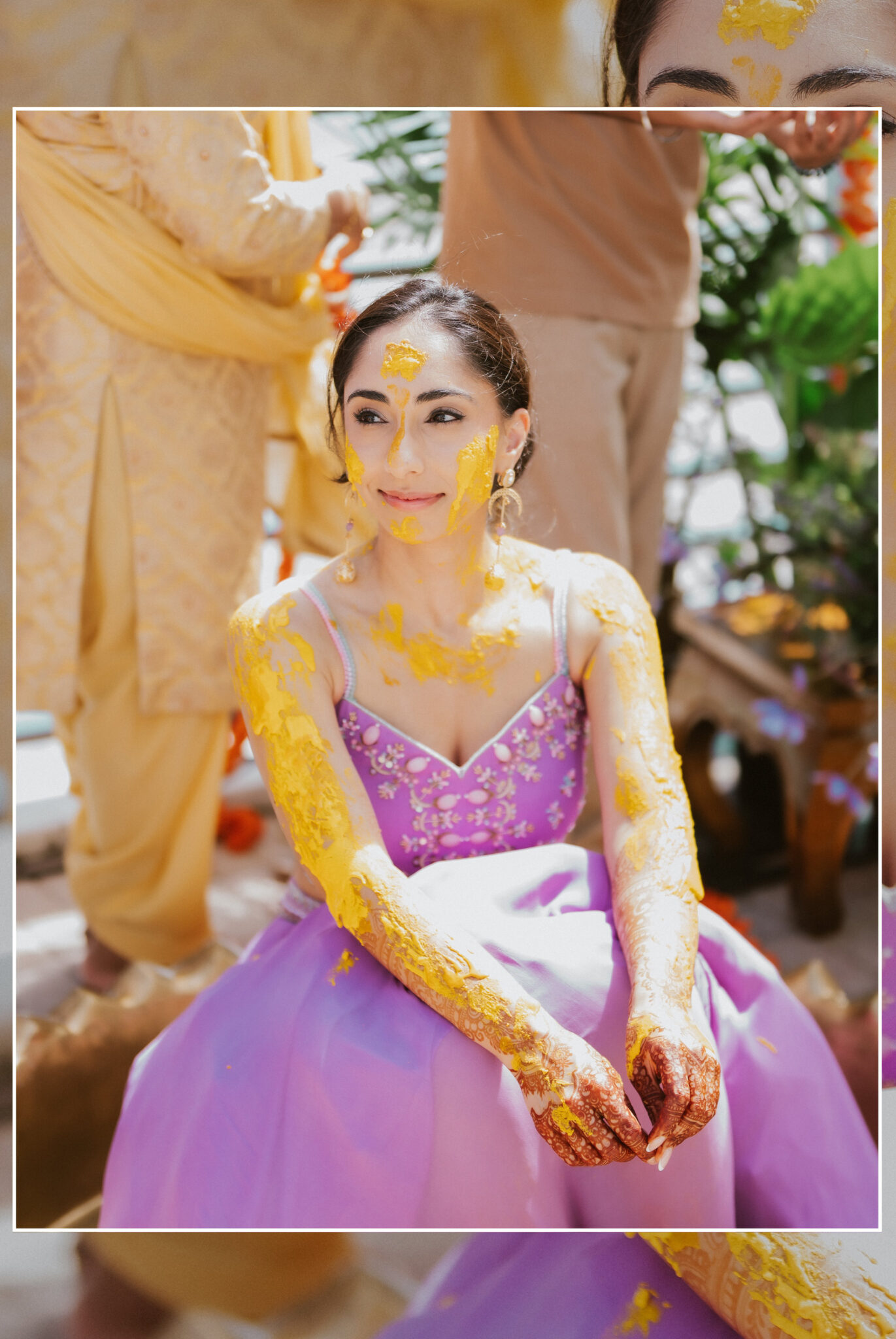
A haldi is a pre-wedding ritual where close family apply a paste made mainly of turmeric to the couple’s face, arms, hands and feet. The paste is usually mixed with gram flour (besan), sandalwood, rose water, oil, milk or yogurt, and every family has its own recipe. Turmeric is a blessing for good luck and protection, and it is also an old beauty ritual meant to give the couple a glow before the wedding.
It usually happens the morning of the wedding or a day or two before. In many families the bride and groom have separate haldis at their own homes or suites, so the two sides are photographed at different times. Other couples now hold one joint haldi with both families, which makes the planning (and the photography) much simpler.
Haldi, pithi, maiyan and ubtan: the names and how they differ
- Haldi: the name used by most North Indian and many Hindu families. Often followed by a playful water or flower shower.
- Pithi: the Gujarati and Marwari name. The pithi is often combined with a small puja, and the bride may sit on a low stool while family take turns.
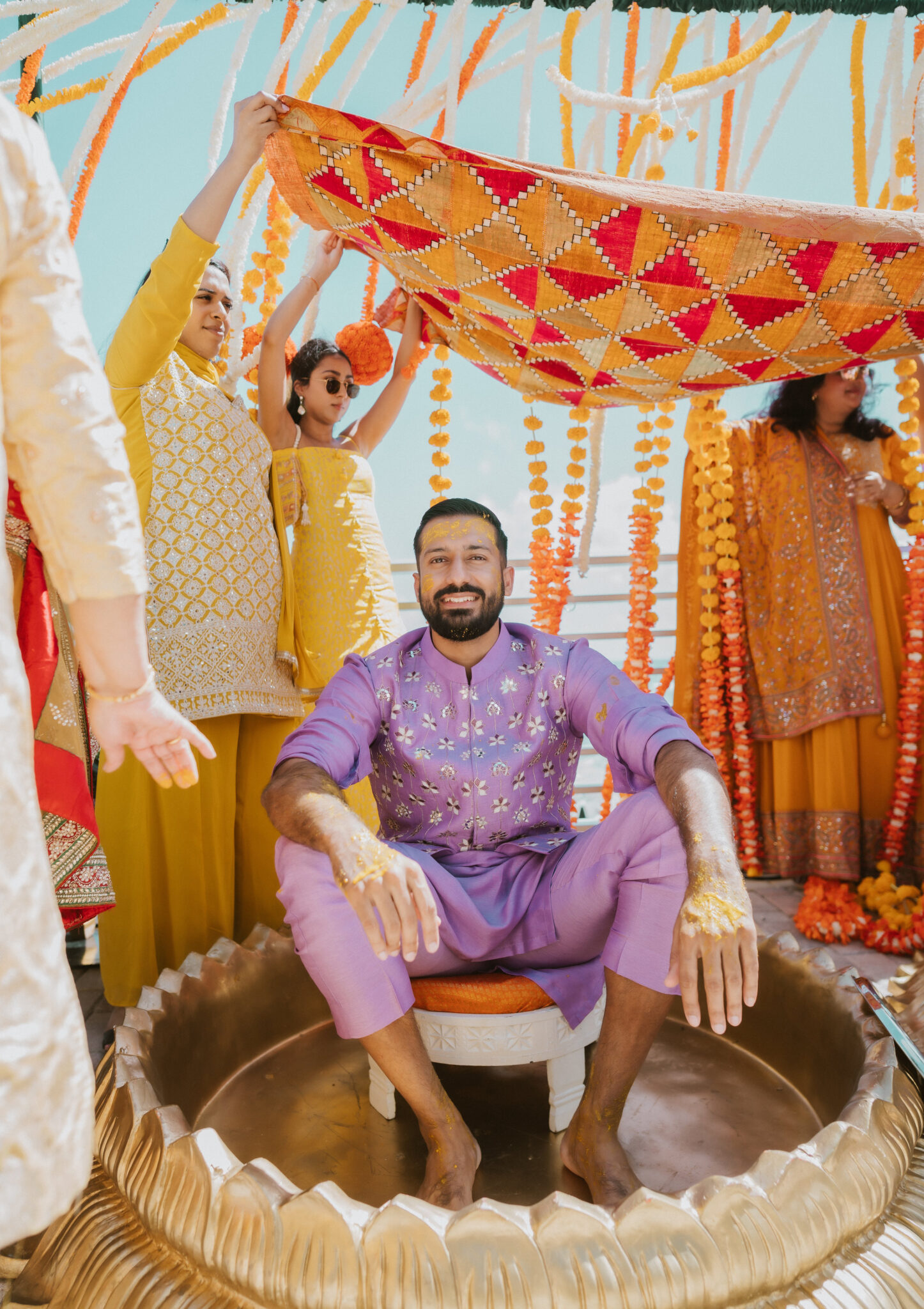
- Maiyan or vatna: the Punjabi and Sikh name. Relatives may hold a red phulkari or cloth over the bride or groom while the paste is applied, with songs and lots of teasing. The choora ceremony, where the bride receives her red and white bangles, is sometimes held the same day.
- Ubtan or mayun: the name used in many Pakistani and Muslim families. The bride traditionally wears yellow, and the ubtan is often part of a dholki or mehndi evening rather than a separate morning event.
- Gaye holud: the Bengali version, where turmeric is first applied to the groom and then taken to the bride’s family.
Tell your photographer which version your family follows and who does what. A Gujarati pithi with a priest moves differently from a Punjabi maiyan in a backyard, and knowing the order lets us stand in the right place before each moment happens.
Haldi photos to plan for
- The setup before anyone arrives: the seat or stool, marigolds, bowls of paste, umbrellas, phulkari and any props
- The couple’s clean, bright outfit and jewelry before the paste goes on
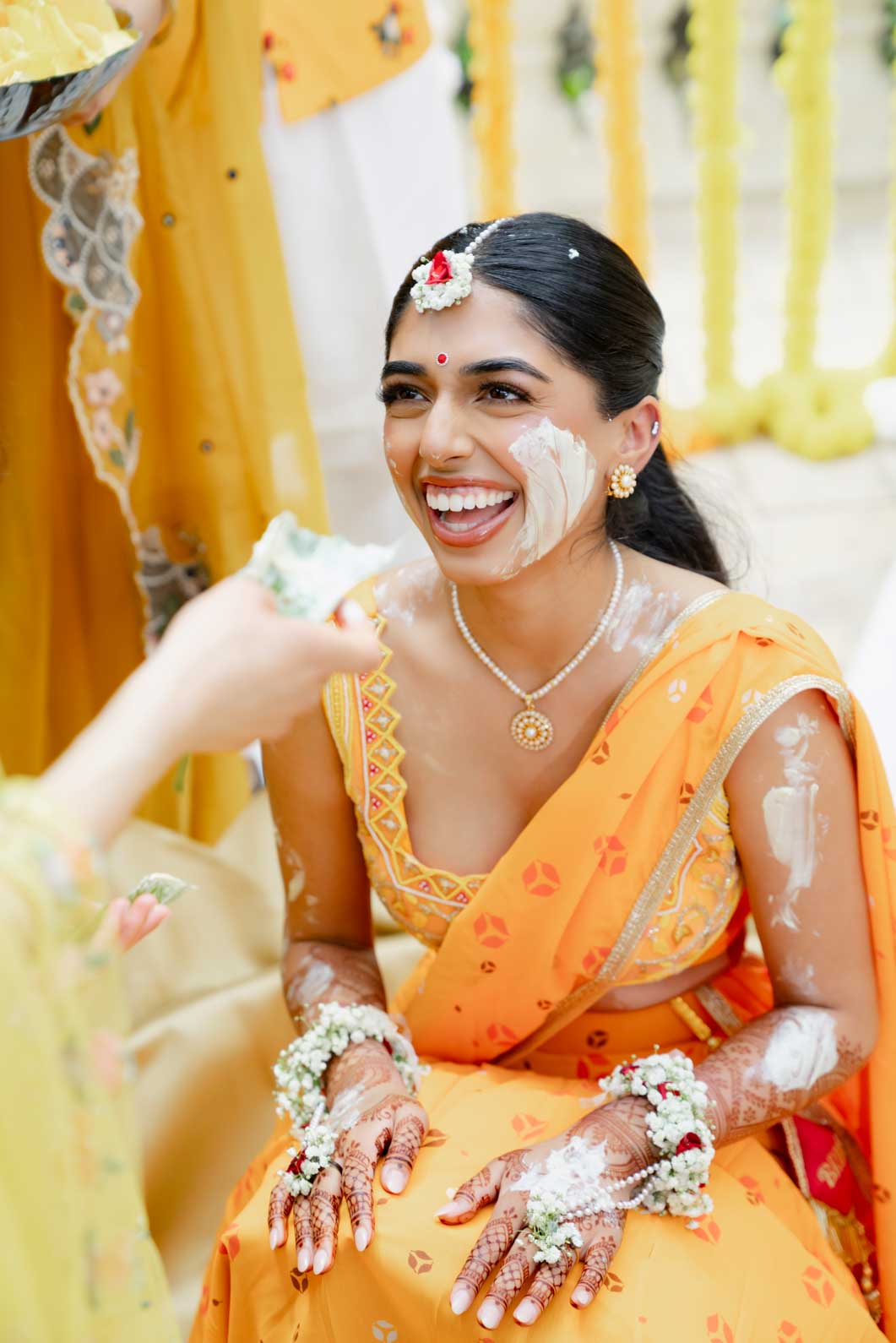
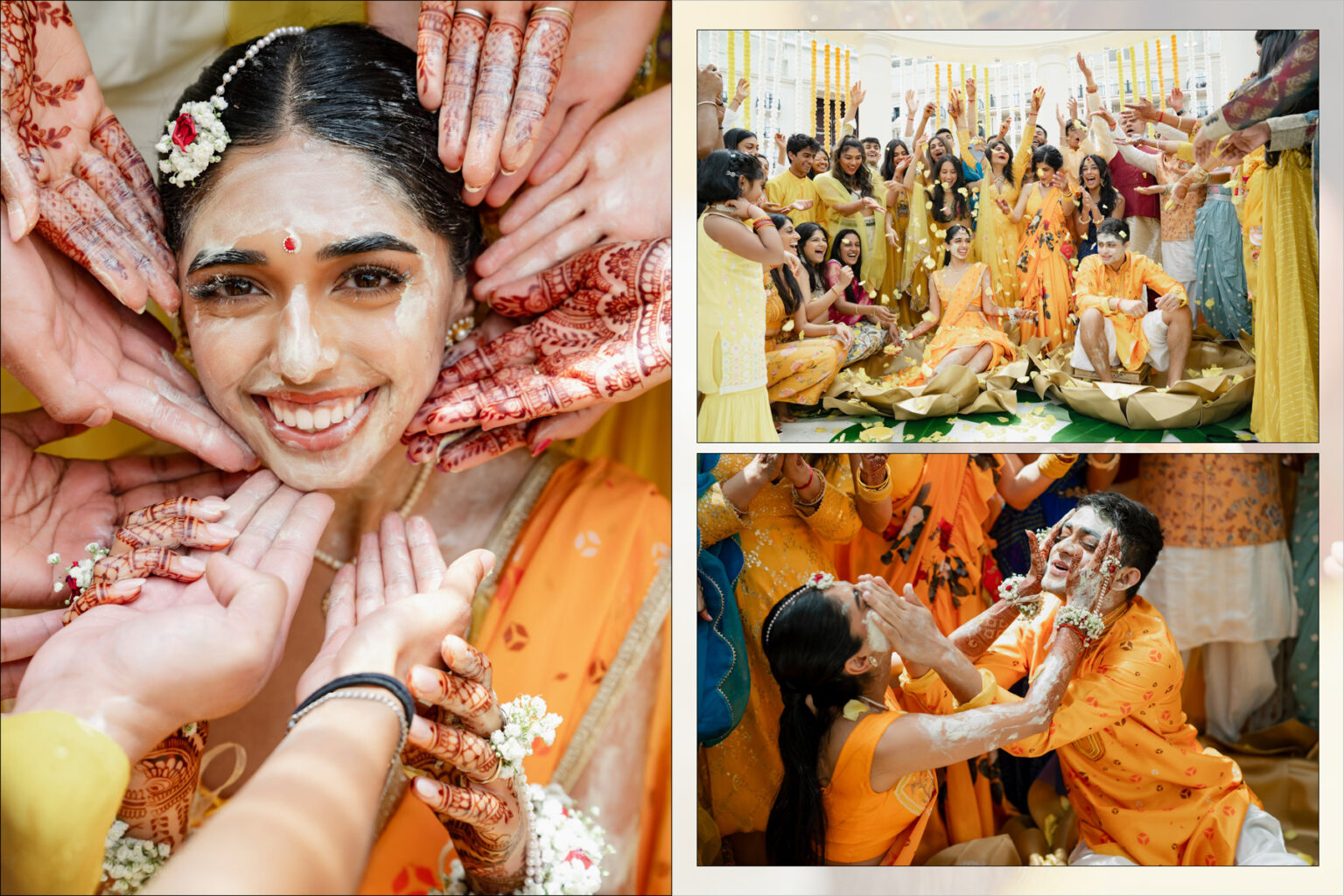
- Parents and grandparents applying the first touch of haldi, and their faces as they do it
- Siblings and cousins taking their turns, from gentle to not-so-gentle
- Close-ups of turmeric on hands, cheeks and feet
- Songs, dancing and the dhol or dholak if your family has music
- Reactions from the couple, especially the laughing ones
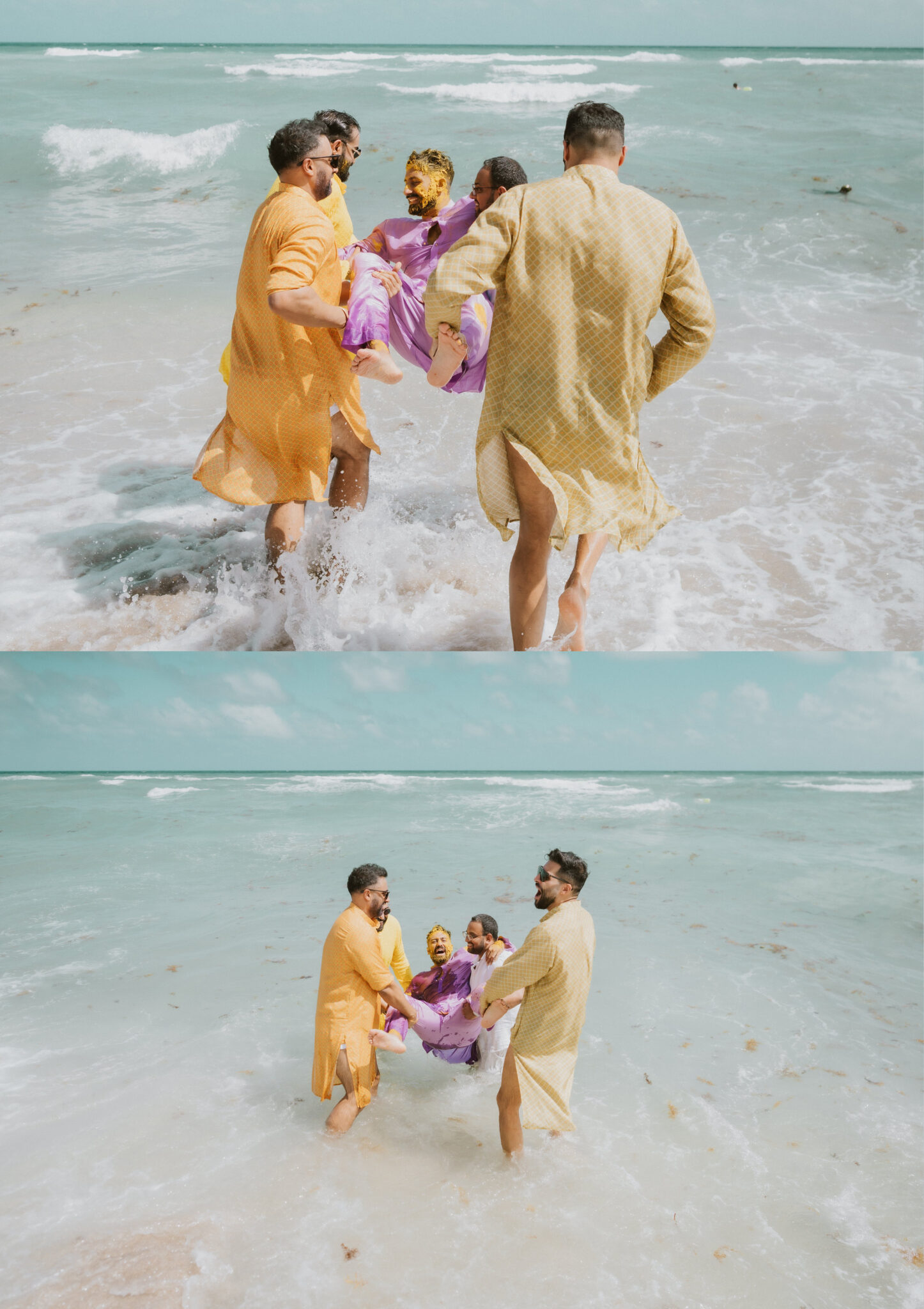
- The water, flower or pool moment at the end, if you plan one
- A few couple portraits afterwards, if you share a joint haldi
How to mess-proof a haldi
The best haldi photos come from families who are not afraid of the mess. A little planning means nobody worries about it on the day.
- Turmeric stains. Wear outfits you are happy to keep only for the haldi, and tell guests the same on the invitation.
- Hold the haldi outdoors or on a covered terrace, lawn or patio where staining is not a problem. Ask your venue about its rules first. Many hotels do not allow turmeric in ballrooms or near pools.
- Lay down drop cloths or outdoor rugs under the seating area, and keep towels and wet wipes close.
- Plan time to shower after the haldi. Two hours is comfortable if another event follows the same day.
- Keep jewelry simple. Fresh flower jewelry looks lovely in photos and does not matter if it gets stained.
- Phones get messy too. Ask one person to hold the couple’s phones and bags.
- Our team protects its own cameras, but please let us know in advance if you plan a water fight or a jump into the pool, so we can stand in the right spot for it.
What to wear for haldi photos
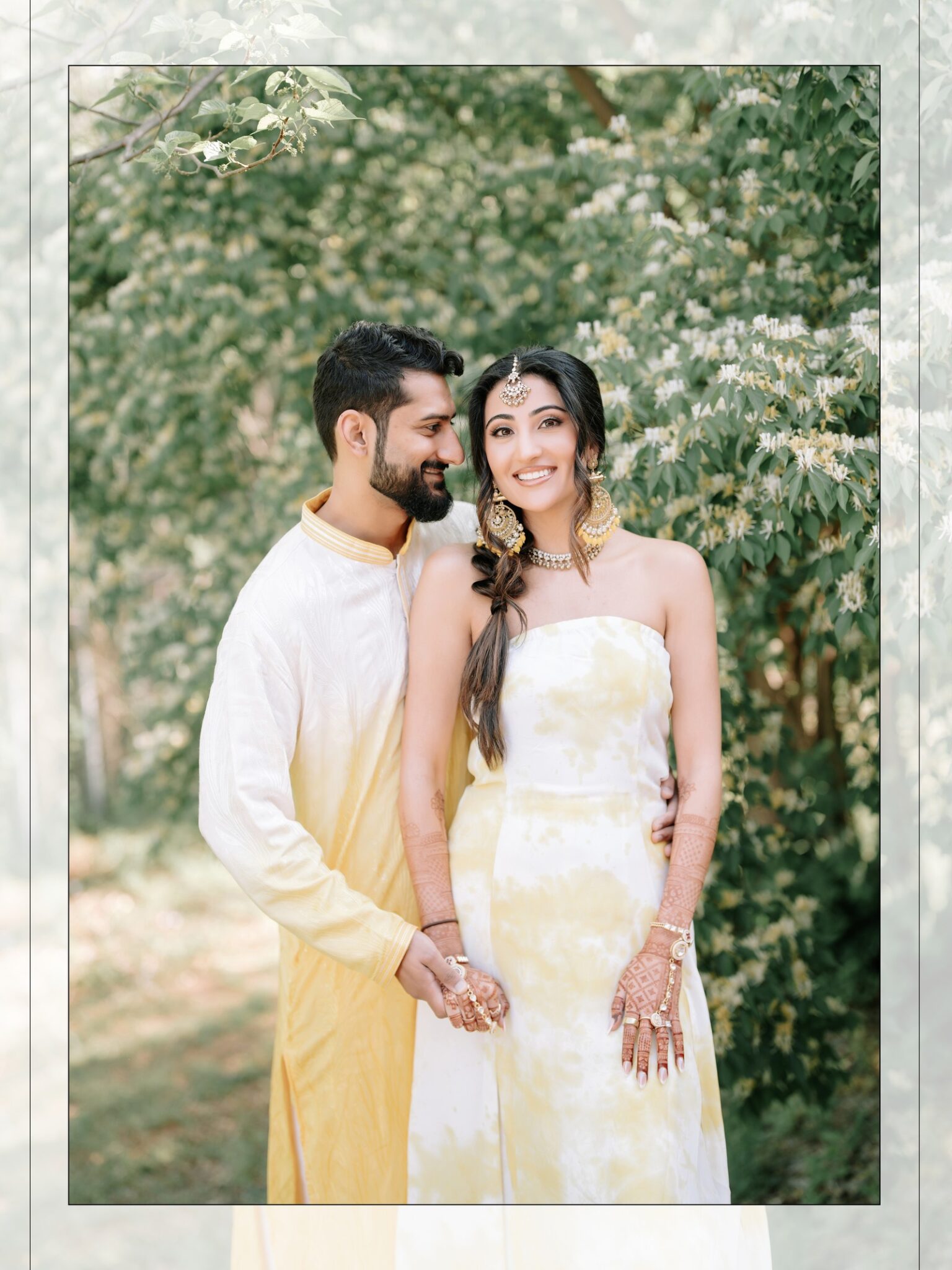
Yellow is the classic color, but it is not the only option. White, ivory, light green, lilac and soft pink all look beautiful with turmeric on them, and they stand out against yellow decor. Simple cotton or light chiffon outfits are cooler in the Florida heat and easier to wash than heavy embroidery. Many couples coordinate: the bride in yellow and the groom in white, or the whole family in yellow with the couple in a contrasting color so they stand out in group shots.
Best light and timing for haldi photography
Turmeric looks best in soft, bright daylight. A morning haldi is ideal in Florida: the light is gentle, it is cooler, and the afternoon storms of the summer months have not started yet. Open shade under trees, a tent or a covered terrace gives even light on faces. Direct midday sun makes deep shadows under the eyes and turns yellow outfits harsh.
- Plan a morning start, roughly 9 to 11 AM, if the haldi is outdoors.
- If the haldi is in the late afternoon, start at least an hour before sunset so the light stays warm.
- Indoors, choose a room with big windows and switch off mixed colored lights where you can.
- Keep a covered backup space if the haldi is outside, especially from June to September.
How many hours of haldi coverage do you need?
Most haldis need about 1.5 to 2.5 hours of photography. They move fast, and the best moments usually happen in the first hour. If the bride and groom have separate haldis at different times, plan coverage for both, or ask for a second photographer. See how the haldi fits into the full weekend in our Indian wedding photography timeline and our guide to how many hours of photography you need.
A sample morning haldi timeline
- 9:00 AM: Photo and film team arrives. Decor, setup and the couple’s outfits before the paste.
- 9:20 AM: Short portraits of the couple, or the bride and groom separately, while they are still clean.
- 9:30 AM: Haldi starts with parents and grandparents, then siblings, cousins and friends.
- 10:15 AM: Music, dancing and the water or flower shower.
- 10:45 AM: Family photos in haldi outfits, then the couple heads off to shower.
Real haldis we have photographed
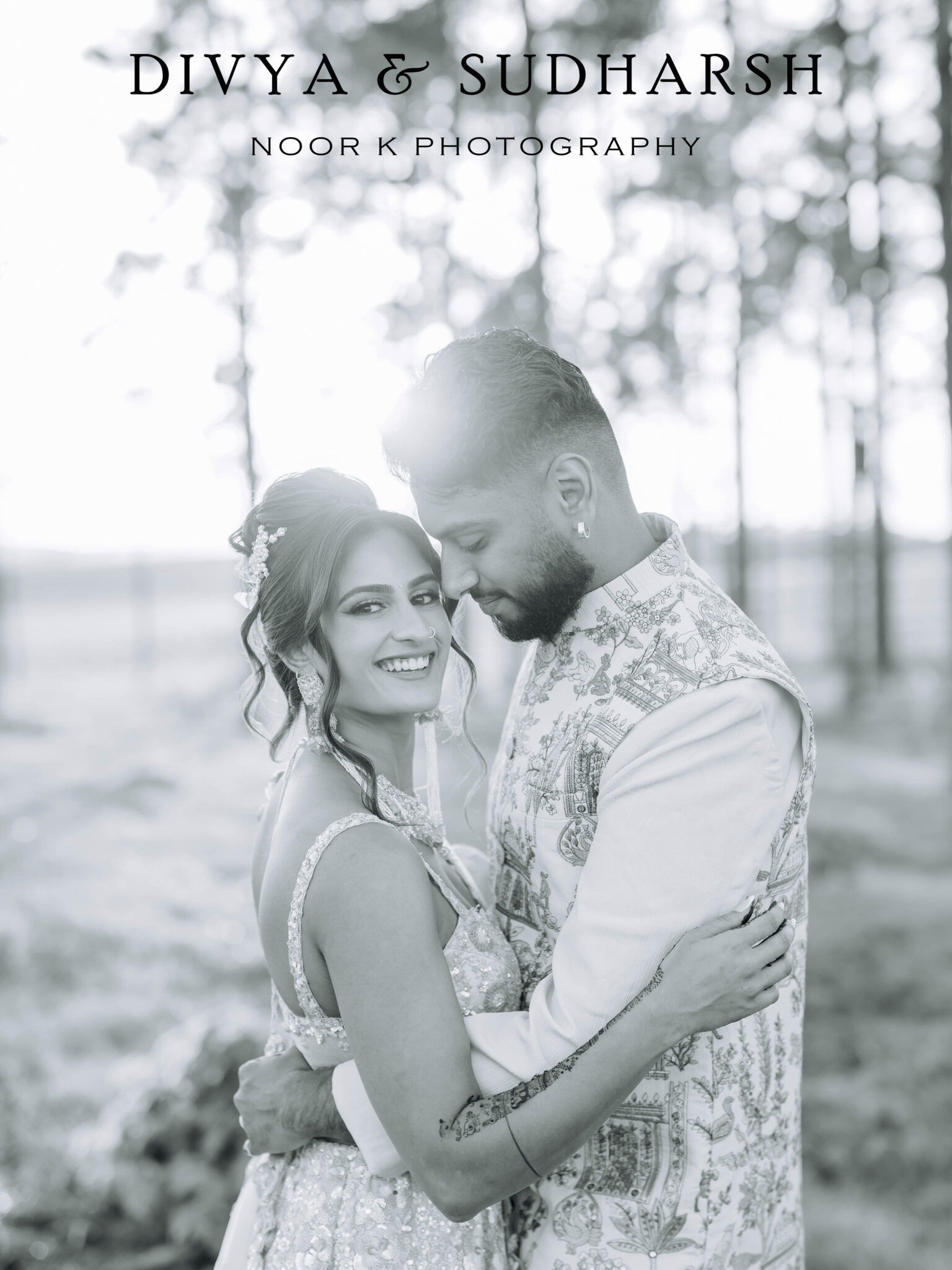
For ideas, see Noor and Gagan’s beach haldi and maiyan at The Diplomat Beach Resort, which ended with a run into the waves, Alisha and Kunal’s haldi morning at Gaylord Palms and the pithi at Divya and Sudharsh’s backyard Indian wedding in Tampa. Planning the rest of your pre-wedding events? Read our mehndi photography guide and sangeet photography guide, or see our work as an Indian wedding photographer in Miami.
Frequently asked questions
What is the difference between haldi, pithi and maiyan?
They are regional names for the same idea: family applying a turmeric paste to the couple before the wedding. Haldi is used by many North Indian families, pithi by Gujarati and Marwari families, maiyan or vatna by Punjabi and Sikh families, and ubtan or mayun by many Pakistani and Muslim families.
How long should a photographer stay at a haldi?
About 1.5 to 2.5 hours for most haldis. If the bride and groom have separate haldis at different times, plan coverage for both or add a second photographer.
What should I wear to my haldi?
Something you do not mind staining. Yellow is classic, but white, ivory, light green, lilac and pink also photograph beautifully with turmeric. Light cotton or chiffon is cooler in Florida.
Does turmeric stain clothes and skin?
Yes, turmeric can stain fabric and leave a yellow tint on skin for a short time. Wear haldi-only outfits, lay down cloths, and plan time to shower before the next event.
What is the best time of day for a haldi in Florida?
Mid-morning, in open shade. It is cooler, the light is soft, and it is usually before the afternoon storms that are common in the summer months.
Can we hold the haldi at our hotel?
Often yes, on a lawn, terrace or patio, but ask your venue first. Many hotels restrict turmeric in ballrooms and near pools because of staining.
Planning your haldi?
We photograph and film haldis, pithis and maiyans across Florida and anywhere in the USA, from beach terraces to backyards. Tell us your date and venue and we will reply within 24 to 48 hours.