Planning guide
Indian Wedding Photography Shot List: Must-Have Photos for Every Event
By Noor K Photography ·
An Indian wedding photography shot list is a simple checklist of the moments, details and family groups you want captured at each event of your wedding. A South Asian wedding has many rituals and a lot of family, so a clear list helps your photographer, videographer and planner make sure nothing important is missed. Below is our event-by-event list, plus a family portrait list you can copy and fill in with names.
How to use this Indian wedding photography shot list
You do not need to send your photographer every line. An experienced team already shoots the standard moments. What helps most is the personal part: the people who matter, the rituals your family does differently, the heirloom jewelry, the grandparent who should be in every group. Mark those, add names, and share the list a few weeks before the wedding.
Getting ready
- Bridal outfit hanging or laid out, with the dupatta, shoes and clutch
- Jewelry: maang tikka, nath, jhumkas, haath phool, chura or bangles, kaleere
- Invitation suite, rings and any family heirlooms
- Mother, sisters or friends helping with the dupatta and jewelry
- Bride’s finished look: full length, close-up and a quiet window portrait
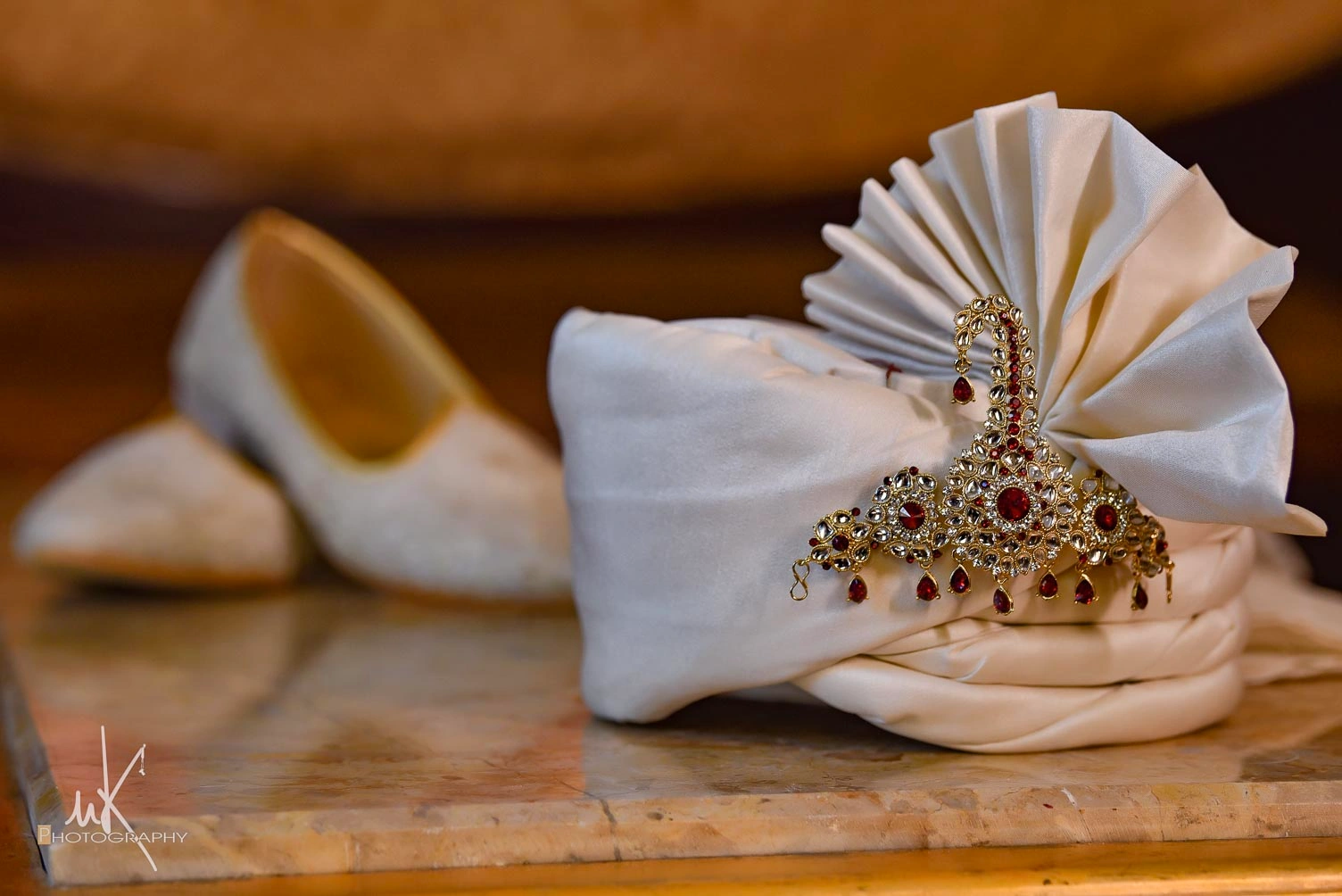
- Groom’s sherwani, mojari, safa or turban, sehra and kalgi
- Turban or safa tying with father, uncles or brothers
- Groom with his parents before leaving for the baraat
Mehndi
- Stage, swing or seating, florals, marigolds and decor before guests arrive
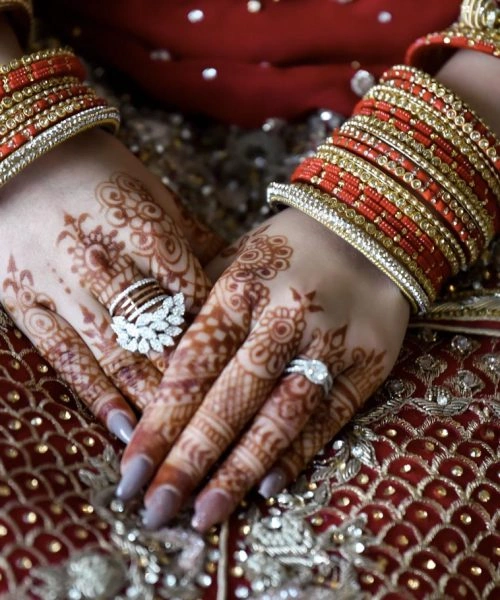
- Henna artist at work, and the finished design on hands and feet
- The partner’s name or initials hidden in the mehndi
- Bride with her closest friends and cousins
- Dholki, songs and dance performances
- Couple portraits in the last soft light
Haldi or pithi
- Bowl of turmeric paste, flowers and the setup
- Parents and elders applying haldi first
- Laughter, mess and candid reactions
- Wide shot of the whole family around the couple
- Final portrait of the couple or bride covered in haldi
Sangeet or garba
- Room and stage before guests arrive
- The couple’s entrance
- Every family performance, with reactions from the couple and parents
- Speeches and toasts
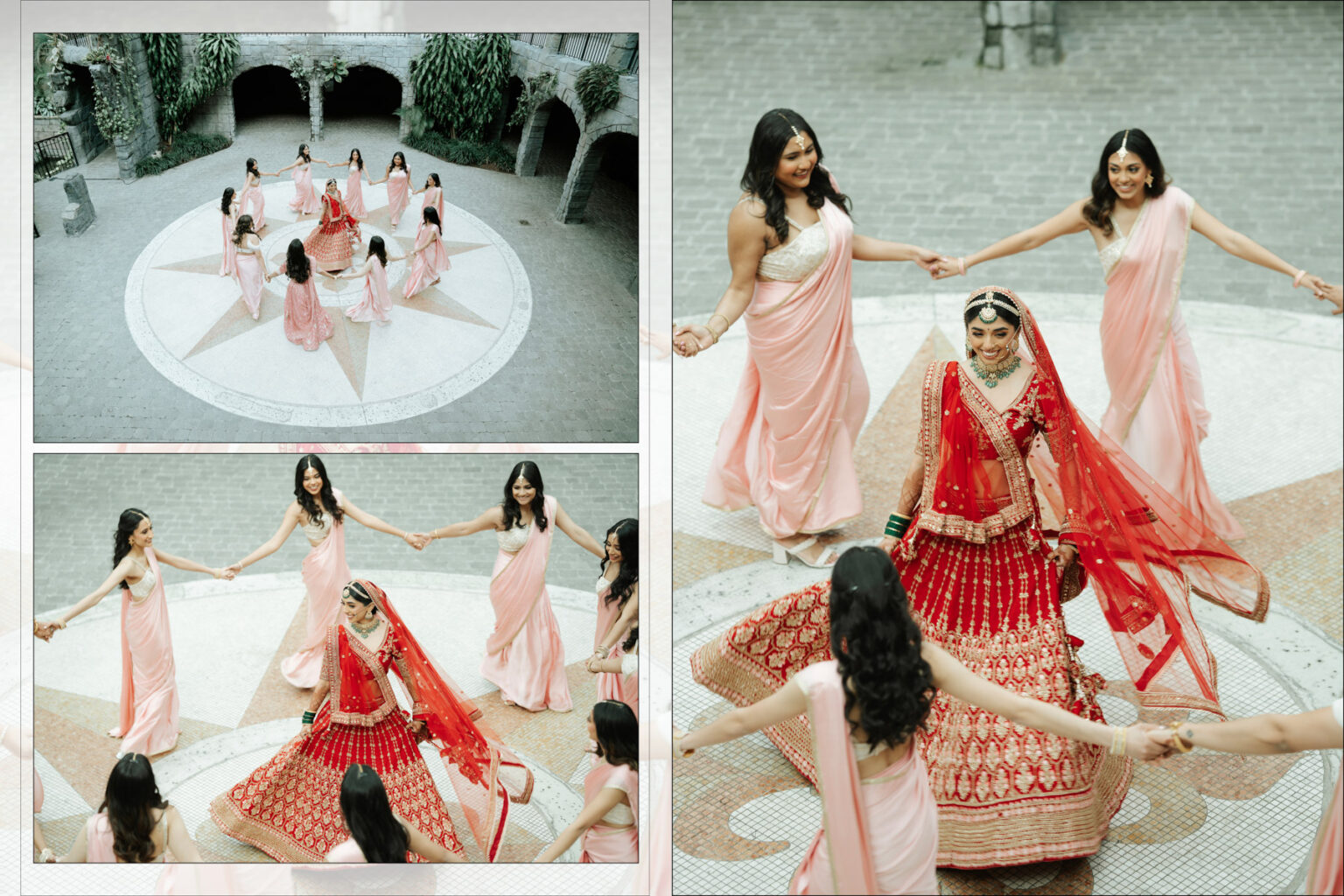
- Dandiya or garba circles from above if the venue allows
- Open dance floor and grandparents dancing
Baraat and milni
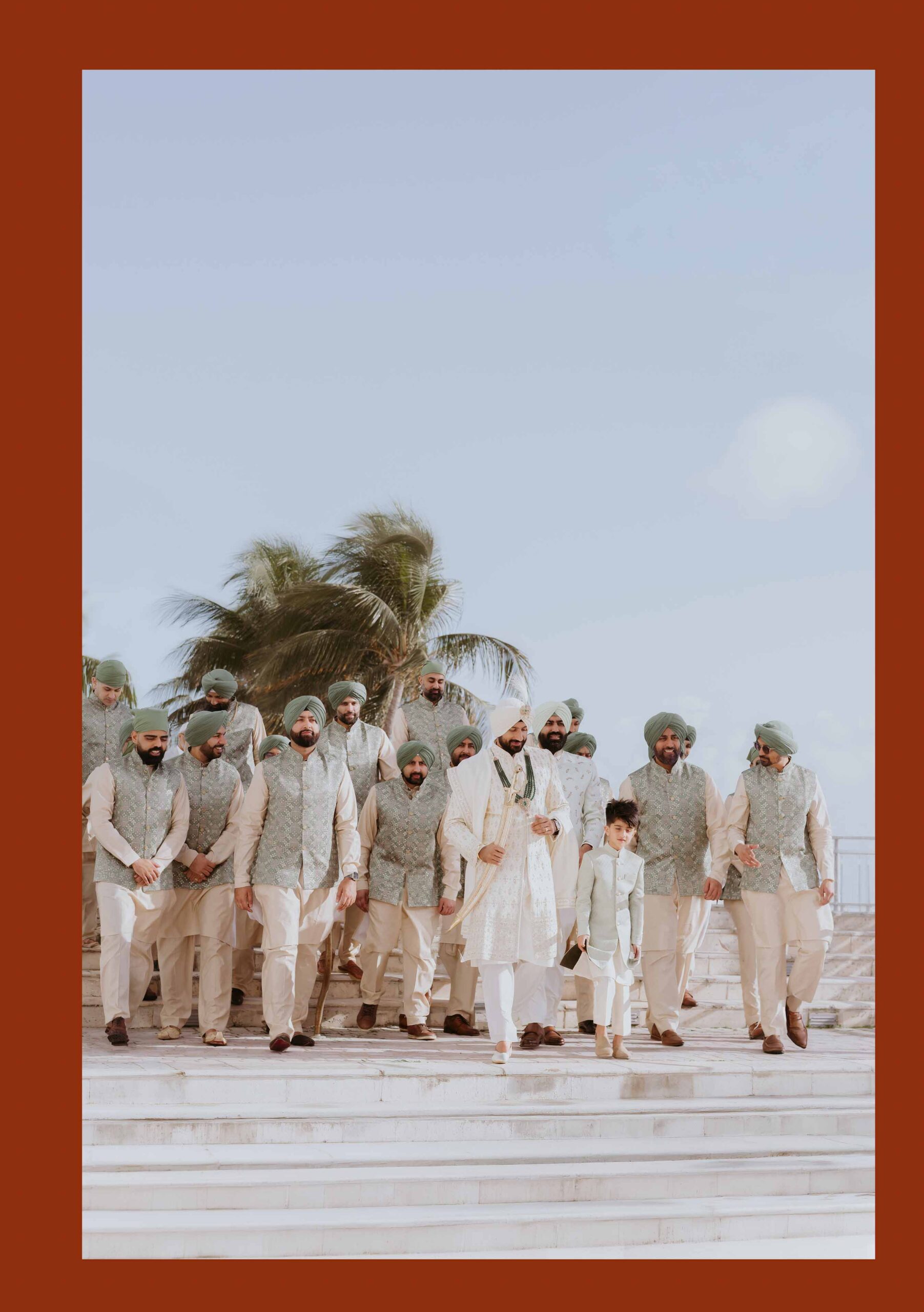
- Groom on the horse, in a car or walking in, with his sehra
- Dhol players and the baraat crowd dancing
- Bride’s family waiting at the entrance
- Milni: each pair of relatives exchanging garlands and hugs
- Aarti or welcome by the bride’s mother
Ceremony
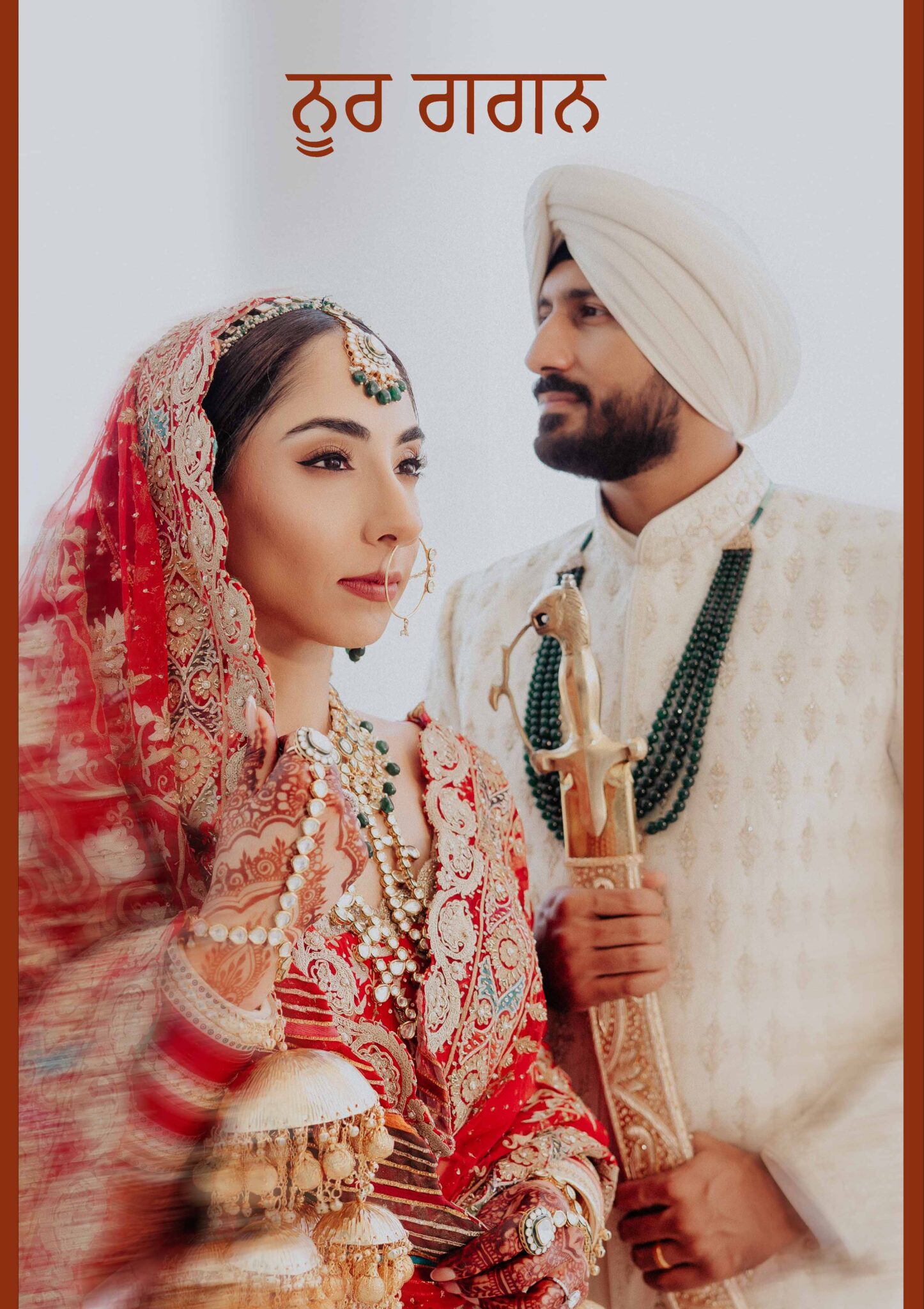
The ceremony list depends on your tradition. For the full set of moments, read our Hindu wedding photography guide, our Anand Karaj photography guide or our nikkah photography guide. In every tradition, make sure your list includes:
- The bride’s entrance, and the groom’s face as she walks in
- Wide shots of the mandap, gurdwara darbar hall or nikkah stage with guests
- Each main ritual: pheras, laavan or ijab-qubool
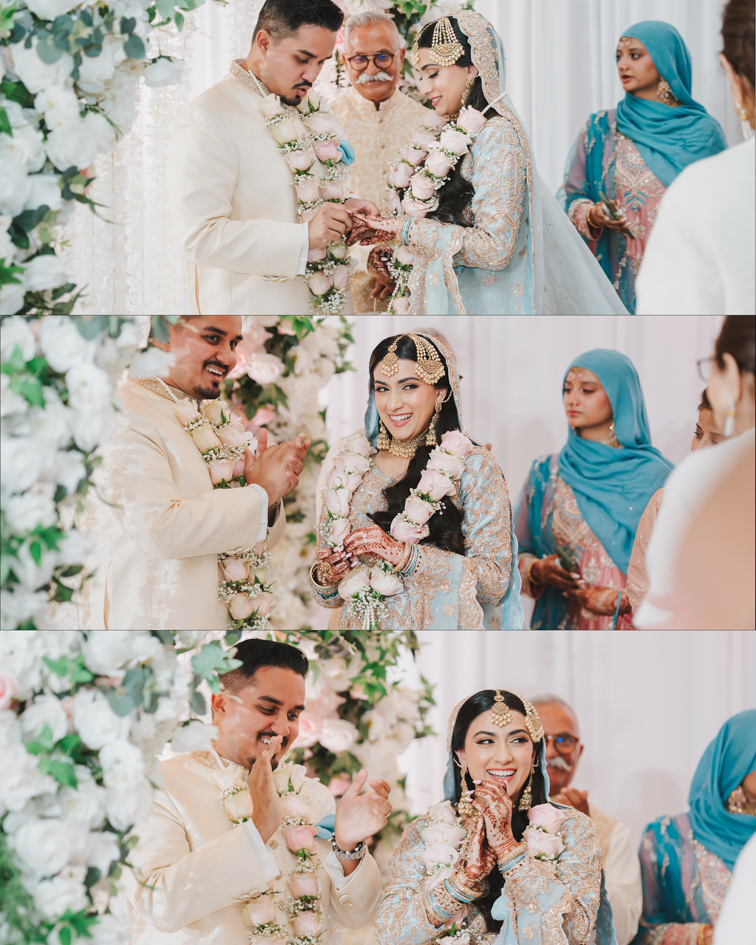
- Rings, garlands, sindoor, mangalsutra or nikah nama signing
- Parents’ reactions during the most emotional moments
- The first moment as a married couple
Family portrait list
Family portraits are where most delays happen. Keep the list to the groups you will print or frame, and name one cousin from each side who knows everyone and can call people up. A list of 15 to 25 groups usually takes 30 to 45 minutes. Copy this list and add names:
- Couple with bride’s parents
- Couple with groom’s parents
- Couple with both sets of parents
- Couple with bride’s siblings, then with their spouses and children
- Couple with groom’s siblings, then with their spouses and children
- Couple with each set of grandparents
- Bride’s immediate family together
- Groom’s immediate family together
- Bride’s side: aunts, uncles and first cousins (paternal and maternal as separate groups if large)
- Groom’s side: aunts, uncles and first cousins (paternal and maternal as separate groups if large)
- Both families together in one large group
- Bridesmaids and groomsmen, or the bride’s and groom’s friends
Tips for large family groups
- Start with the biggest groups first, while everyone is still nearby, then let people leave as their groups are done.
- Keep grandparents and elders seated in the front row and bring their groups up early.
- Ask guests to keep phones down during family photos, so everyone looks at the same camera.
- Choose a spot with even shade or indoor light and enough room for 30 people or more.
Couple portraits
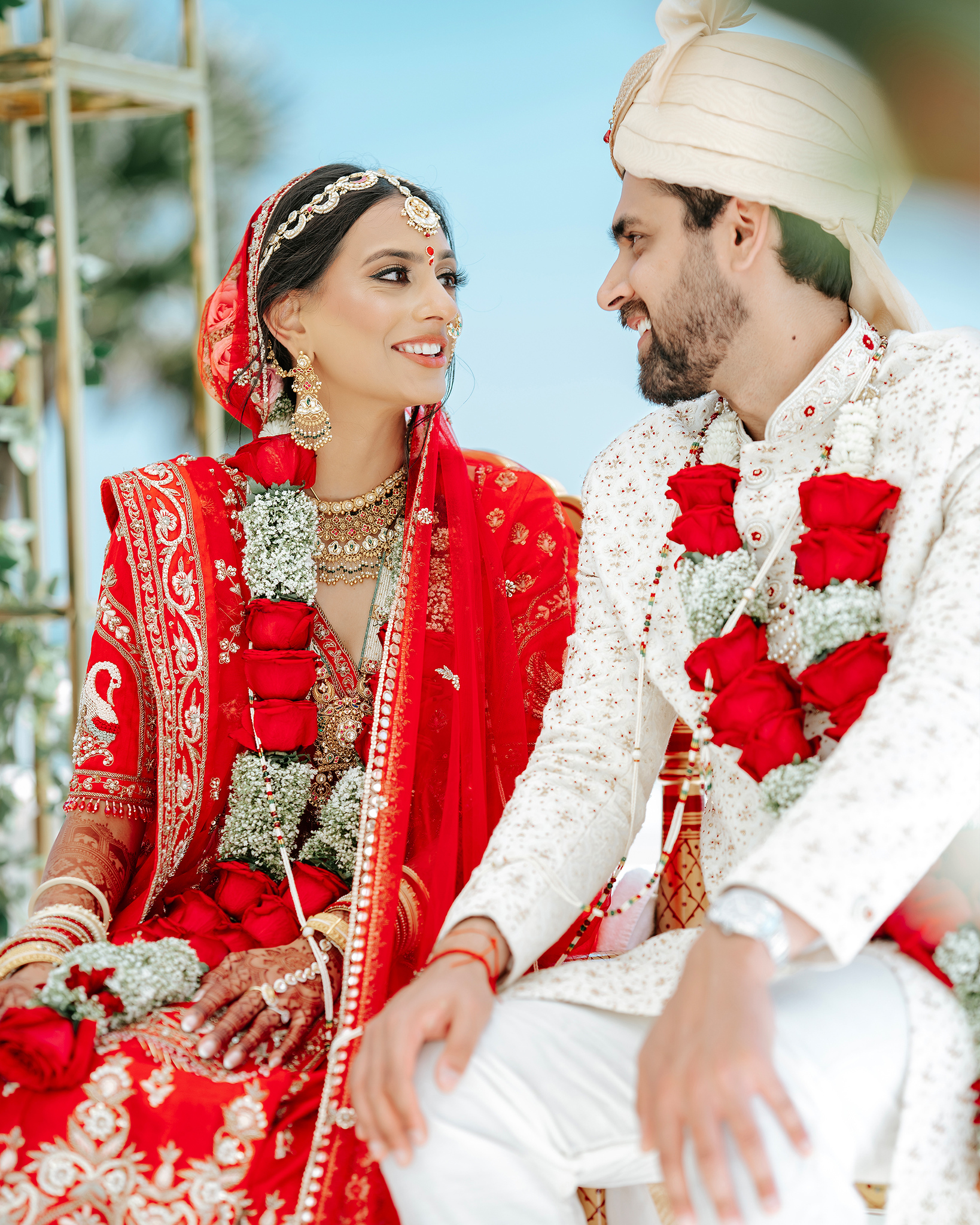
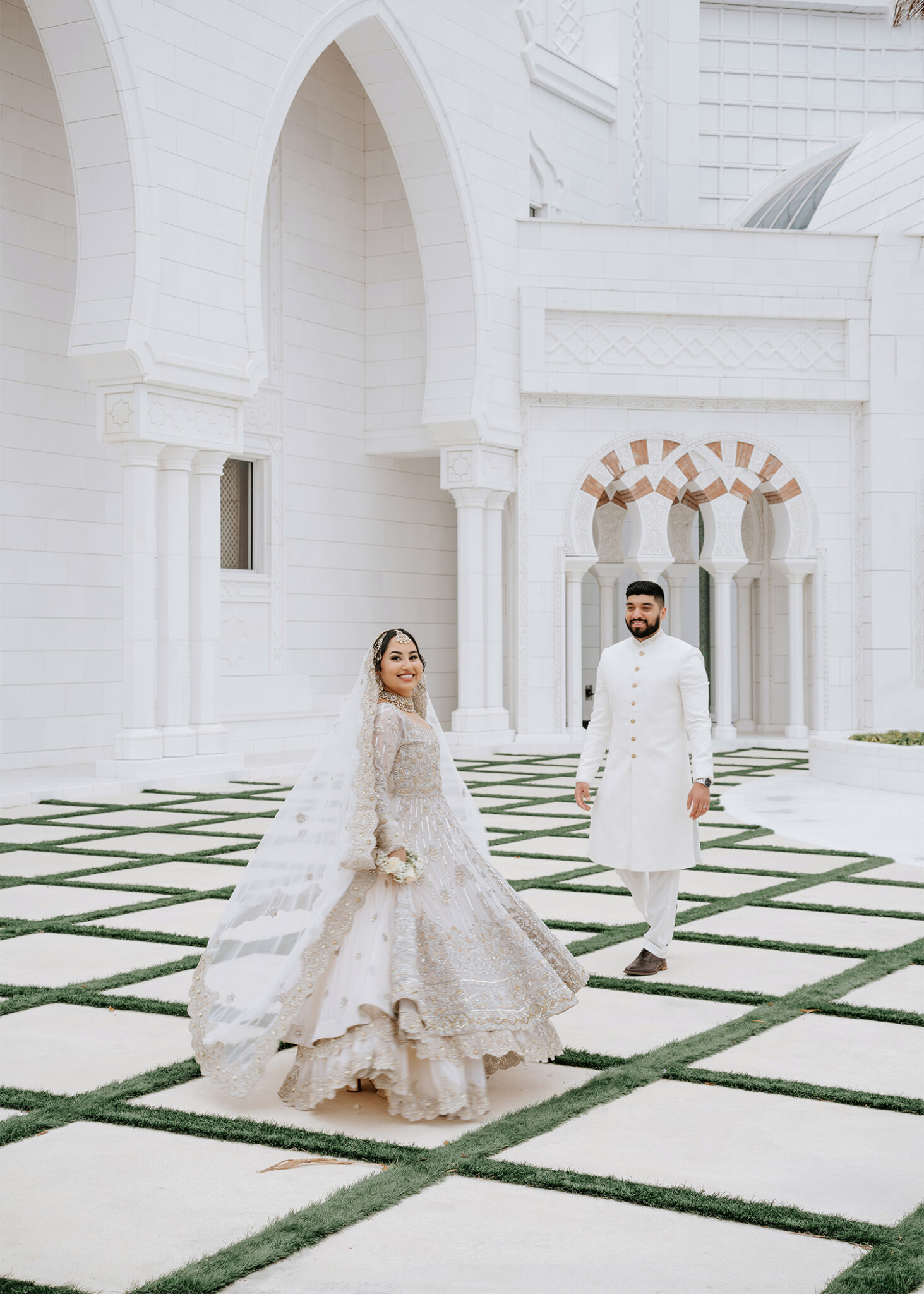
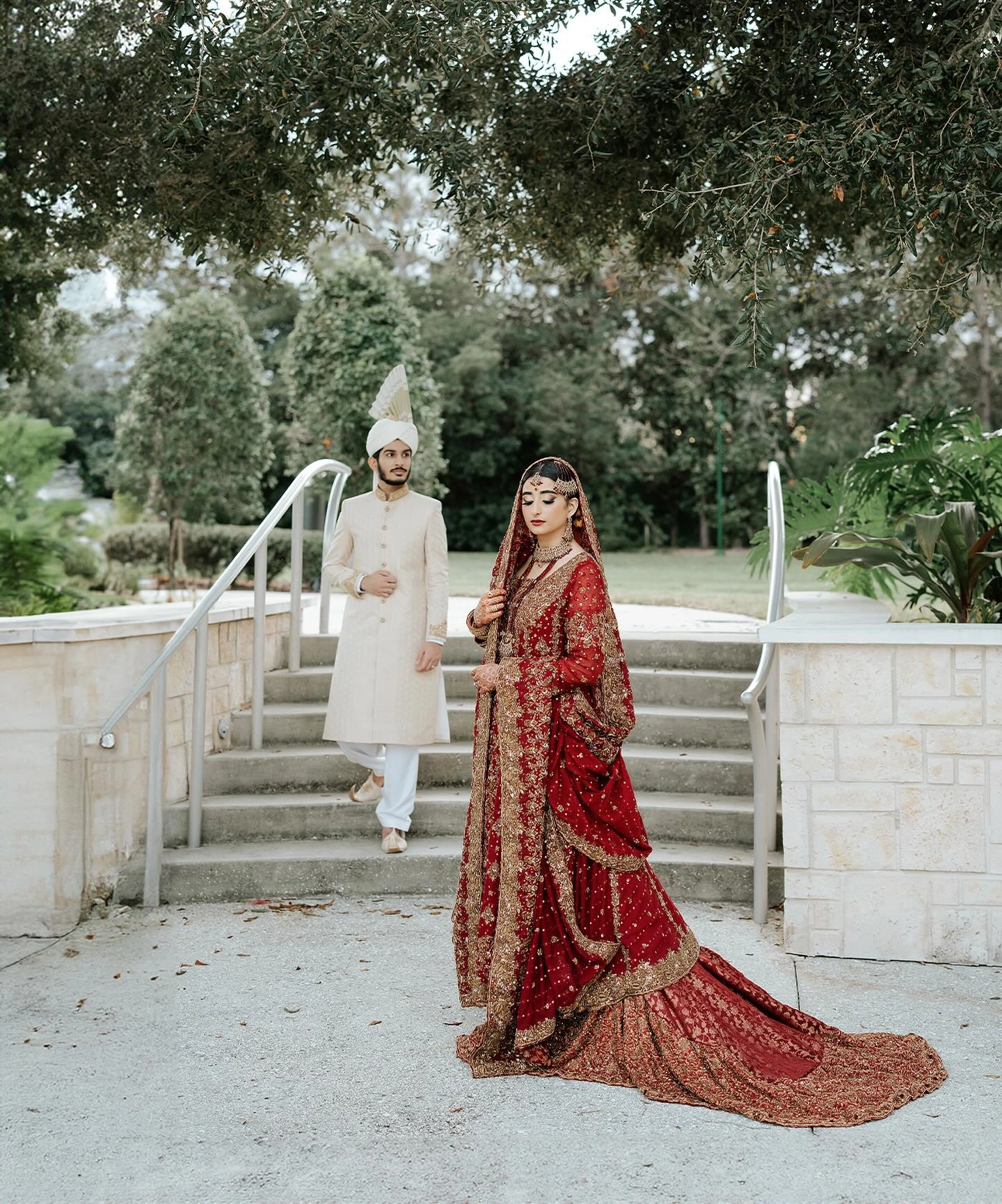
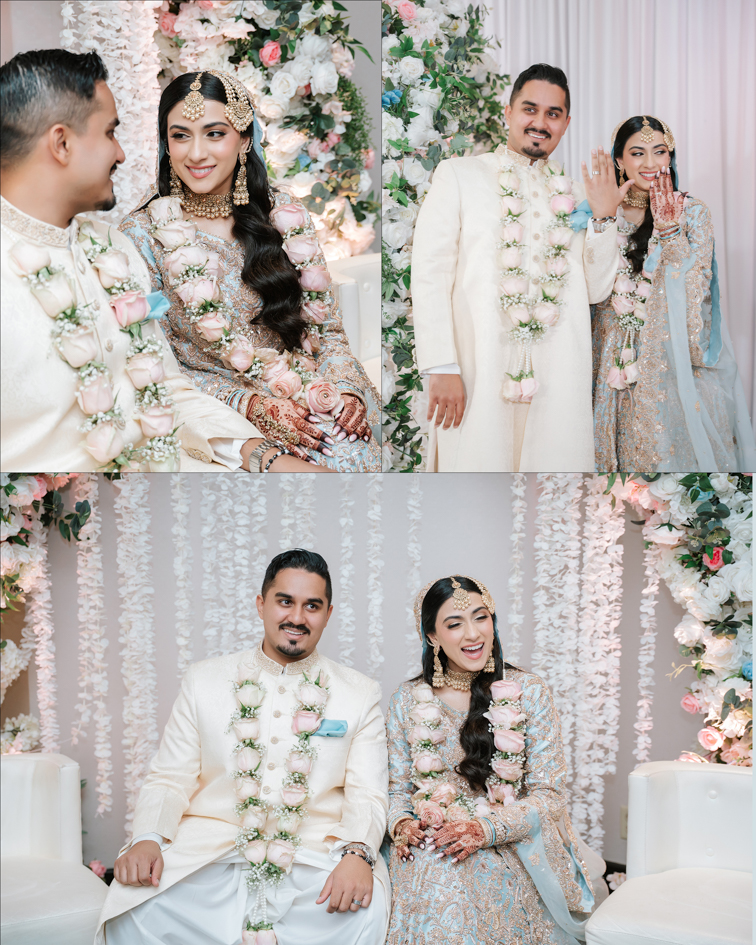
- Full-length portraits that show both outfits completely
- Close portraits of faces, hands, jewelry and mehndi
- Walking shots, twirls and dupatta movement
- A portrait with the venue or a local view, such as a lake, palm trees or the ocean
- A quiet, unposed moment just for the two of you
- Evening portraits with city or venue lights, if time allows
Reception
- Room, stage, centerpieces and cake before guests enter
- Grand entrance and first dance
- Parent dances and speeches with reactions
- Cake cutting
- Table photos or stage photos with guests, if you want them
- Open dancing, bhangra and the last song of the night
Photos families often forget
- Grandparents with the couple at every event, not only on the wedding day
- The couple with their friends from school, work and college
- Vendors who matter to you, such as the priest, granthi or imam with the couple
- Family members who travelled from India, Pakistan, Bangladesh or elsewhere
- Children of the family, who often grow up fastest in the years after a wedding
- A photo of the whole guest crowd from the stage or a balcony
Tips so nothing is missed
- Share your list two to three weeks before the wedding, with names next to each family group.
- Tell us about any ritual your family does differently, such as a special milni or a family-specific puja.
- Ask relatives with phones and tablets to stay seated during the ceremony, so aisle shots stay clear.
- Give portrait time on the timeline. A shot list only works if there are minutes set aside for it.
A typical South Asian wedding with our team delivers around 2,000 to 3,000 edited images, so the list is about making sure the right people and moments are in them. To plan when each part happens, pair this list with our sample wedding photography timeline, and see full galleries in our portfolio.
Frequently asked questions
Should I give my photographer a shot list for an Indian wedding?
Yes, but focus on what is personal: family members, heirlooms and rituals your family does differently. An experienced team already covers the standard moments.
How long do family portraits take at an Indian wedding?
A list of 15 to 25 groups usually takes 30 to 45 minutes. Naming one helper from each family who knows everyone keeps it moving.
When should I send my shot list?
Two to three weeks before the wedding. We send a planning questionnaire about a month before, which is a good place to include it.
How many photos will I get from an Indian wedding?
A typical South Asian wedding with our team delivers around 2,000 to 3,000 edited images, depending on the number of events and hours.
What details should I set aside for photos?
The invitation, rings, jewelry, outfits, shoes, the groom’s safa or turban and sehra, and any family heirlooms. Keep them together in one bag so they are ready when we arrive.
Should couple portraits be on the shot list?
Yes. Add full-length portraits, close-ups, walking shots and a portrait with a local view, and make sure the timeline gives 20 to 45 minutes for them.
Ready to plan your shot list together?
Based in Orlando, Florida, we travel for weddings anywhere in the USA. We will help you turn this list into a plan for your own events and family. Tell us your dates and venue and we will reply within 24 to 48 hours.