Photography guide
Nikkah Photography Guide: Key Moments, Mosque Etiquette and Planning
By Noor K Photography ·
Nikkah photography captures the Islamic marriage contract and the family moments around it: the khutbah, the ijab and qubool, the signing of the nikah nama, the rings, the aarsi mushaf and the rukhsati. A nikkah is often short and quiet, and many of its most meaningful moments last only a few seconds. This guide walks through each part, explains how photographers should behave inside a mosque, and shares planning tips for a nikkah anywhere in the US, with notes for Florida weddings.
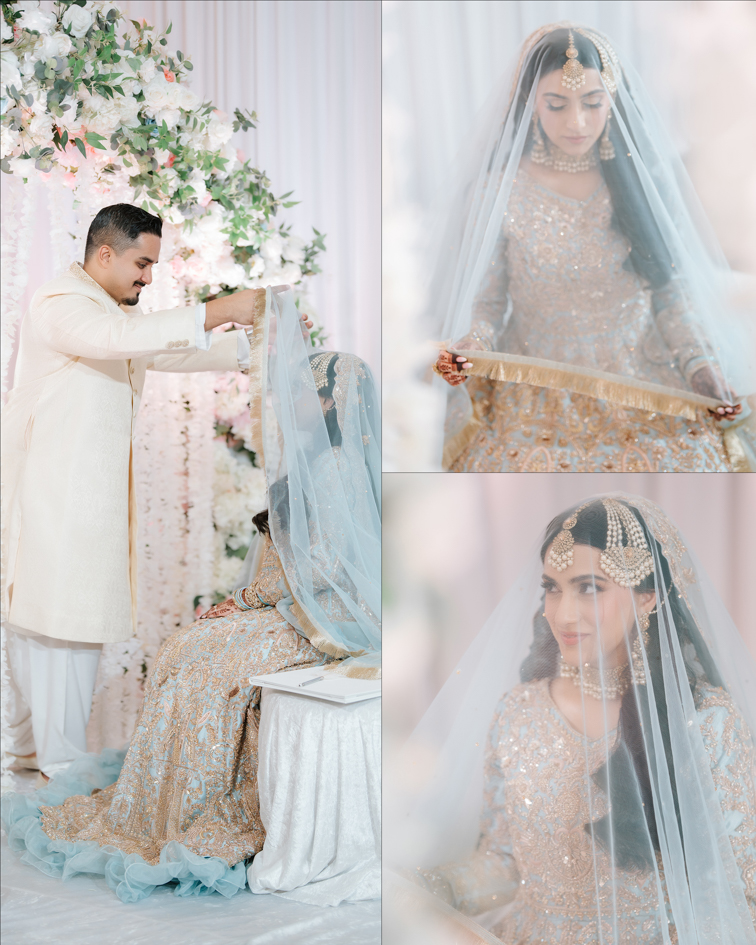
What happens at a nikkah?
The nikkah is the marriage contract in Islam. It can take place in a mosque, at home, in a hotel ballroom or outdoors. Customs vary between Pakistani, Indian, Bangladeshi, Arab and other Muslim families, but most South Asian nikkahs include the same core parts. The imam or officiant leads the ceremony, two adult witnesses are present, and the mehr (the gift from the groom to the bride) is agreed before or during the ceremony.
Key moments in nikkah photography
Here is each part of a typical South Asian nikkah in order, and what to photograph at each one. Your imam may follow a slightly different order.
Khutbah
The imam begins with a short sermon, the khutbat-un-nikah, with recitation from the Quran and advice to the couple about marriage. Photos here are about atmosphere: the imam speaking, the groom listening, fathers and elders seated nearby, and wide shots of the room. We stay low and still during the recitation.
Ijab and qubool
This is the heart of the nikkah: the offer (ijab) and acceptance (qubool). In many South Asian families the bride and groom are each asked, sometimes in separate rooms, and each answers “qubool hai” three times. The bride is often seated with her mother and close female relatives, with her wali or father and the witnesses coming to her. Emotions run high here. Plan for a second photographer if the bride and groom are in separate rooms, so both moments are captured.
Signing the nikah nama
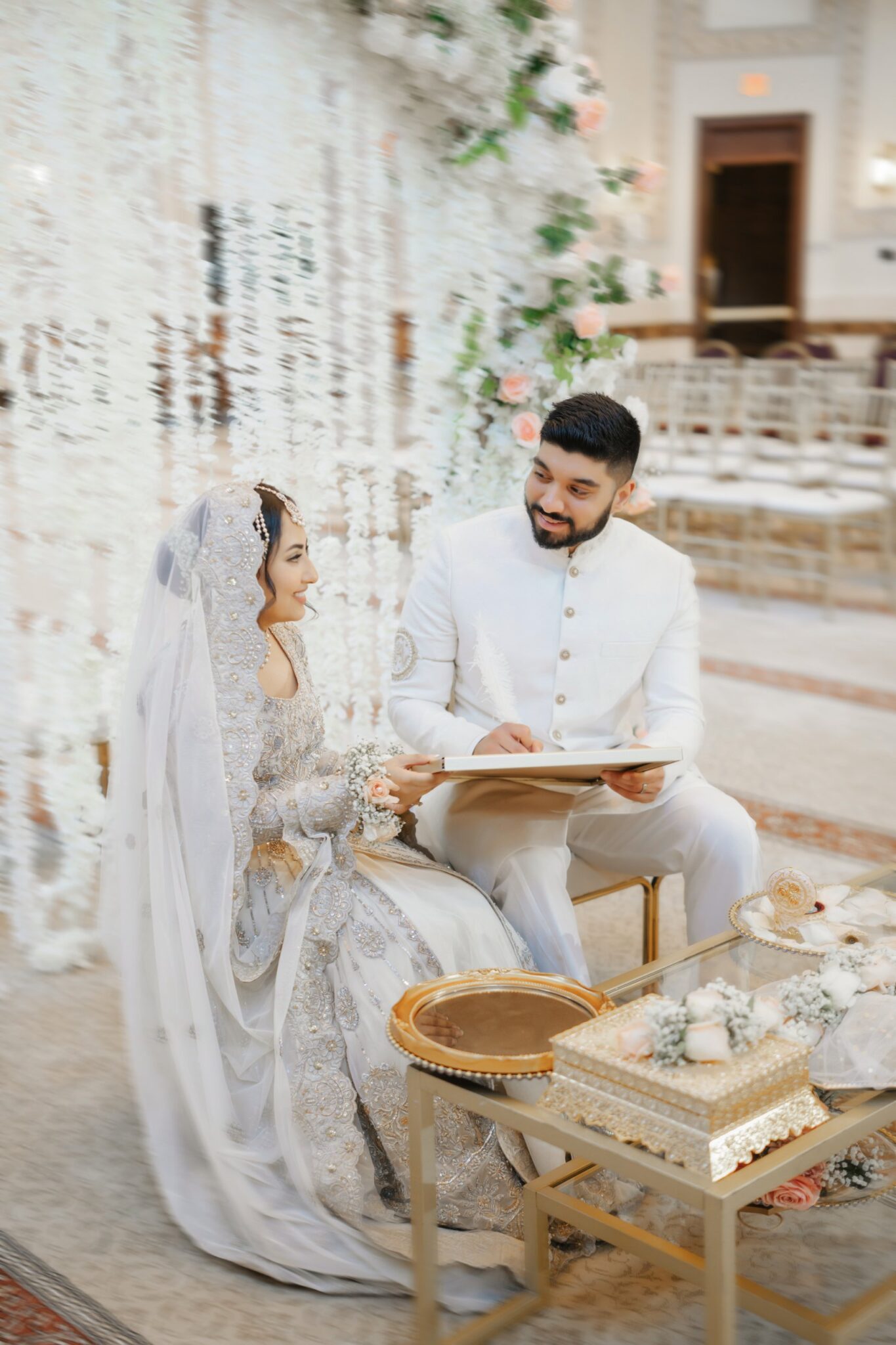
The couple, the witnesses and the officiant sign the nikah nama, the written marriage contract. It is a short moment that families love to have photographed: the pen, the hands, the signatures and the smiles afterwards. A decorative pen or a feather pen makes a beautiful detail shot. If you also need a civil marriage license in Florida, the officiant often signs that too.
Dua, mubarak and the rings
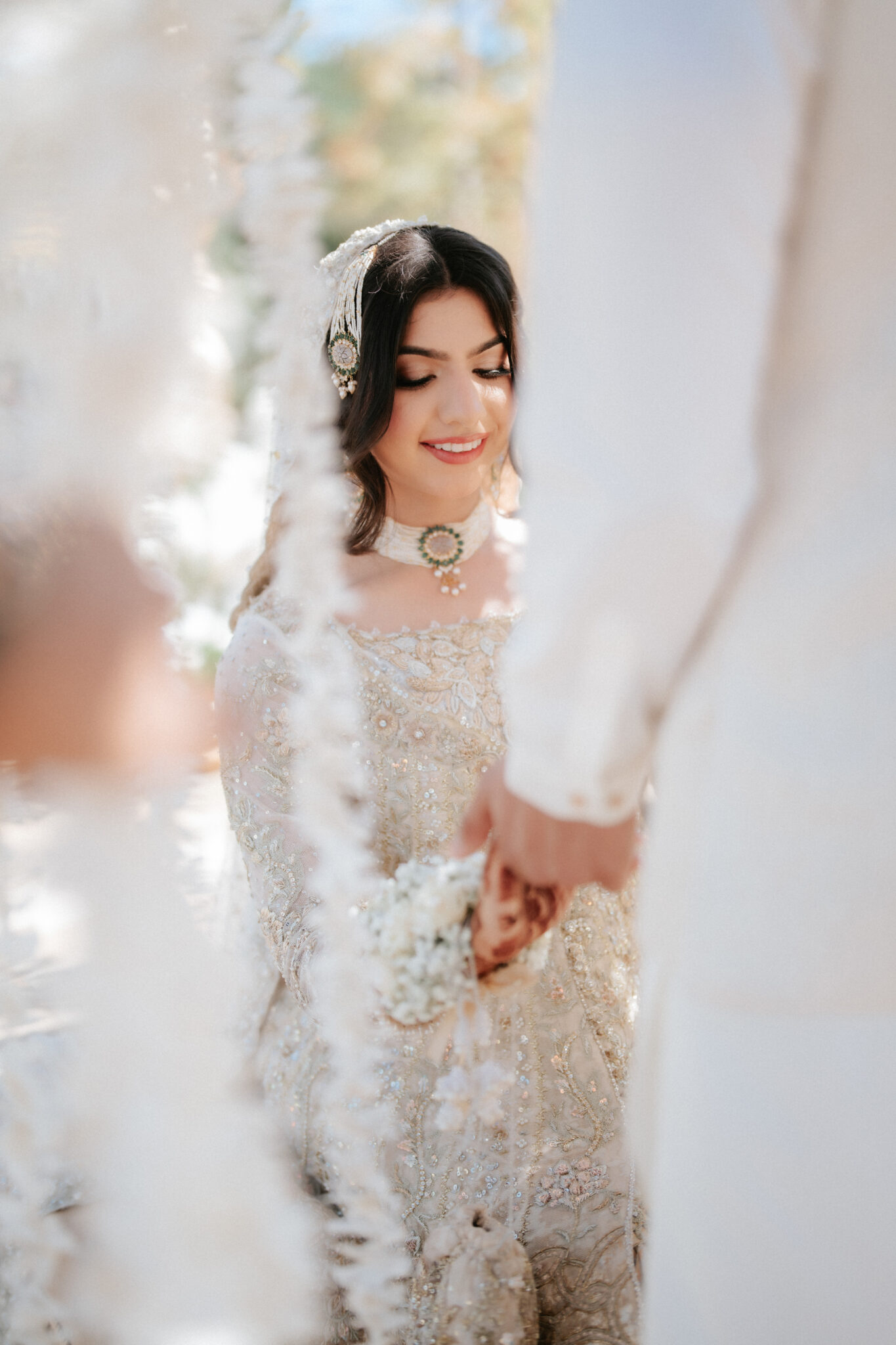
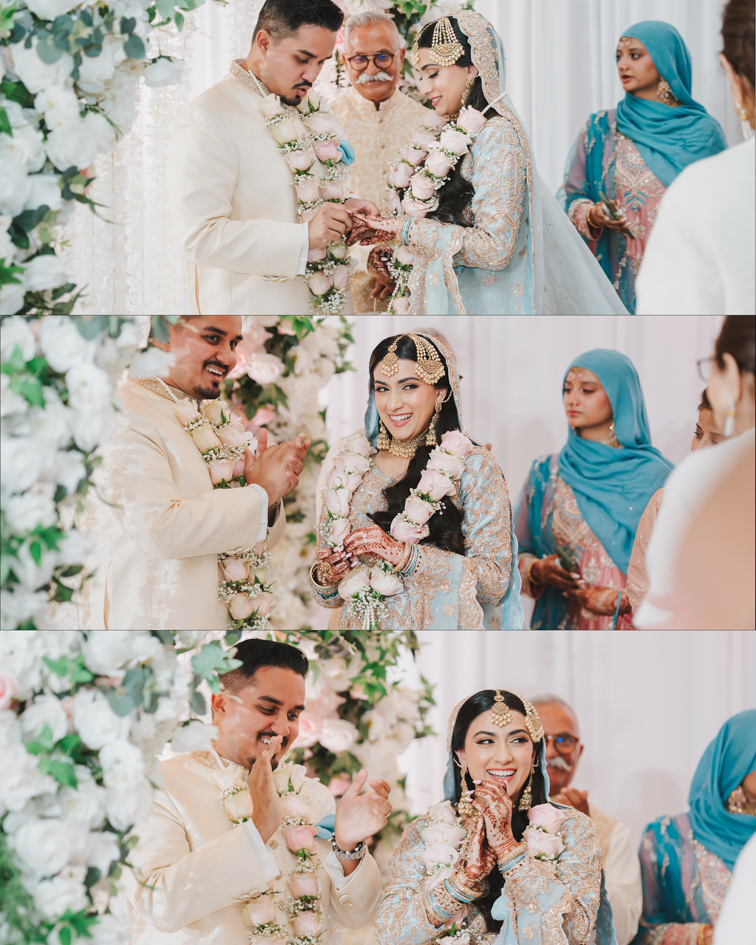
After the contract is complete, the imam leads a dua and guests say “Mubarak.” Dates or mishri are often shared. Many couples then exchange rings, and in some families the groom’s mother gives the bride jewelry. These are the first moments of the couple as husband and wife, and they are full of hugs from parents and siblings.
Aarsi mushaf
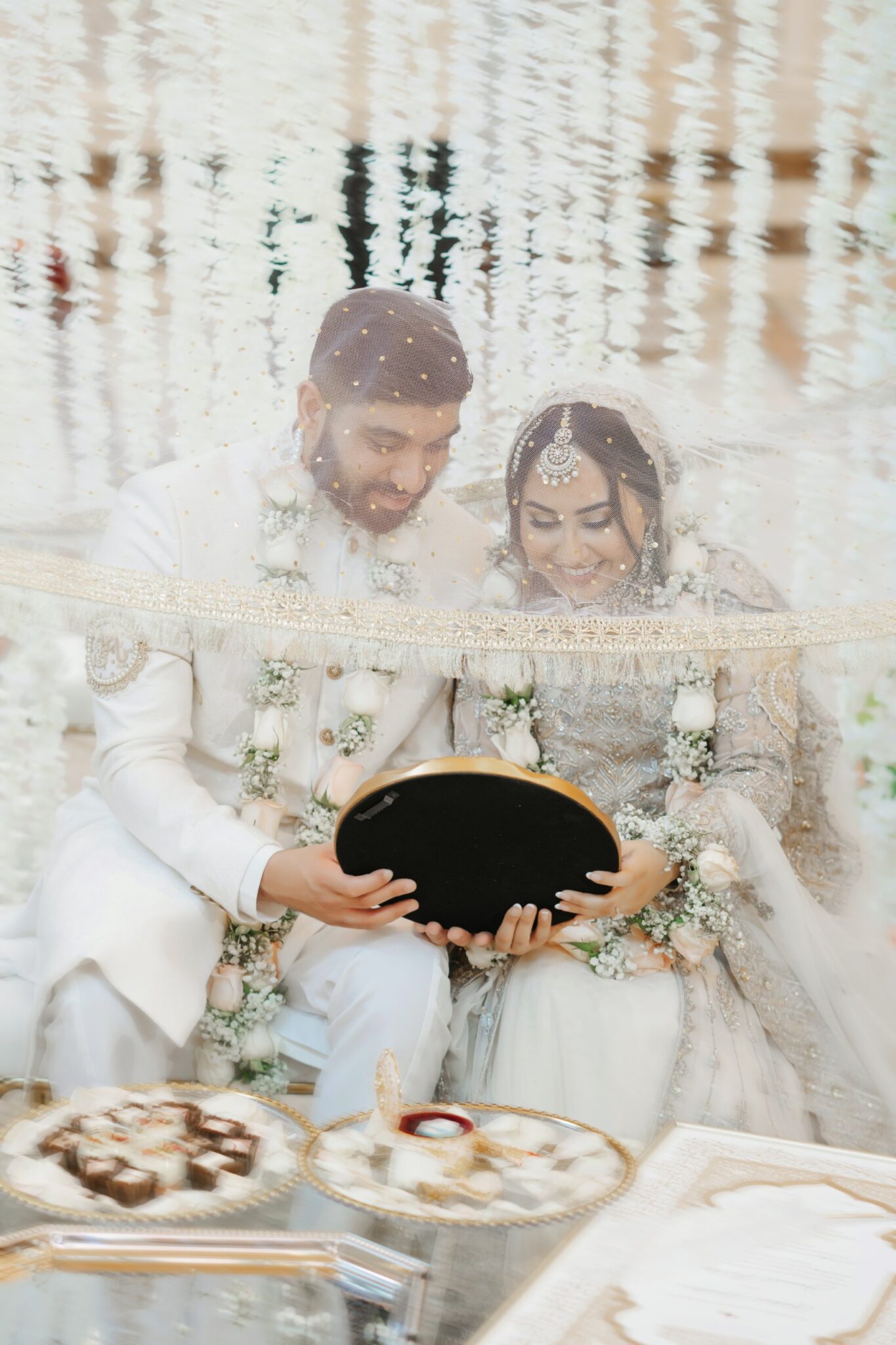
In the aarsi mushaf, a tradition in many Pakistani and Indian Muslim families, the couple sits together under a shared dupatta. A Quran and a mirror are placed between them, and they see each other’s reflection, traditionally for the first time as a married couple. It is one of the sweetest moments of the day. A close, quiet angle that shows both faces in the mirror is the photo most couples want.
Rukhsati
The rukhsati is the bride’s farewell from her family home. Often a Quran is held over her head as she leaves, and parents and siblings say goodbye. It is usually the most emotional part of the wedding day. Plan it before it gets fully dark, or make sure the exit area is well lit, so faces can be seen in the photos.
Nikkah at a mosque, hotel, home or outdoors
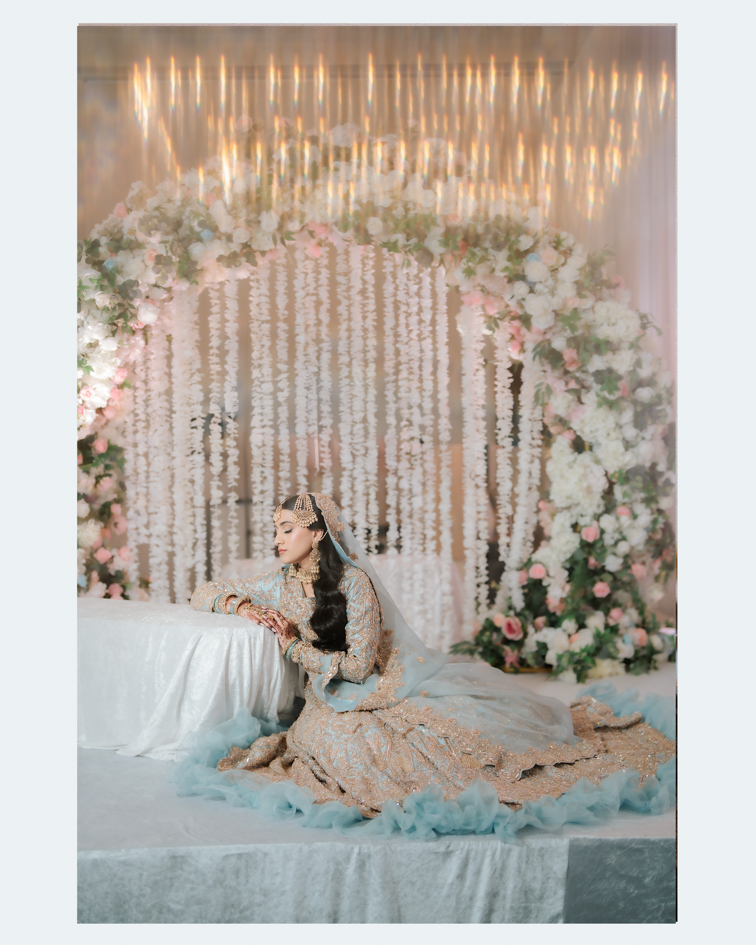
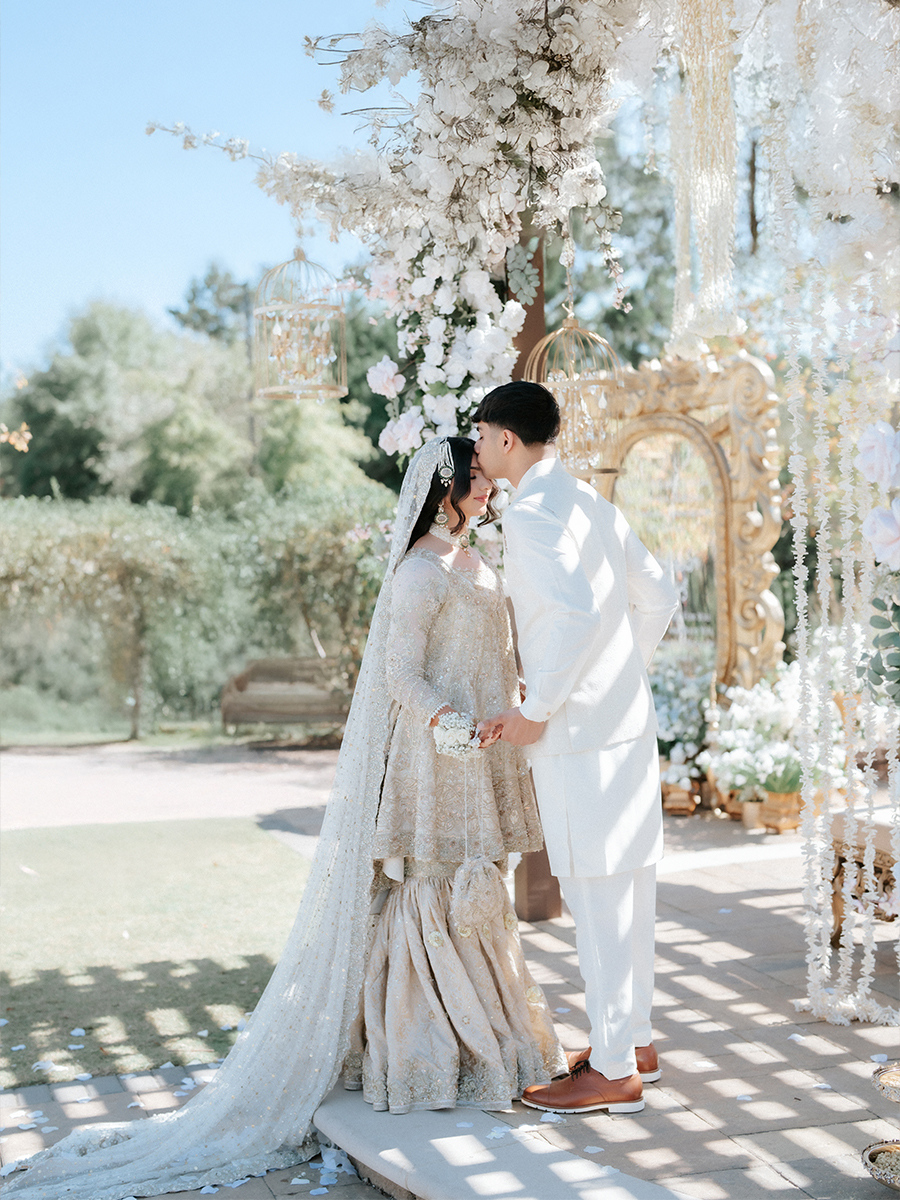
The setting changes how the nikkah is photographed. At a mosque, the rules of the mosque come first, and the light is often soft and even. At a hotel, the nikkah is usually on a decorated stage, so there is more freedom to move, but ballroom lighting can be dark and mixed. At home, rooms are small and full of family, so a short lens and patience matter. Outdoors, the light is beautiful in the morning or late afternoon, but Florida sun and summer storms need a backup plan.
Mosque etiquette for nikkah photography
- Ask the mosque office about its photography rules before the day. Some allow photos in the prayer hall, some only in a hall or courtyard.
- Photographers should dress modestly, with arms and legs covered, and women should cover their hair inside the mosque.
- Remove shoes before entering prayer areas.
- Do not walk in front of people who are praying, and pause coverage during salah.
- Stay quiet and still during Quran recitation and the khutbah. No flash during the ceremony.
- Respect separated seating. If men and women sit apart, agree ahead of time how the photo and film team will cover each side.
- Ask before photographing guests who may prefer not to be photographed.
We have photographed nikkahs at mosques, hotels and outdoor venues, including Umbul and Jamiel’s nikah at Masjid Al-Hayy in Sanford, Hanna and Nabeel’s nikkah at Hilton Tampa Downtown and Maham and Reyaan’s outdoor nikkah at the Omni Atlanta.
After the nikkah: walima and portraits
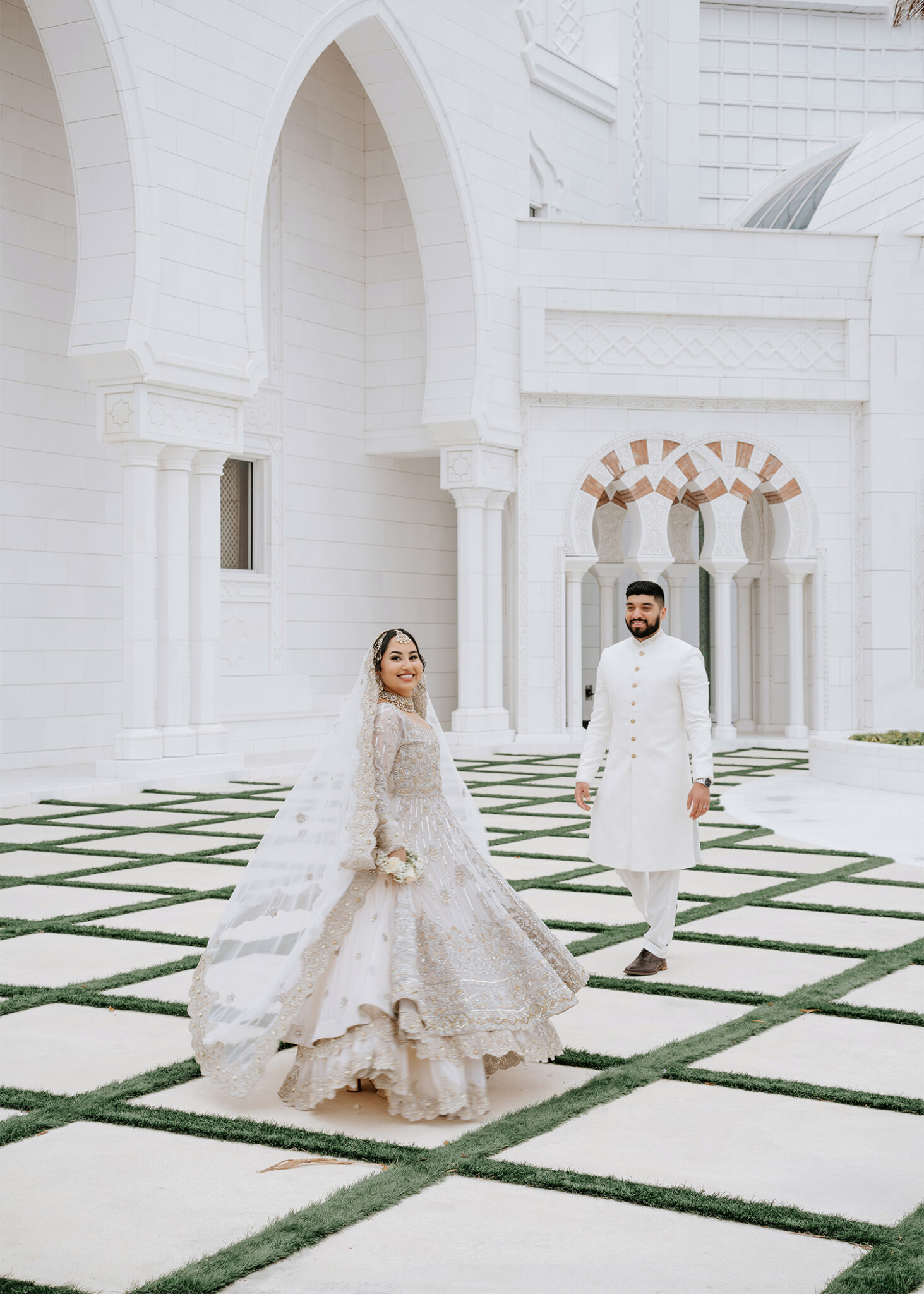
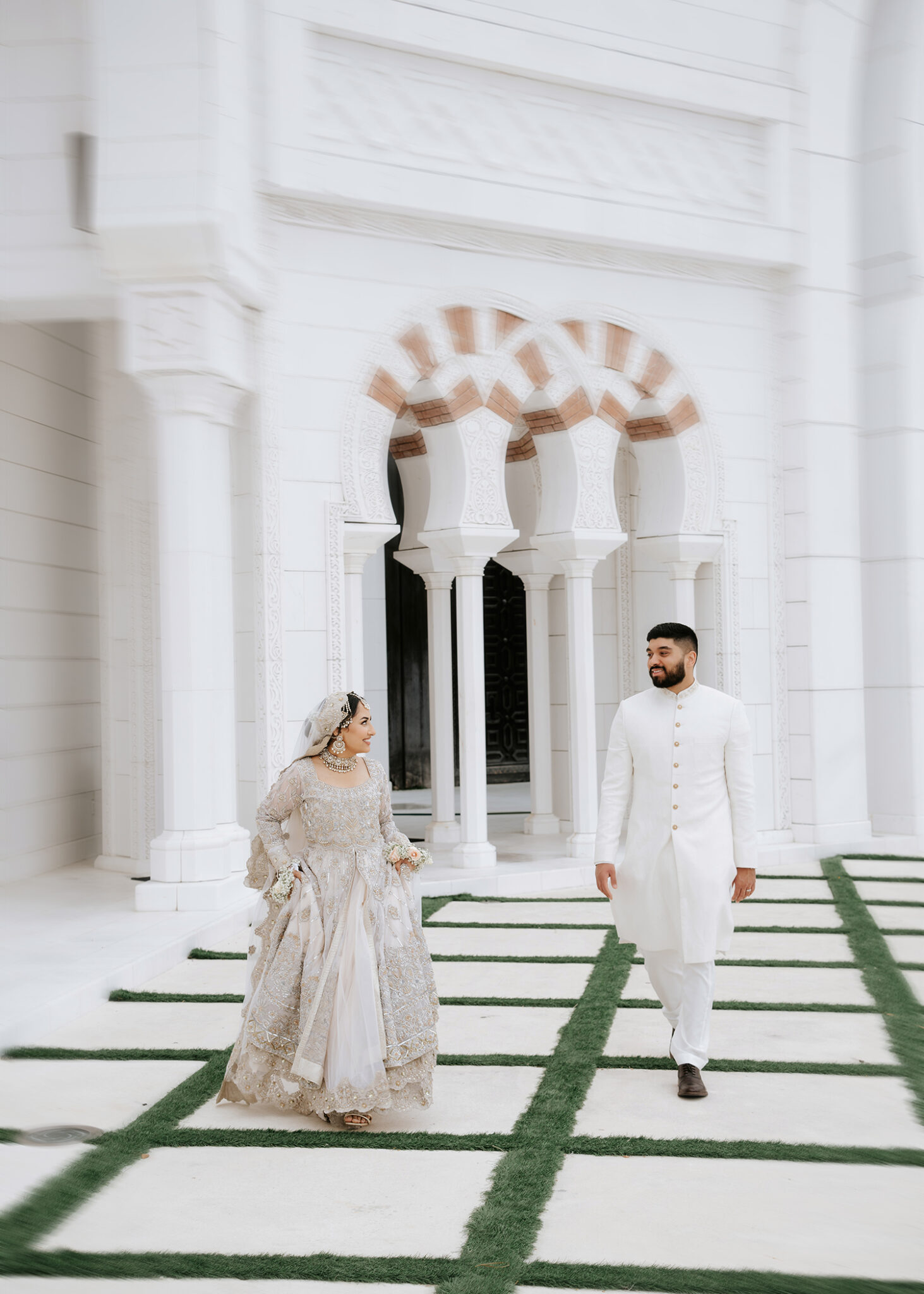
Many families hold the walima, the reception given by the groom’s family, a day or more after the nikkah. It is usually more relaxed, with the couple’s entrance, dinner, family photos on the stage and speeches. If the nikkah and walima are on different days, the couple often wear very different outfits, which gives two distinct sets of portraits. Plan time for couple photos at both.
Planning tips for your nikkah
- Confirm the ceremony length with your imam. Many nikkahs take 45 minutes to an hour, but family moments around it add time.
- Tell your photographer if the bride and groom will be in separate rooms for qubool.
- Set aside the mirror, Quran, rings and any nikah nama pen so they are ready.
- Plan couple portraits right after the ceremony, while the outfits and makeup are fresh.
- If the nikkah is outdoors in Florida, aim for the morning or late afternoon and keep a covered backup.
- Share your family photo list ahead of time, and tell us if any relatives prefer not to be photographed.
If your nikkah is part of a longer celebration with a mehndi, baraat and walima, see our Muslim wedding photography in Florida page and our Pakistani wedding photographer page. For the full weekend schedule, use our sample wedding photography timeline.
Frequently asked questions
Can you take photos inside a mosque during a nikkah?
It depends on the mosque. Many allow photos during a nikkah with respectful behavior, some only in a hall or courtyard. Ask the mosque office about its rules before the day.
How long does a nikkah ceremony take?
Many nikkahs take about 45 minutes to an hour. Family moments, the aarsi mushaf, portraits and the rukhsati add time around it.
What is the aarsi mushaf?
A tradition in many South Asian Muslim families where the couple sits under a shared dupatta with a Quran and a mirror between them, and sees each other’s reflection as a married couple.
What are the most important nikkah photos?
The ijab and qubool, the signing of the nikah nama, the rings, the aarsi mushaf, family reactions and the rukhsati.
Do you photograph nikkahs with separate seating for men and women?
Yes. We agree with the family ahead of time how each side will be covered, and we follow the mosque’s and the family’s wishes.
Planning your nikkah?
We photograph and film nikkahs, mehndis and walimas across Florida, in Atlanta and anywhere in the USA. Tell us your date and venue and we will reply within 24 to 48 hours.