Photography guide
Anand Karaj Photography Guide: Sikh Ceremony Moments and Gurdwara Etiquette
By Noor K Photography ·
Anand Karaj photography captures the Sikh wedding ceremony, held in the presence of the Guru Granth Sahib, and the family moments around it: the milni, the ardas, the palla and the four laavan. The Anand Karaj is a sacred, calm ceremony, usually in the morning at a gurdwara, and photographers must work within its rules. This guide explains each part of the ceremony, the photos families value most, and the gurdwara etiquette every photo and film team should follow.
What happens at an Anand Karaj?
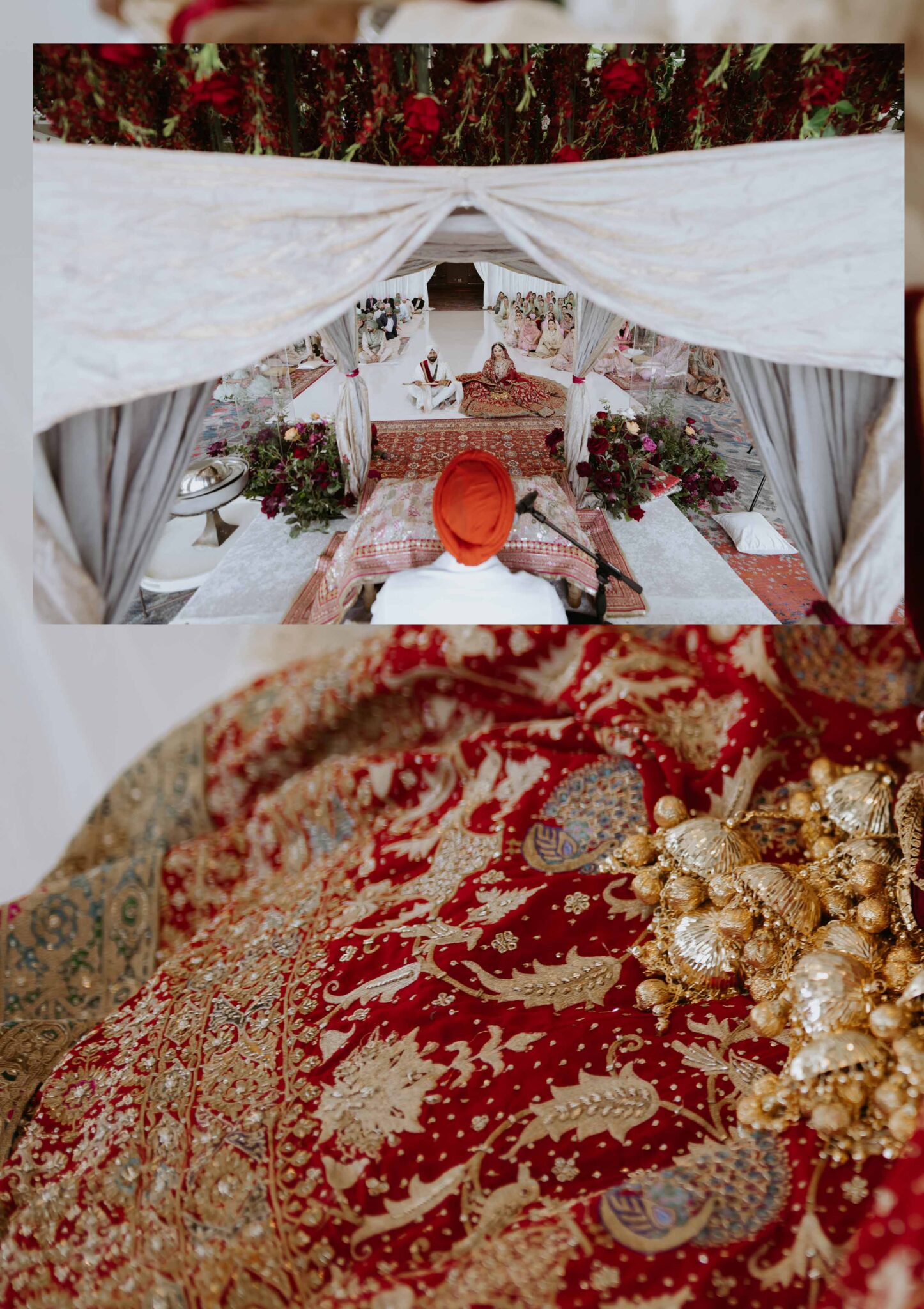
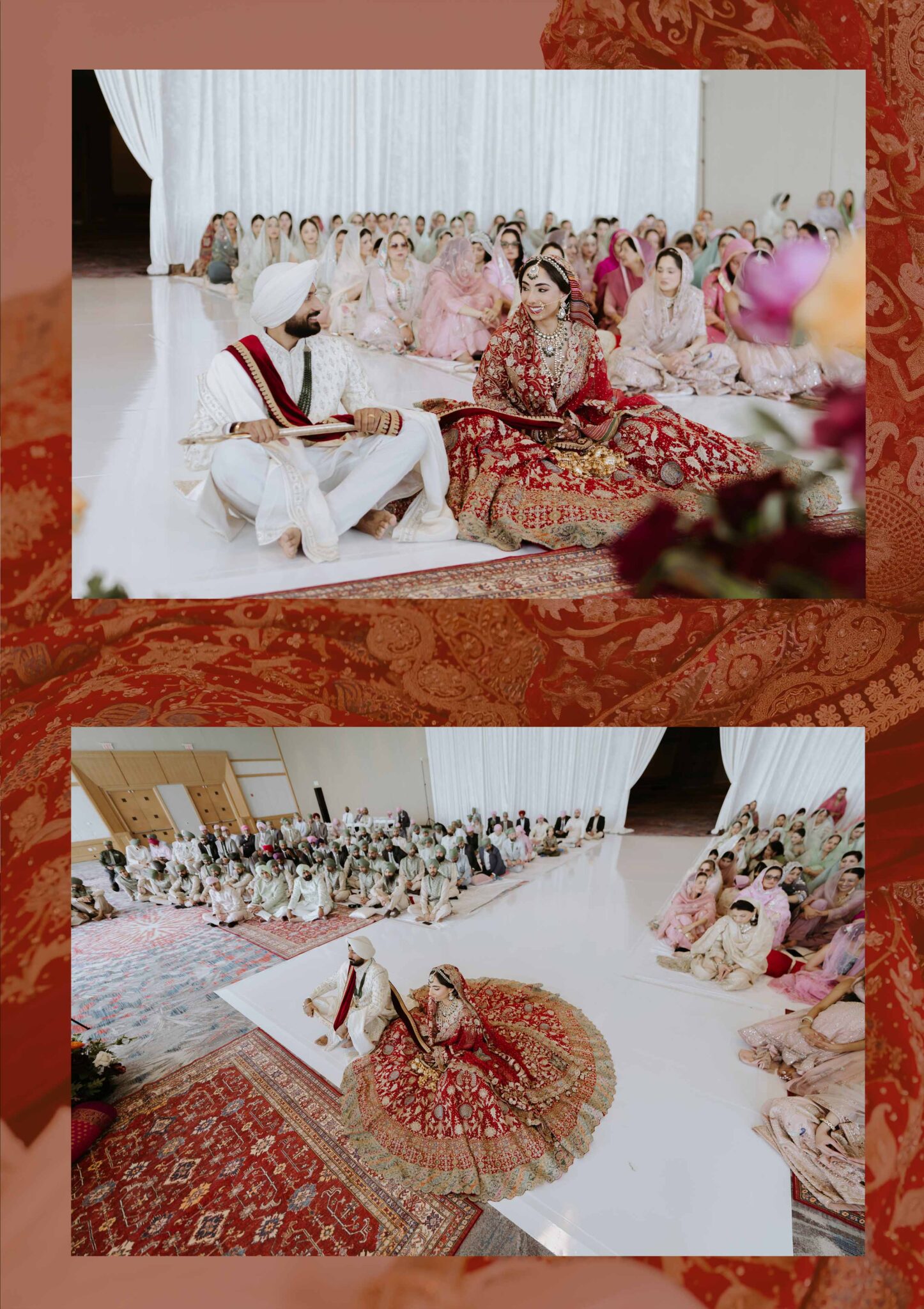
Anand Karaj means “blissful union.” The ceremony takes place in the darbar hall of a gurdwara, or at a venue where the Guru Granth Sahib is brought and placed with full respect, often under a Palki Sahib. A granthi leads the ceremony, ragis sing kirtan, and the couple and guests sit on the floor facing the Guru Granth Sahib. The whole ceremony usually lasts about an hour, with the milni before it and langar afterwards.
Key moments in Anand Karaj photography
Here are the main parts in the order they usually happen. Each gurdwara has its own customs, so confirm the order with the granthi or the gurdwara committee.
Baraat arrival and milni
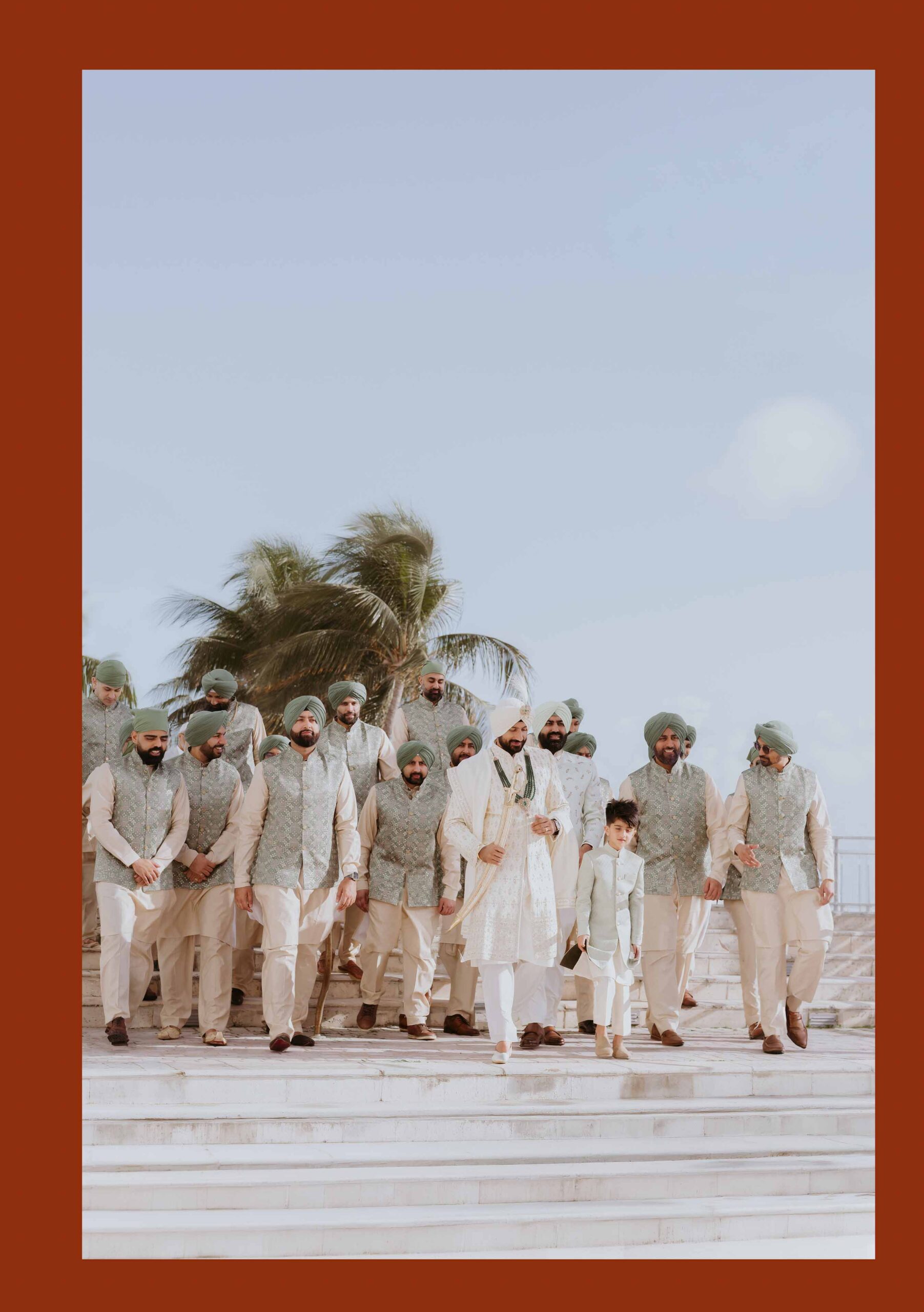
The groom’s family arrives at the gurdwara, often with dhol, and the bride’s family welcomes them. In the milni, relatives from each side are called up in pairs, usually fathers first, then uncles, brothers and grandfathers, to embrace and exchange garlands. It is joyful and fast. Share your milni list ahead of time so each pair is ready, and so we know who is who.
Entering the darbar hall
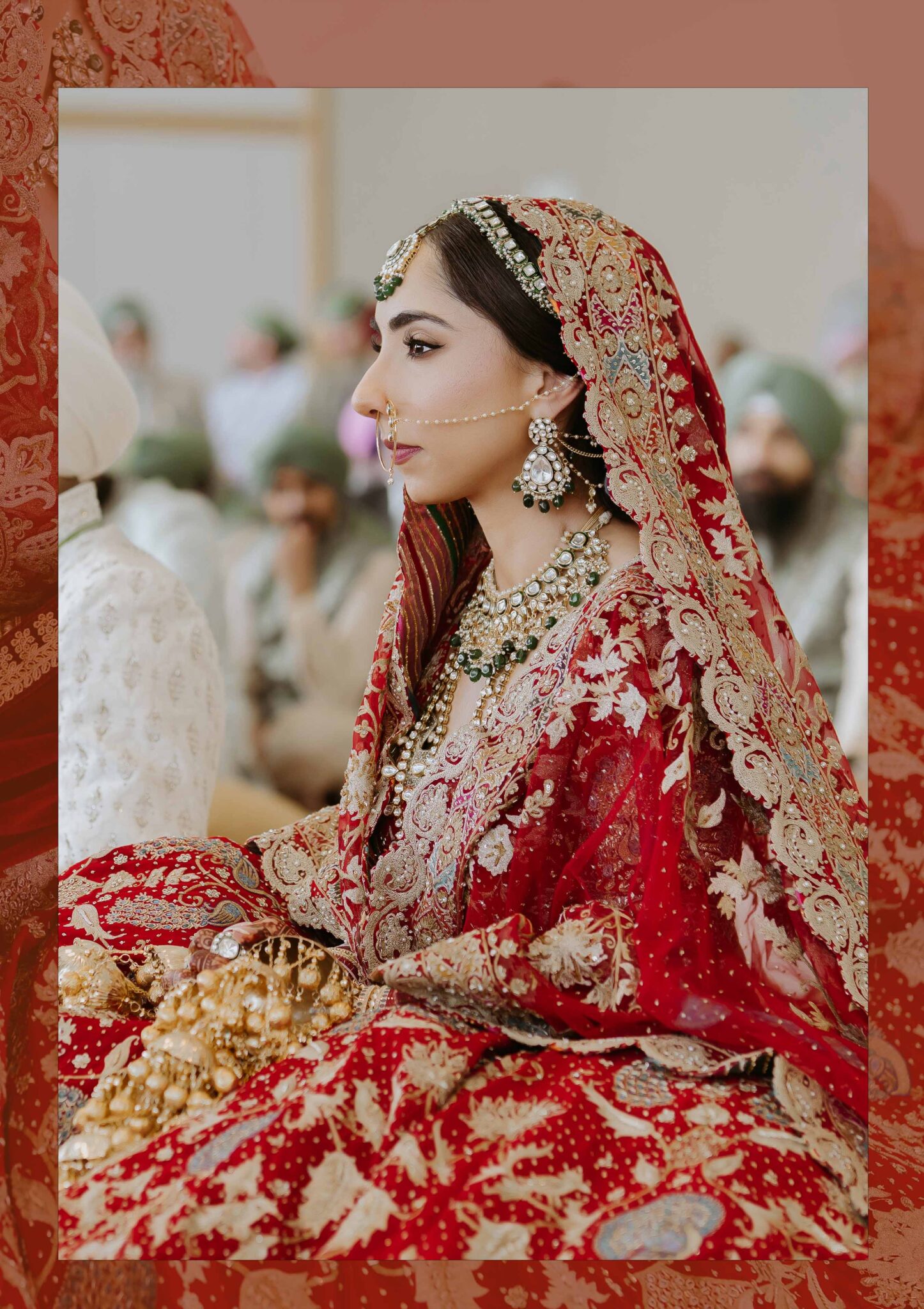
The groom enters and sits before the Guru Granth Sahib, and the bride follows, often walking in with her brothers or close family and sitting to the groom’s left. Her entrance and the groom’s first glance are two of the most treasured photos of the day.
Ardas
The couple and their parents stand for the ardas, a prayer asking for blessings on the marriage. Everyone in the hall stands with hands folded. We photograph quietly from the side, without moving around during the prayer.
The palla ceremony
The bride’s father places one end of the groom’s palla, a long scarf, into the bride’s hand. It symbolizes him giving his daughter into the marriage, and it connects the couple as they walk the laavan. It is a short, emotional moment. A close angle that shows the father’s hands and the bride’s face is the image many families frame.
The four laavan
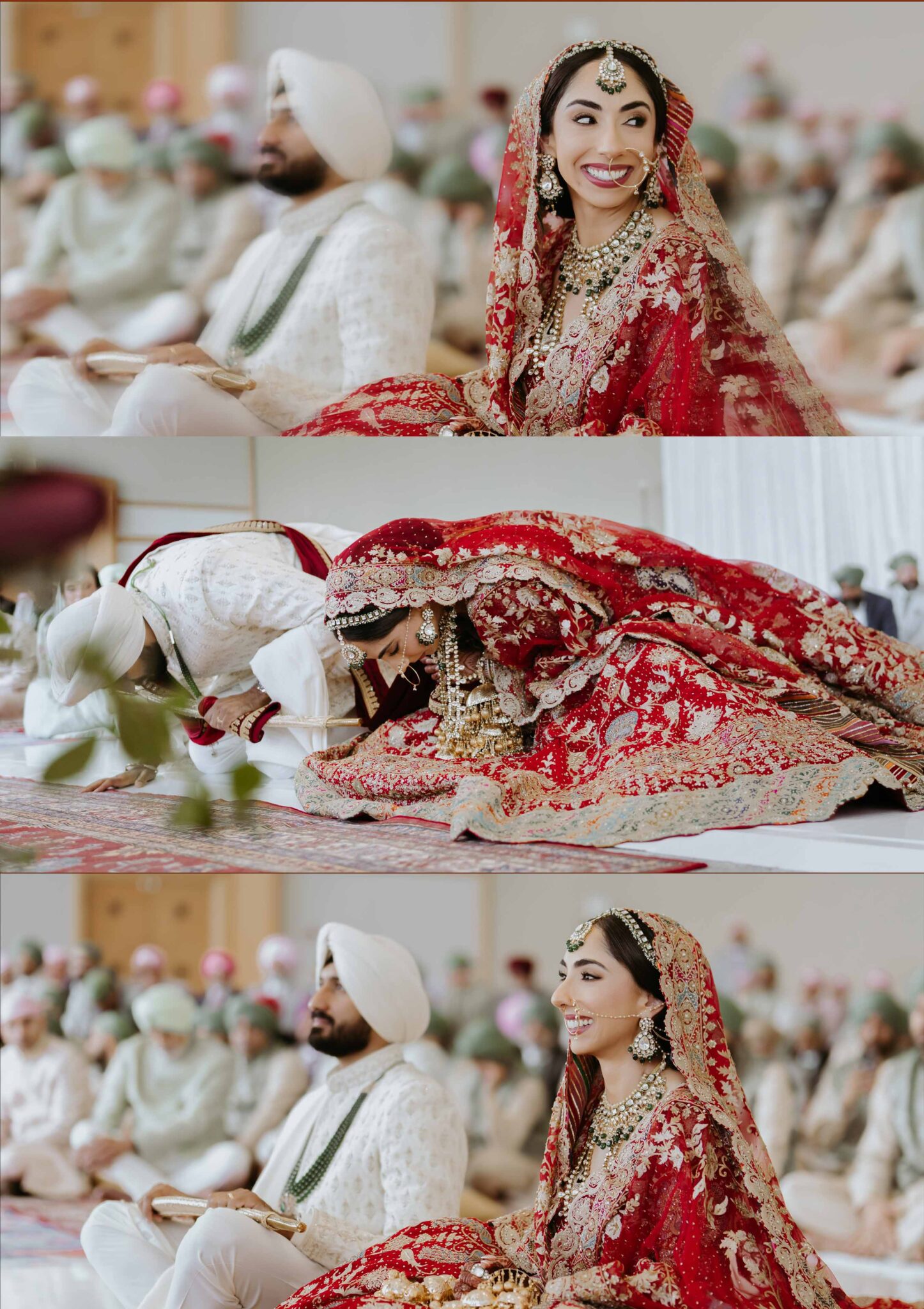
The laavan are four hymns written by Guru Ram Das. For each one, the granthi reads the verse, the ragis sing it, and the couple walks clockwise around the Guru Granth Sahib, the groom leading and the bride holding the palla. After each round they bow and sit again. Brothers and cousins often stand around the path to guide and support the bride. Photograph each of the four rounds with different angles: a wide shot of the hall, the couple walking, the family around them and close-ups of hands on the palla.
Anand Sahib, hukamnama and karah prashad
After the fourth lav, the Anand Sahib is sung, a final ardas is said and the hukamnama is read. Karah prashad is served to everyone. Then family and friends come forward to congratulate the couple, place garlands, give shagun and take photos with them. This is a good time for group photos with relatives who will not stay for the reception.
A sample Anand Karaj morning
- 6:30 AM: Bride and groom getting ready, often in different places.
- 8:30 AM: Baraat arrives at the gurdwara.
- 8:45 AM: Milni, then tea and breakfast for both families.
- 9:30 AM: Everyone enters the darbar hall. Kirtan begins.
- 10:00 AM: Anand Karaj: ardas, palla, the four laavan, Anand Sahib and final ardas.
- 11:00 AM: Karah prashad, congratulations and family photos.
- 11:30 AM: Langar, then couple portraits outside the darbar hall or at the hotel.
Times are examples only. Gurdwaras set their own schedules, and many ask that the ceremony start on time, so build in a buffer before the baraat.
Gurdwara etiquette for photographers
- Everyone covers their head inside the gurdwara, including the photo and film team. Bring a patka or scarf.
- Shoes come off before entering. Wash hands if the gurdwara asks.
- No alcohol or tobacco on the grounds.
- Never stand on the raised platform where the Guru Granth Sahib rests, and never walk between the couple and the Guru Granth Sahib.
- Do not turn your back directly to the Guru Granth Sahib or point your feet toward it when kneeling or sitting.
- Move only along the sides and the back of the hall, and stay still during ardas and the reading of each lav.
- No flash during the ceremony. Use quiet shutters where possible.
- Follow any rules from the granthi or committee about where photographers may stand. Some gurdwaras limit movement during the laavan.
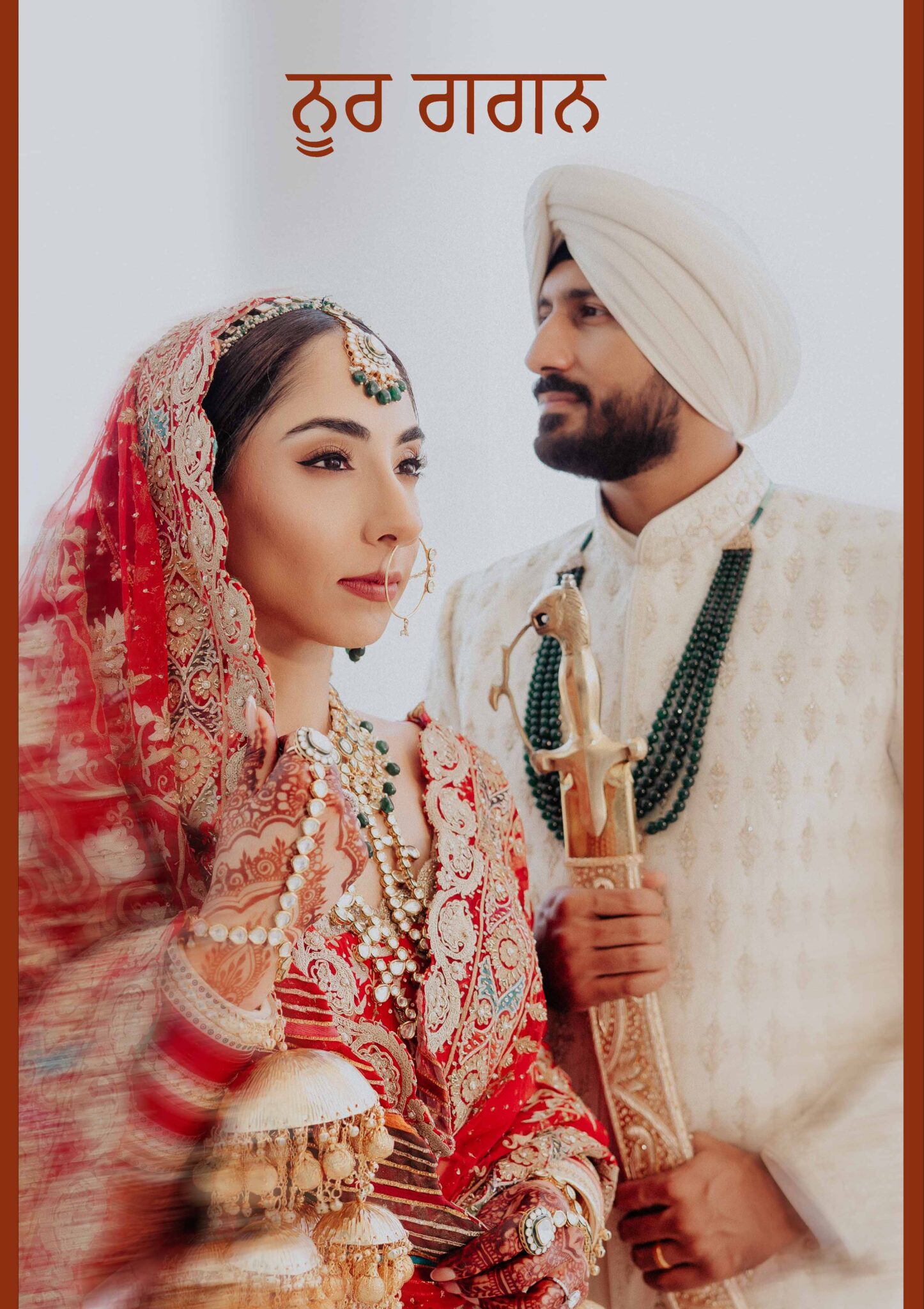
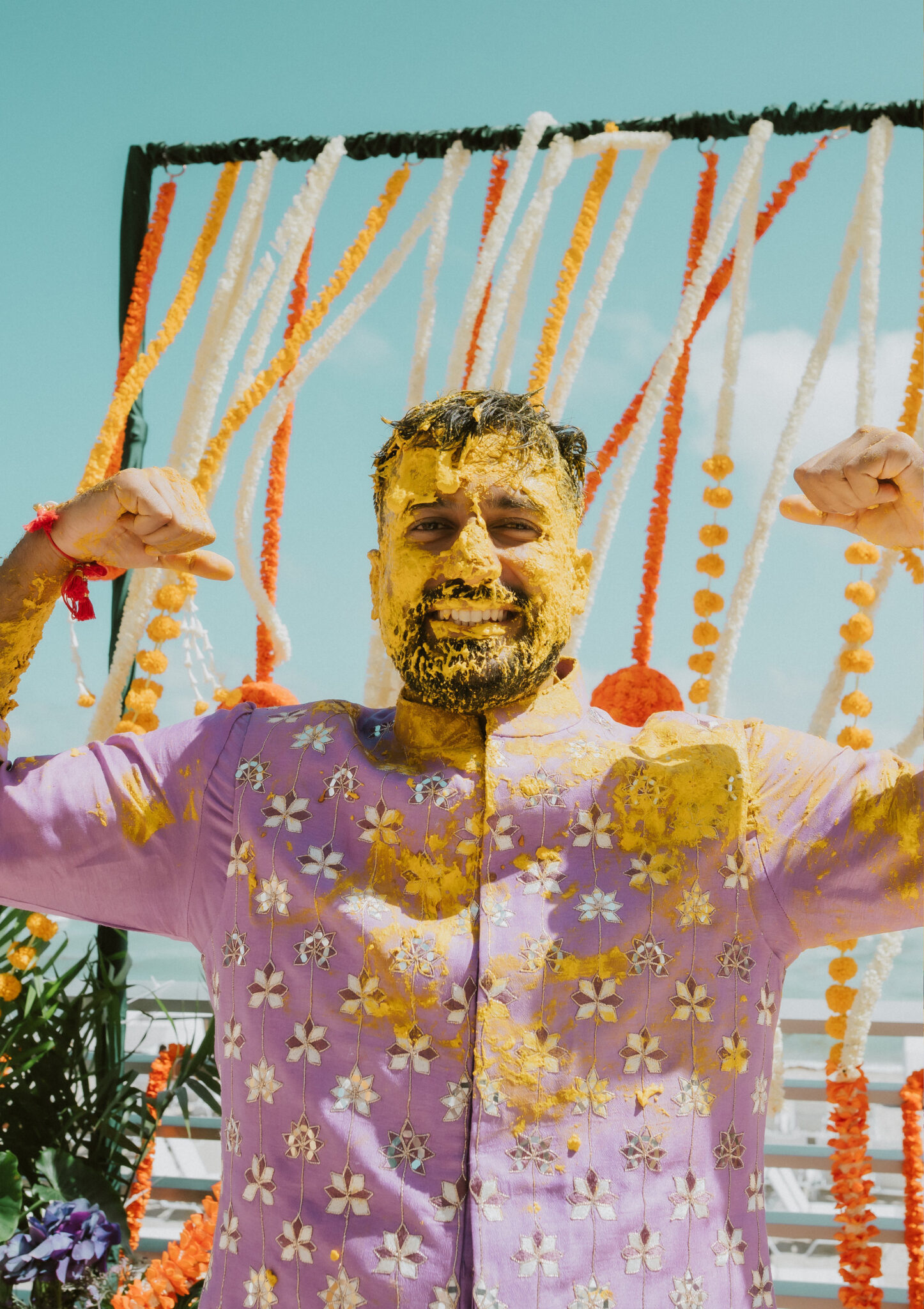
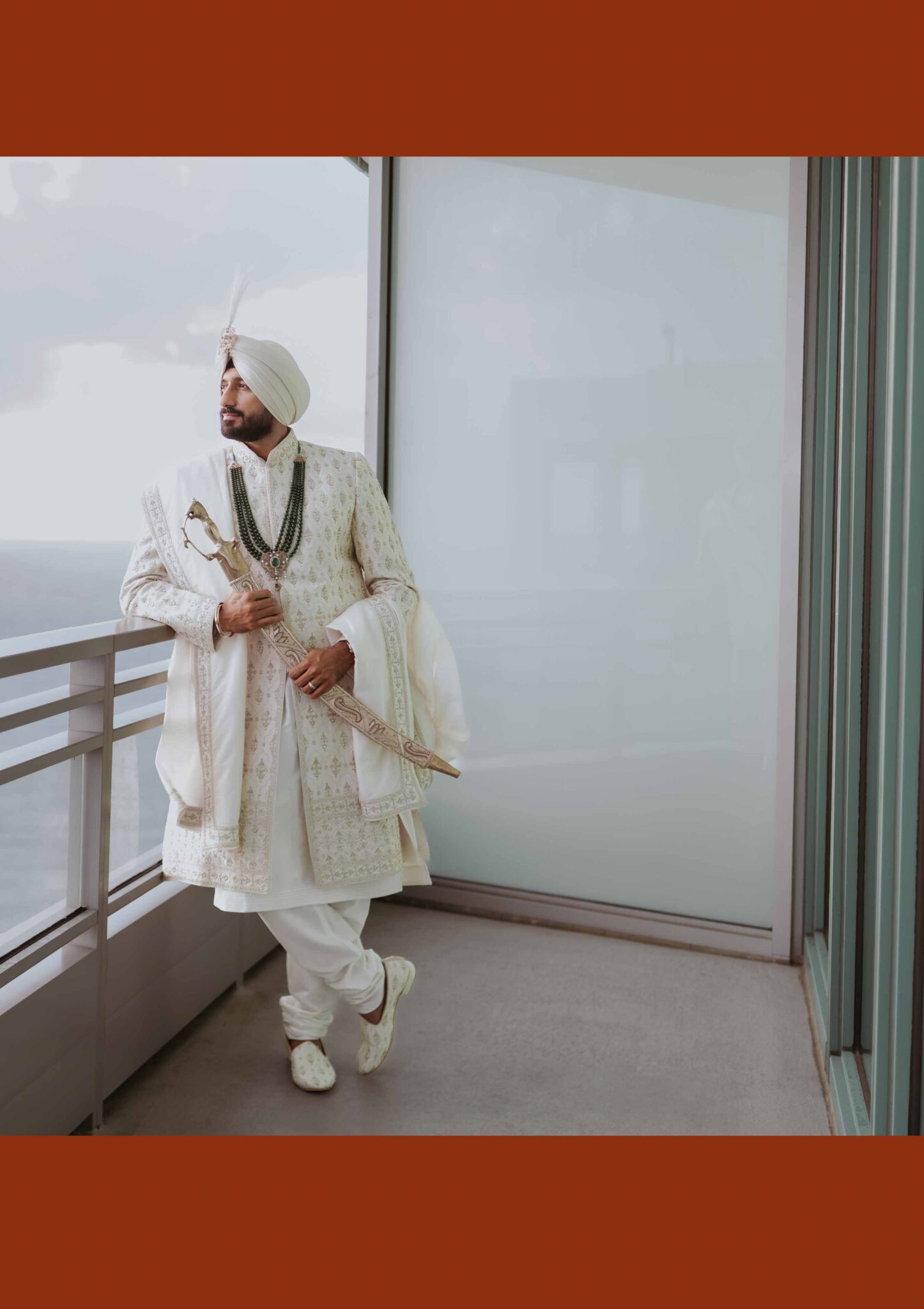
We have photographed Anand Karaj ceremonies at gurdwaras in Orlando, Oviedo, Tampa and Miami, and at Florida resorts. Gagan and Noor’s Sikh wedding at The Diplomat Beach Resort shows an Anand Karaj under a floral Palki Sahib, and their beach haldi and maiyan shows the days before.
Photos inside and outside the darbar hall
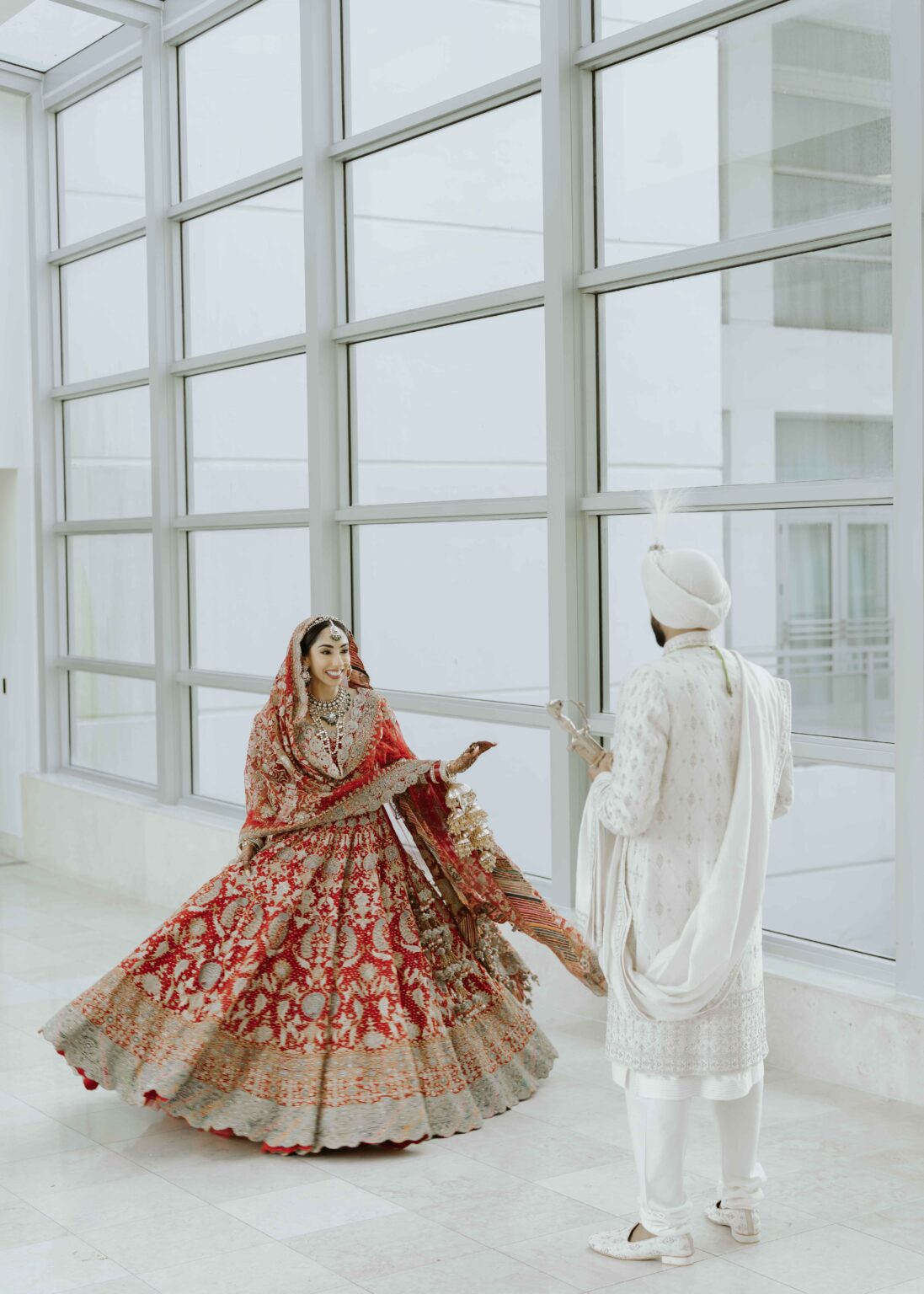
Inside the darbar hall, the photos are about the ceremony: the couple facing the Guru Granth Sahib, the laavan, the family and the sangat. Posed portraits do not belong there. Save couple portraits, bridal portraits with the chura and kaleere, and wedding party photos for the gurdwara grounds, a nearby garden or your hotel. Many families also take a group photo outside the gurdwara entrance after langar, when everyone is still together.
Planning tips for your Anand Karaj
- Book the gurdwara early and ask for its written guidelines for weddings, photographers and dress.
- Most Anand Karaj ceremonies are held in the morning. Plan getting-ready photos early, and portraits after the ceremony.
- Share your milni list with names and order, and make sure each relative has a garland.
- Choose a bride’s outfit that is easy to sit and walk in on the floor. Long trains can be hard during the laavan.
- Plan couple portraits away from the darbar hall, on the gurdwara grounds or at your hotel.
- If you have a doli at home or after the reception, tell us the time so the team is there for it.
For the rest of the weekend, see our Sikh wedding photographer in Florida page, our sample wedding photography timeline and our shot list and family portrait list.
Frequently asked questions
Can you take photos during an Anand Karaj?
Yes, most gurdwaras allow the hired photographer and videographer to work during the ceremony, with rules. Everyone covers their head, removes shoes, stays off the platform and moves only along the sides. Ask the gurdwara for its guidelines.
How long does an Anand Karaj take?
The ceremony itself usually lasts about an hour. With the milni before it and langar after it, plan two to three hours at the gurdwara.
What are the four laavan?
Four hymns written by Guru Ram Das. As each one is read and sung, the couple walks clockwise around the Guru Granth Sahib, the groom leading and the bride holding the palla.
What is the palla ceremony?
The bride’s father places one end of the groom’s scarf, the palla, in the bride’s hand. The couple holds it as they walk the four laavan.
Where in Florida do you photograph Anand Karaj ceremonies?
We have photographed Anand Karaj ceremonies at gurdwaras in Orlando, Oviedo, Tampa and Miami, and at Florida resorts such as The Diplomat Beach Resort.
Planning your Anand Karaj?
We photograph and film Sikh weddings across Florida and anywhere in the USA, from the maiyan and milni to the laavan and reception. Tell us your gurdwara and date and we will reply within 24 to 48 hours.