Photography guide
Walima Photography Guide: Entrances, Stage Photos and Family Groups
By Noor K Photography ·
Walima photography captures the reception that the groom’s family hosts after the nikkah, usually the last and calmest event of a Muslim wedding. The rituals are done, the bride and groom are married, and the evening is about welcoming guests, sharing a meal and celebrating the new couple with both families. This guide explains what happens at a walima, the photos to plan for, how to run stage photos and family groups without losing your evening, and how to plan for modesty preferences.
What is a walima?
The walima is the wedding feast hosted by the groom’s family after the nikkah. It is a Sunnah, and its purpose is to announce the marriage and share a meal with family, friends and the wider community. In many Pakistani, Indian and Bangladeshi Muslim families, the walima takes place the day after the shaadi or rukhsati. Some families hold it the same weekend as the nikkah, and some combine the nikkah and walima on one day.
A walima can be a simple dinner or a large ballroom reception with several hundred guests. It is usually calmer than the mehndi or the baraat. Many families keep music soft or skip it, while others include speeches, a slideshow or a first dance. Ask your families what feels right and tell your photographer, so the coverage fits the tone of the evening.
What the bride and groom wear to the walima
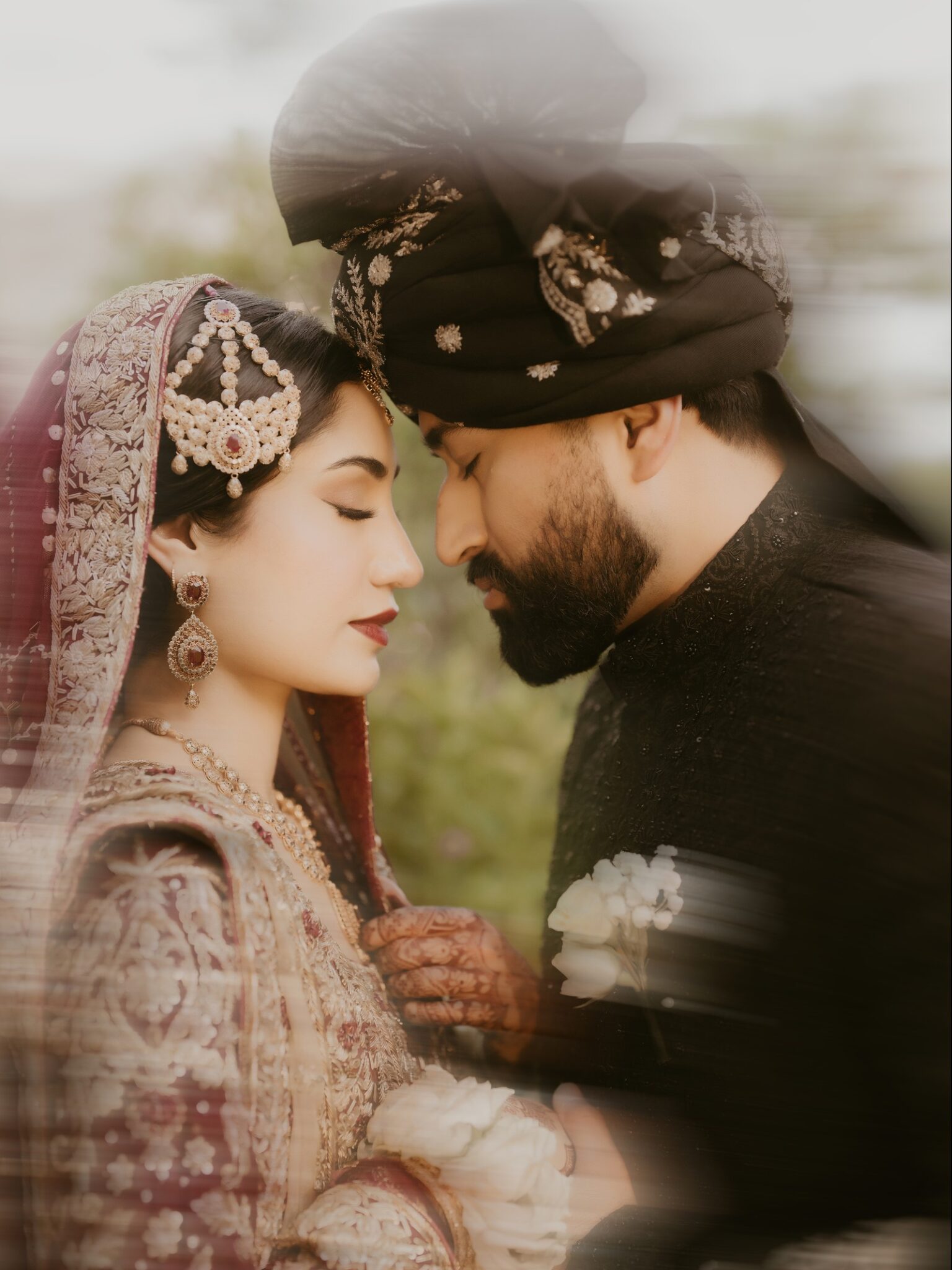
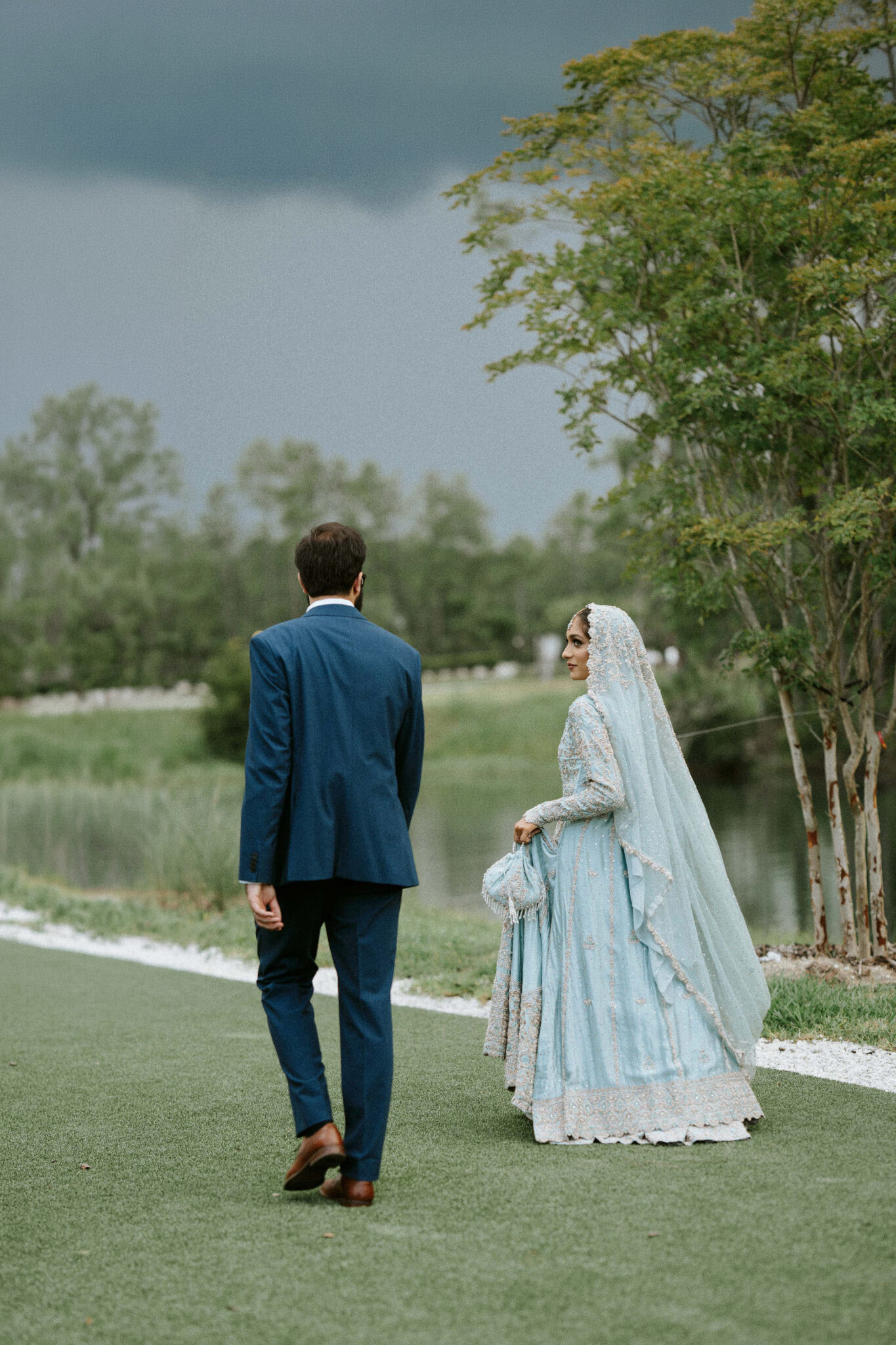
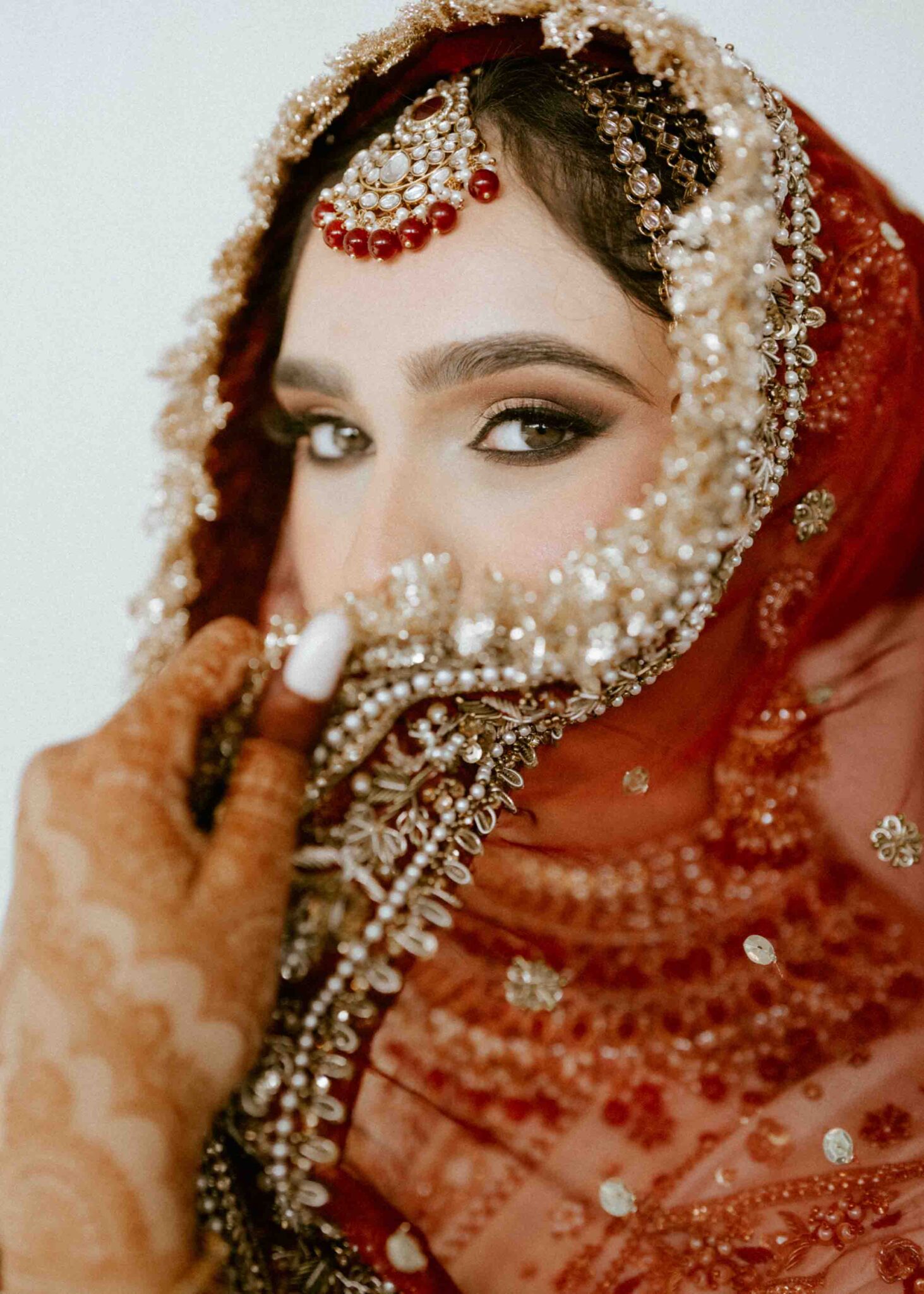
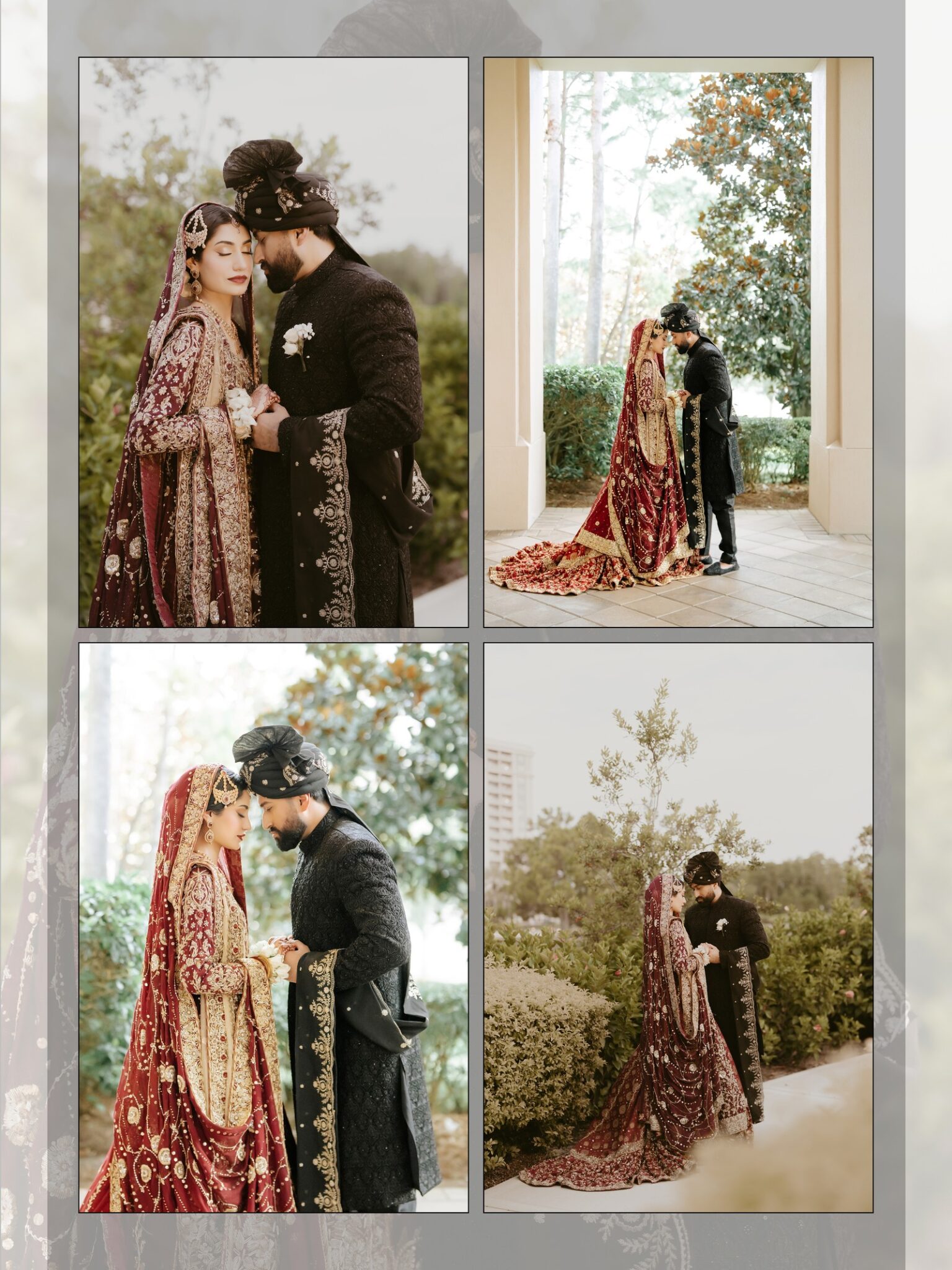
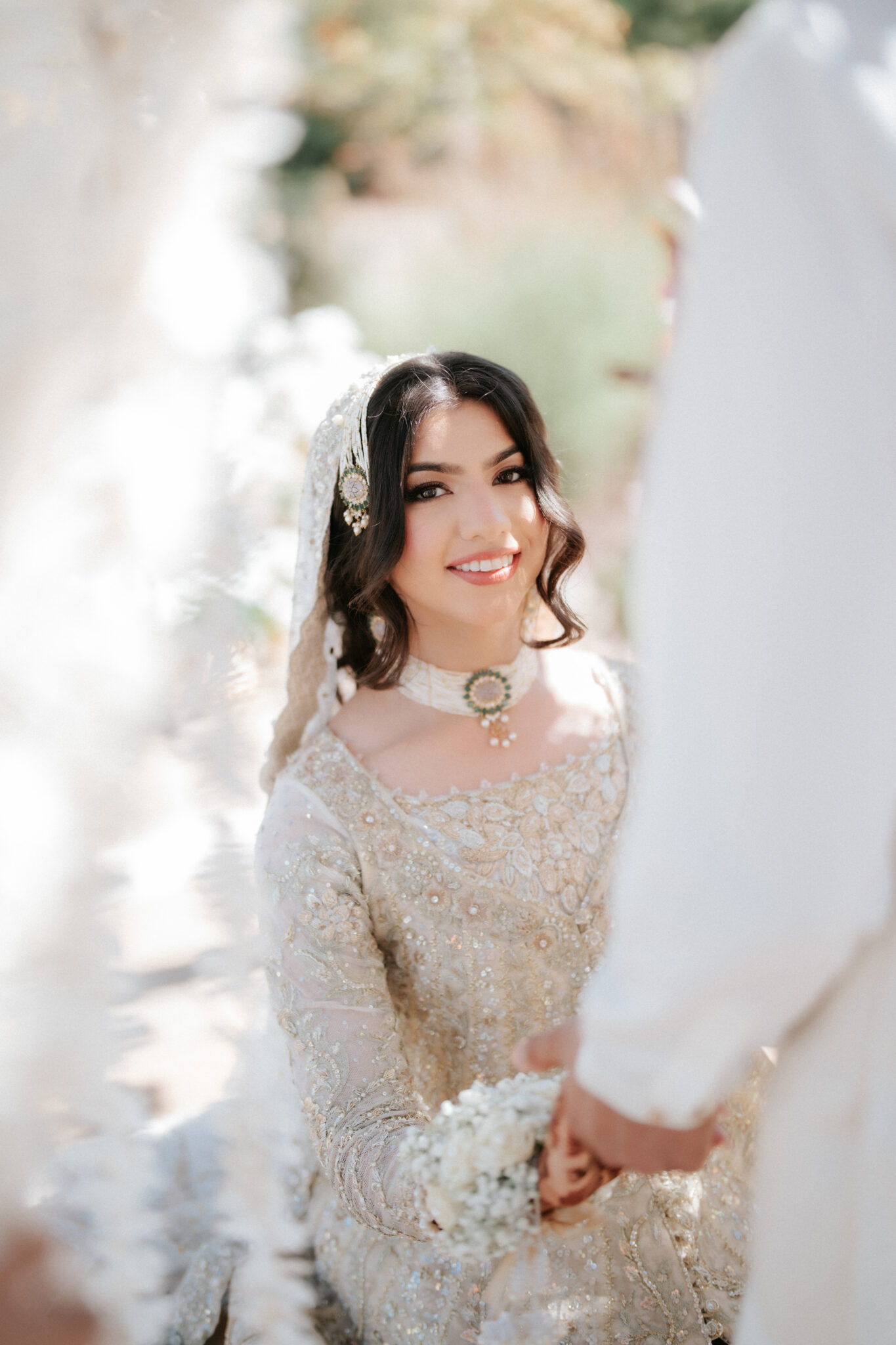
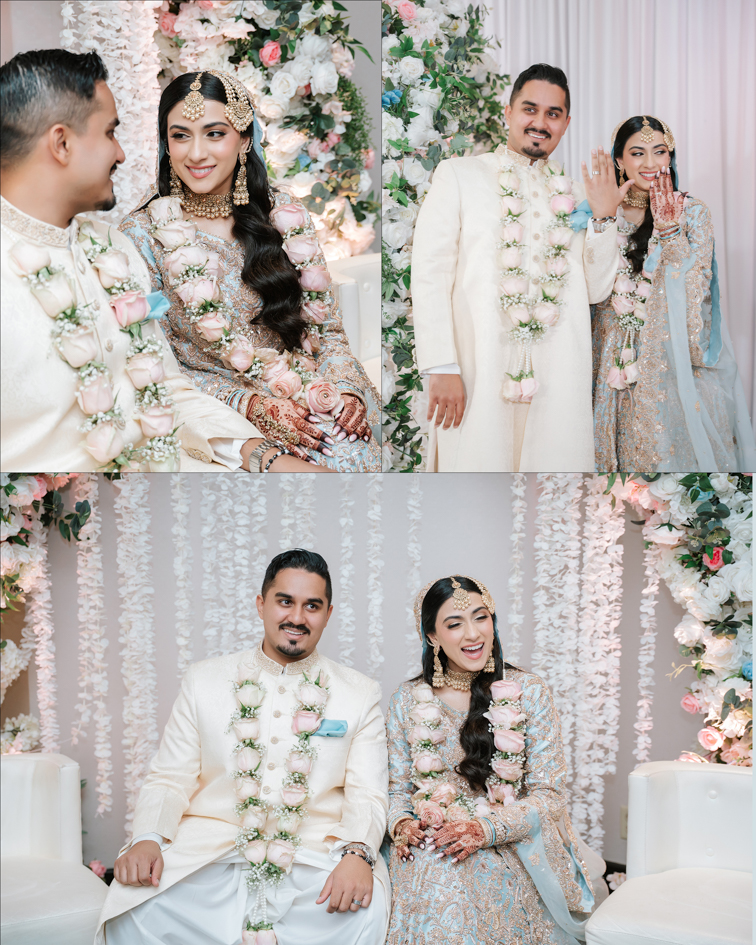
After a red or deep-colored outfit at the shaadi, many brides choose something lighter for the walima: ivory, silver, gold, pastel blue, mint, blush or champagne, often with a gown-style lehenga or a long kameez with a heavy dupatta. Grooms often wear a suit, a tuxedo, a prince coat or a lighter sherwani. Lighter colors photograph beautifully on stage, but ask your decorator to choose a backdrop that contrasts with your outfits, so you do not disappear into an all-white stage.
Walima photos to plan for
- Bride and groom getting ready, outfit and jewelry details
- Couple portraits before guests arrive, ideally outdoors in the hour before sunset
- The stage, florals, table settings and the room before it fills up
- The couple’s entrance, with family walking in ahead of them
- Parents of the groom welcoming guests, as hosts of the evening
- The dua or blessing, and any speeches from fathers, siblings or friends
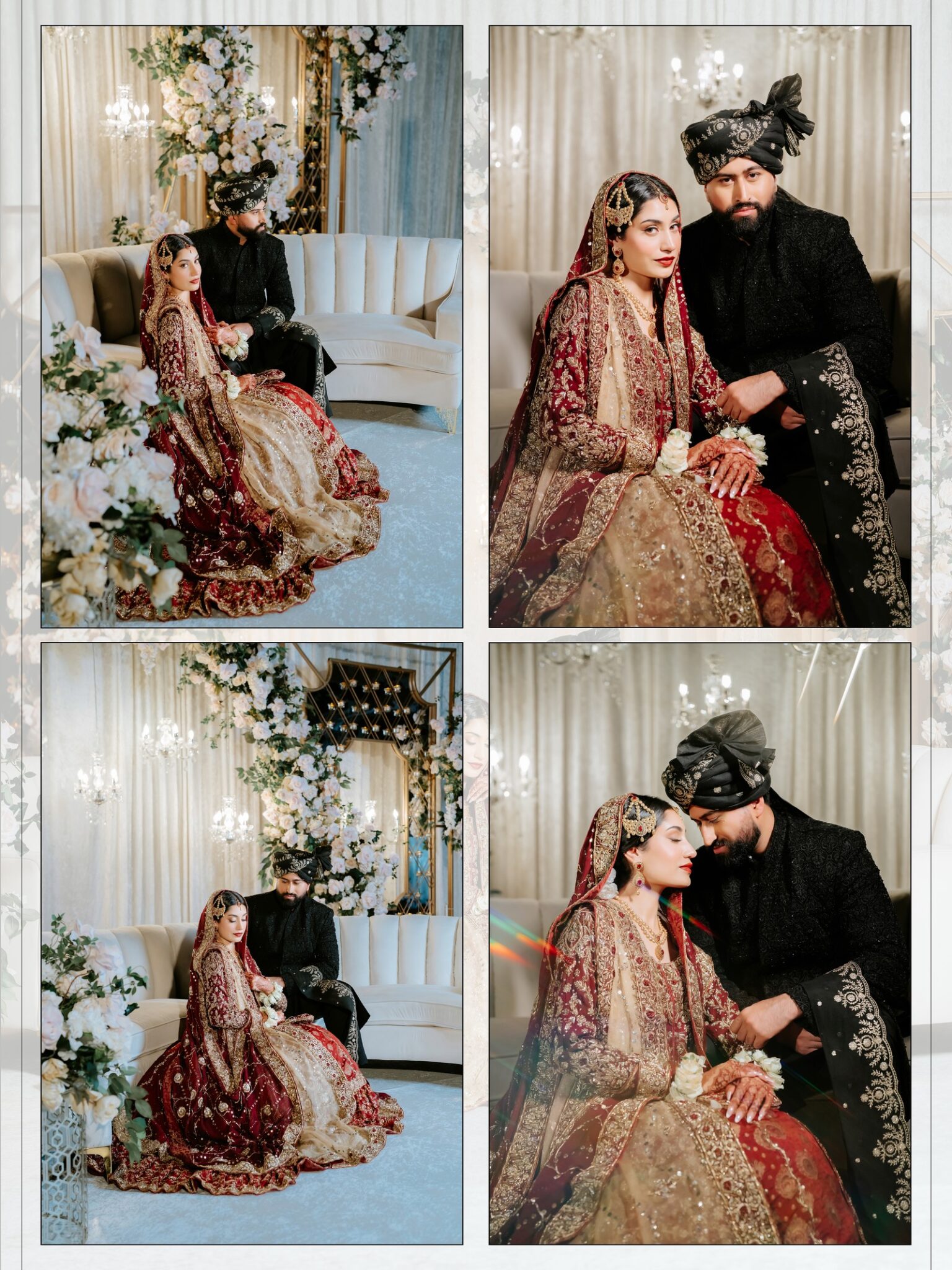
- Stage photos with family and close friends
- Dinner, laughter at the tables and the cake, if you have one
- A final portrait of the couple as the evening ends
Planning the entrance
The walima entrance is usually simpler than a baraat but still a big moment. Many couples walk in under a floral canopy or a dupatta held by siblings, with rose petals, soft music or a nasheed. Plan the entrance before dinner, while guests are seated and fresh, and tell the photo and film team the order: who walks in first, where the couple stops, and when they go up to the stage. A short pause at the door gives us the photo of the whole room turning to look at you.
How to run stage photos at a walima
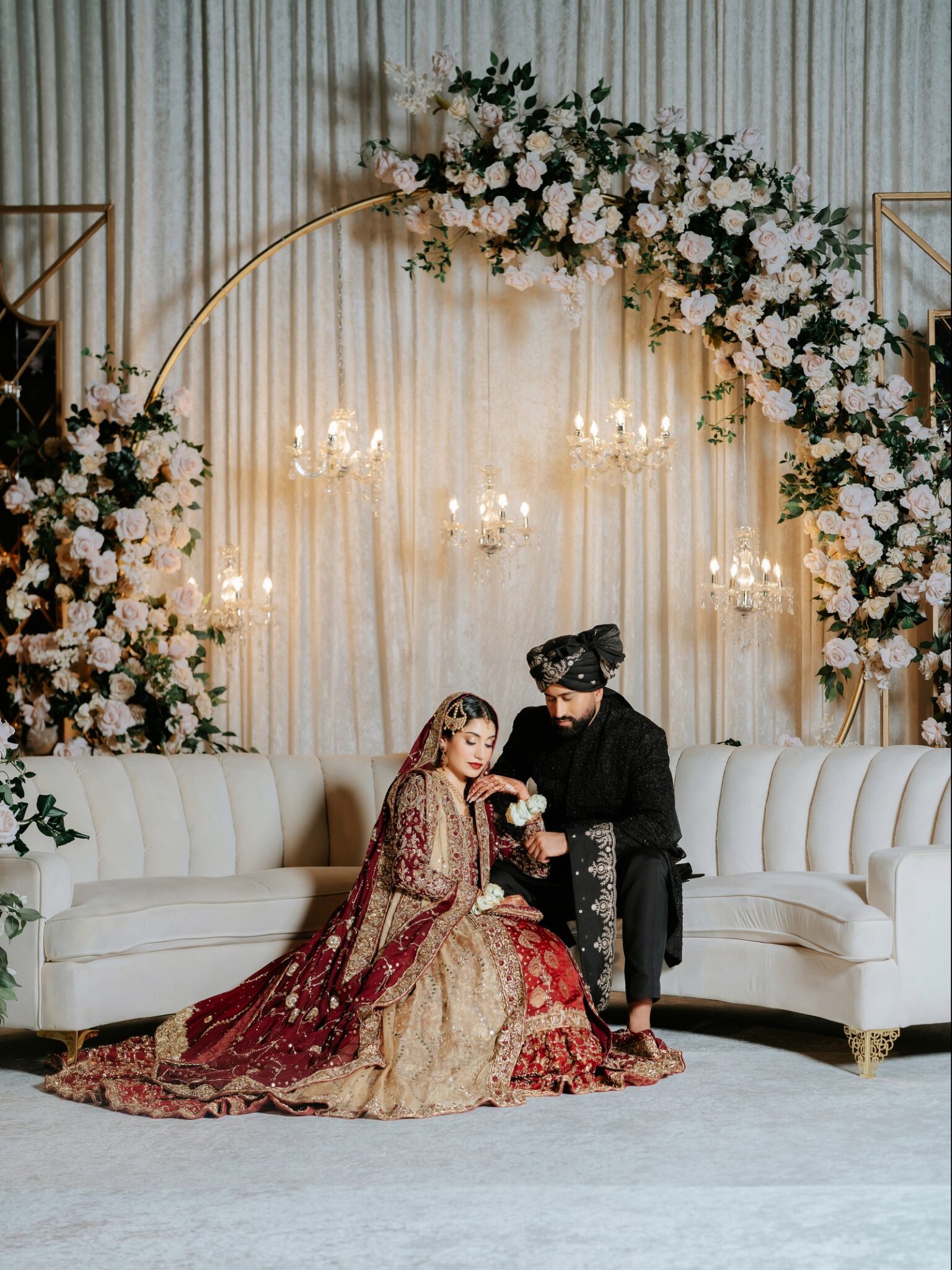
Stage photos are a big part of most South Asian Muslim receptions. Guests come up to the couple, table by table or family by family, to congratulate them and take a photo. It is a lovely tradition, but with 300 guests it can take most of the evening and keep the couple from eating or enjoying their own party. A plan makes it faster and calmer.
- Agree on a stage photo window, for example 45 to 60 minutes after the entrance, and stick to it.
- Name one helper from each family, usually a cousin who knows everyone, to call groups up in order.
- Start with elders and immediate family, then aunts, uncles and cousins, then friends and community.
- Keep a clear path to the stage and a few steps on each side, so groups can come up and leave quickly.
- Ask the decorator to leave space in front of the stage for the photographer to stand back far enough for large groups.
- Make sure the stage has soft, even front light. Backlit flowers look beautiful, but faces need light too.
- If guests want photos on their own phones, ask them to wait until after the main photo is taken.
Family groups at the walima
The walima is often the best time for formal family portraits, because both families are dressed up and nobody is rushing to a ceremony. Many couples save the large extended family groups for this night. Share a list with names a few weeks before, and keep it to the groups you will actually frame or print. Our South Asian wedding family photography guide has a full list and timing for large families.
Modesty, privacy and separate seating
Some families prefer separate seating for men and women, a women-only area, or no photos of certain guests who wear niqab or prefer not to be photographed. Others are happy with photos of everyone. Tell your photographer ahead of time so the coverage can be planned around it: which areas to photograph and when, clear guidance on which guests not to photograph, and careful choices about what goes into the online gallery and highlight film. If you would like a woman on the team for a women-only area, ask about it when you book. If guests are unsure, a small sign at the entrance asking them to tell the photographer works well.
Lighting and timing tips
- Most walimas are in hotel ballrooms in the evening. Warm, even light on the stage matters more than anything else.
- Avoid strong colored uplighting directly on the stage. It changes skin tones and the color of a light outfit.
- Plan couple portraits before guests arrive. Once the stage photos start, the couple rarely gets a break.
- Serve dinner after the entrance and the first round of stage photos, so the couple can eat with the guests.
- If the walima is the day after the shaadi, plan a slightly later start. Everyone will be tired.
How many hours of walima coverage do you need?
Most walimas need about 4 to 5 hours of photography: portraits before the event, the entrance, speeches, stage photos, family groups and dinner. A small walima dinner may need 3 hours. If the walima is the last event of a multi-day wedding, our guide to coverage hours helps you plan the full weekend.
More Muslim wedding planning
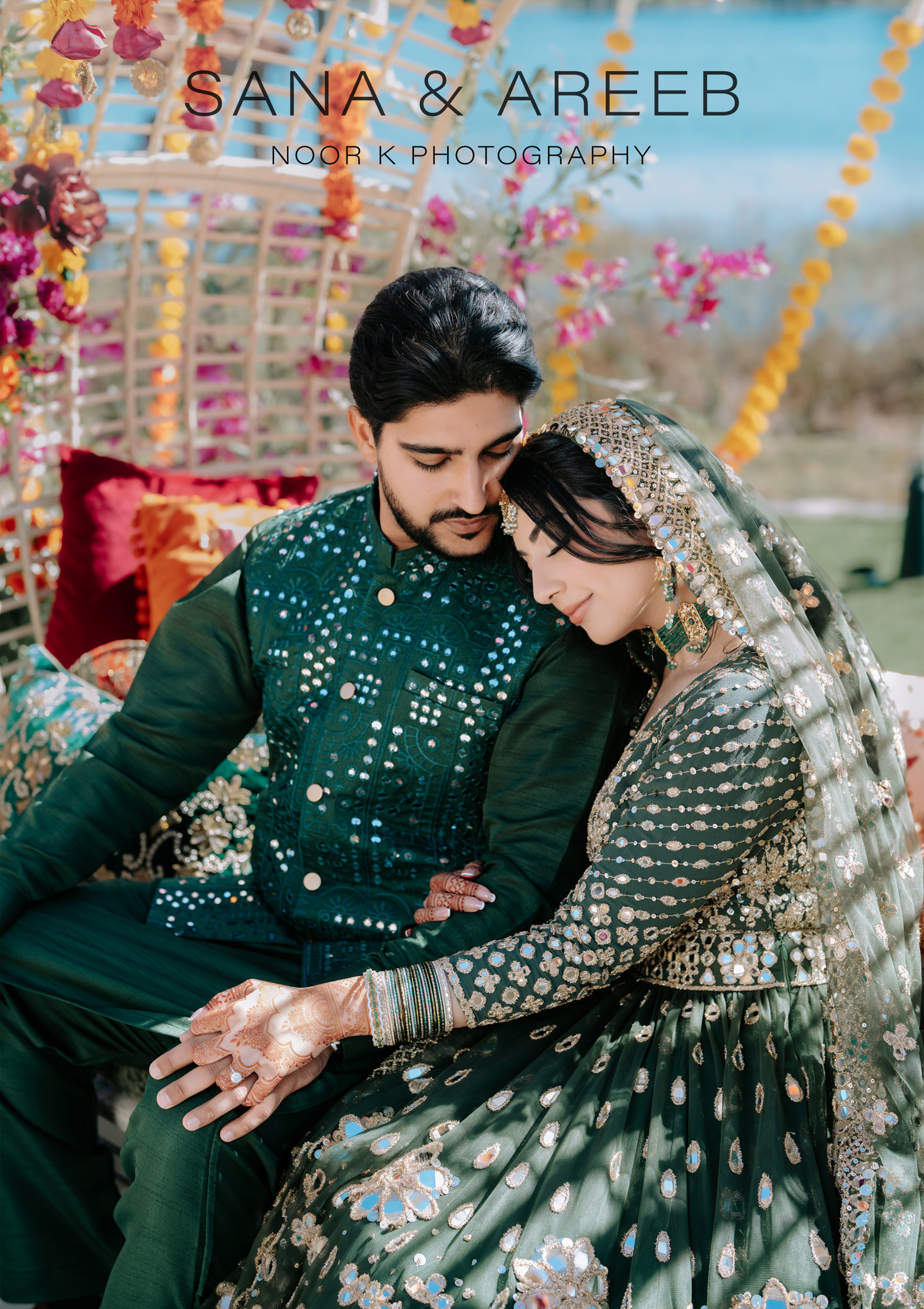
Read our nikkah photography guide for the ceremony, and see the stage and reception portraits from Amen and Shoaib’s South Asian wedding at Signia by Hilton and Waldorf Astoria Orlando, Sana and Areeb’s Muslim wedding in Florida and a Muslim shaadi in Jacksonville. Our pages for Muslim wedding photography in Florida and Pakistani wedding photography cover every event from the dholki to the walima.
Frequently asked questions
What is a walima?
The walima is the wedding feast hosted by the groom’s family after the nikkah. It is a Sunnah and is meant to announce the marriage and share a meal with family and the community.
When is the walima held?
Often the day after the shaadi or rukhsati, but some families hold it the same weekend as the nikkah or combine the nikkah and walima on one day.
How long do stage photos take at a walima?
With a large guest list, stage photos can take an hour or more. Set a time window, name a helper from each family to call groups up, and start with elders and immediate family.
What does the bride wear to the walima?
Many brides choose lighter colors than at the shaadi, such as ivory, silver, gold, pastel blue, mint or blush, with a gown-style lehenga or a long kameez and heavy dupatta.
Can you photograph a walima with separate seating for men and women?
Yes. Tell us ahead of time and we will plan the coverage around it, including which areas and guests to photograph and care with what is shared online.
How many hours of photography does a walima need?
Most walimas need about 4 to 5 hours, covering portraits, the entrance, speeches, stage photos, family groups and dinner. A small walima dinner may need about 3 hours.
Planning your walima?
We photograph and film walimas, nikkahs and shaadis across Florida, in Atlanta and anywhere in the USA, with care for your family’s traditions. Tell us your date and we will reply within 24 to 48 hours.